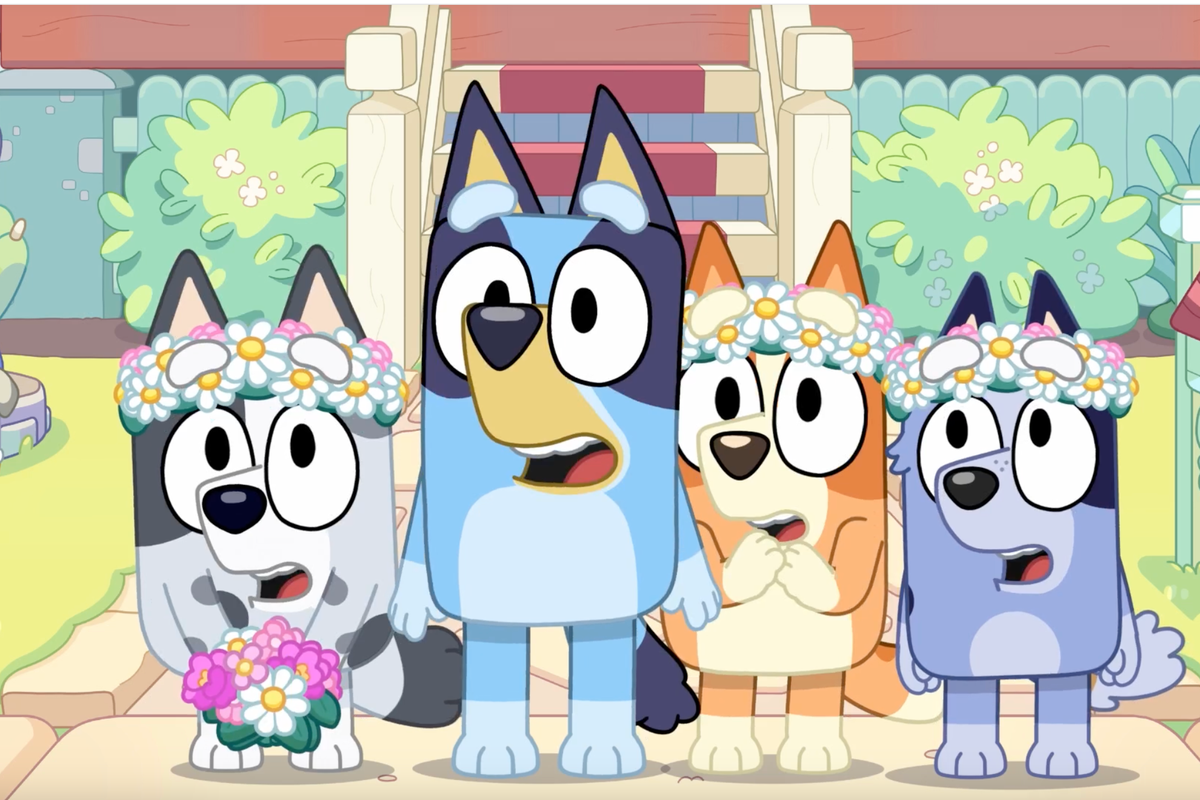
The global television market is intimately familiar with the commercial footprints of Bluey, the animated powerhouse from Brisbane. It streams into millions of homes across more than 140 countries, localized into over 40 global languages. Yet, the show has never been available in a traditional Australian Indigenous language until now.
Five landmark episodes from seasons one and two have finally been dubbed into Yolŋu Matha, the First Nations language of North-east Arnhem Land. The project, launched in partnership with Yolŋu Radio and the Aboriginal Resource and Development Services (ARDS) alongside Ludo Studio and the ABC, debuted for Naidoc Week. Dimathaya Burrawanga of the rock band King Stingray voices the patriarch Bandit, educator Rosie Mununggurr takes on Chilli, and local children from North-east Arnhem Land provide the voices for Bluey and Bingo.
While the entertainment industry is quick to champion this as a straightforward victory for representation, the late arrival of an Indigenous language version reveals a much harder truth about the economics and politics of global media distribution.
The Economic Irony of a Global Export
Translating a media property into French, Spanish, or Mandarin is a simple calculation of return on investment. The audience size justifies the recording costs, studio time, and distribution logistics.
Indigenous languages operate under an entirely different economic reality. Yolŋu Matha is one of the country's most vibrant and active traditional languages, yet it possesses an estimated base of fewer than 8,000 fluent speakers. For a standard commercial network, spending thousands of dollars to dub high-end animation for a target demographic that could fit inside a minor suburban sports stadium is a non-starter.
The project only materialized because it bypassed traditional commercial funding structures altogether. It required a unique coalition between public broadcasting infrastructure, non-profit language preservation bodies, and community-led consultation. Relying on community radio networks and cultural advocacy groups to pull a flagship national product into its own domestic linguistic heritage exposes the structural gaps in how media diversity is funded.
The Mirage of Structural Diversity
The entertainment sector frequently relies on symbolic gestures to demonstrate inclusivity. For years, domestic broadcasts of the series have featured brief textual acknowledgments in the credits, noting that the program was produced on traditional lands.
While these acknowledgments serve a purpose, they cost production companies very little. They exist on the periphery of the actual creative product. Re-voicing a complete television episode requires deep structural engagement. The process forces an industry that values rapid, assembly-line localization to halt its operations and adapt to the specific cultural rhythms of the community it wishes to represent.
By focusing on five specific episodes—including highly regarded chapters like The Beach and Sleepytime—the initiative highlights how specialized this work truly is. It cannot be replicated by automated translation tools or outsourced to corporate localization agencies.
The Technical Deficit of AI Translation
In executive suites across the media industry, the current instinct for reducing localization costs is to look toward automated systems. AI-driven dubbing and translation tools are frequently promoted as solutions for niche language markets.
This approach fails entirely when applied to Indigenous languages. Artificial intelligence requires vast bodies of digital text and clean audio data to train translation models. For languages that rely heavily on oral traditions, or those whose digital footprints are intentionally protected by the communities that speak them, these training sets simply do not exist.
Furthermore, translation is not a mechanical process of replacing an English word with an Indigenous equivalent. In Yolŋu Matha, meaning is fundamentally tied to geography, kinship systems, and deep-seated cultural concepts. A literal, machine-generated translation would strip the dialogue of its context, resulting in a product that feels completely alien to native speakers. Human intervention by community elders and professional educators remains irreplaceable.
The Risk of Tokenism
A major challenge facing projects of this nature is the danger of isolation. A single batch of five dubbed episodes risks becoming a historical novelty rather than a catalyst for systemic change.
If the television industry treats this release as a completed task to be ticked off a corporate social responsibility checklist, the systemic neglect of Indigenous languages in broadcast media will continue unchanged. True sustainability requires a continuous production pipeline. Children need ongoing exposure to media in their own language to reinforce literacy and cultural pride, not just a brief burst of programming tied to an annual celebratory week.
The long-term impact depends heavily on whether this release sets a precedent for future productions. If major media institutions do not commit regular, recurring budget lines to Indigenous language dubbing, the structural barriers will remain firmly in place.
Moving Past the Pilot Phase
The success of the Yolŋu Matha episodes provides a clear operating framework for the broader television industry. It demonstrates that when production studios surrender absolute creative control and allow local communities to lead the translation process, the resulting art resonates far more deeply.
The path forward requires media executives to look beyond simple metrics like immediate audience size or short-term profitability. Investing in the preservation and normalization of First Nations languages through popular culture is an exercise in cultural preservation. The true measure of this project will not be found in streaming charts or critical praise, but in whether a generation of young viewers grows up hearing their own community's voice reflected in the world's most popular stories.