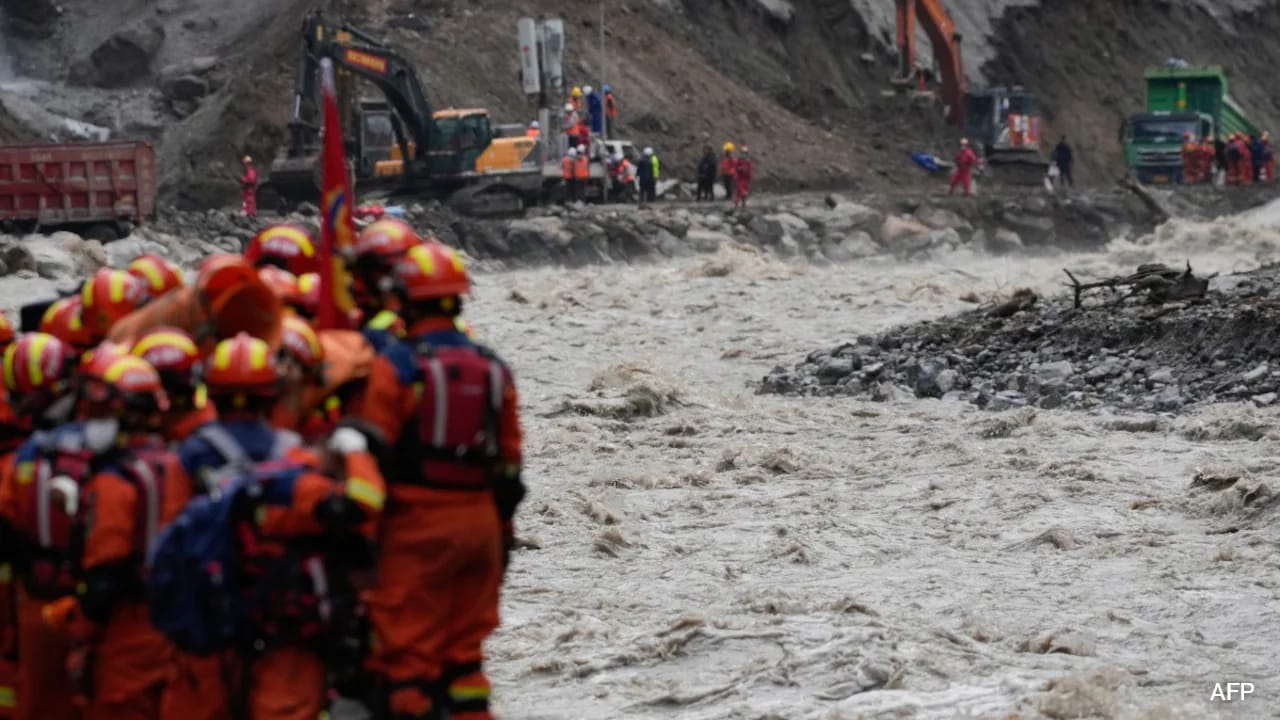
A staggering $2.56 billion price tag rarely captures the actual human misery left behind when a landscape fractures overnight. That is the raw financial tally officials recently released following the catastrophic floods in Nepal, a disaster triggered by a sudden glacier collapse that sent an avalanche of ice, rock, and mud barreling down the Trishuli River.
When disaster hits mountain communities, numbers like 387.5 billion Nepalese rupees get tossed around on evening news broadcasts. Most people hear the headline, flinch at the sheer scale of the figure, and change the channel. They don't picture what it takes to rebuild a life when your front yard is buried under ten feet of slurry.
Dharma Raj Upreti, who heads the National Disaster Risk Reduction and Management Authority, laid out the grim baseline data. Beyond the initial shock, the early recovery phase alone carries a price tag of $52.6 million just to cover the bare necessities over the first four months. We are talking about clearing choked pathways, throwing up temporary shelters, and getting basic drinking water and electricity running again for people who lost everything.
Why This Disaster Hits Differently
Mountain infrastructure is notoriously fragile. Traditional engineering models often fail when faced with glacial lake outbursts because these events carry brute kinetic force that modern concrete defenses struggle to withstand.
Property destruction tells only part of the story. Current damage assessments show that roughly 20,000 homes require complete reconstruction across the battered regions, with at least 7,500 dwellings wiped off the map entirely. Families aren't just dealing with structural cracks. They are staring at empty plots of land where their generational homes used to stand.
Search and rescue teams face brutal conditions on the ground. Thousands of people remain missing, with many feared trapped inside the underground tunnels of major hydropower projects that bore the brunt of the deluge. Every hour that ticks past dims the hope of finding survivors, shifting the operational focus toward recovery, identification, and temporary housing.
The Road Ahead for Reconstruction
Governments love to promise swift aid, but bureaucratic gridlock usually slows things down. The immediate financial allocation of 7.95 billion rupees is earmarked strictly for emergency triage—temporary roofs, cleared roads, and emergency lines.
If you are tracking how international aid and local governance intersect during climate catastrophes, pay attention to execution speed. Pledges made in conference rooms in Kathmandu take weeks to filter down to remote mountain districts where bridges have snapped.
Communities cannot wait for permanent concrete highways to be engineered from scratch. Local leaders are relying on makeshift timber tracks and mobile water filtration units just to keep isolated pockets from starving.
Relief operations continue around the clock, but the sheer volume of displaced citizens means resources are stretched dangerously thin. If you want to support credible relief efforts on the ground, look toward established humanitarian networks currently deploying boots on the ground rather than generic fundraising campaigns. Track official updates through municipal channels to ensure your contributions target active reconstruction rather than administrative overhead.