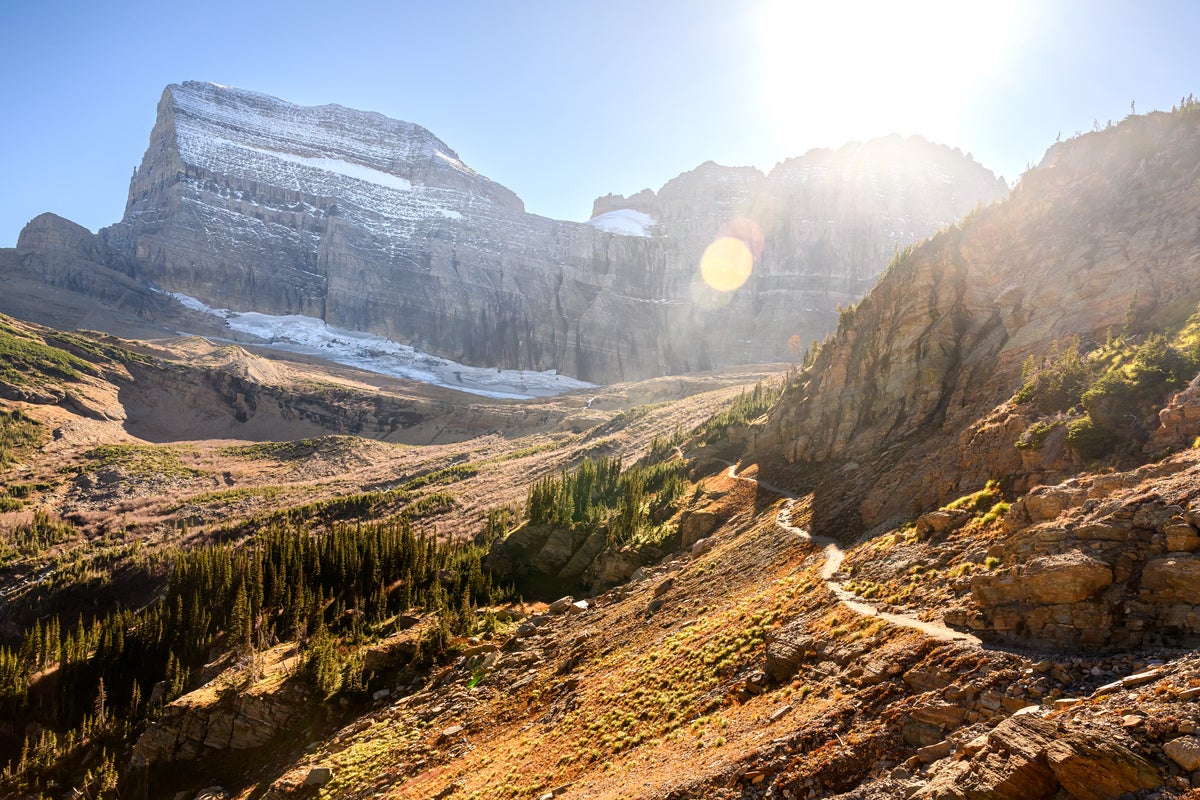
The scream cut through the quiet afternoon near the north shore of Lake Josephine. Within seconds, a terrified hiker came sprinting down the trail, yelling a frantic, two-word warning to anyone within earshot: "Bear attack!"
It sounds like a scene from a Hollywood survival movie, but it played out in real life on May 21, 2026, on the east side of Glacier National Park. Devin Dufrene, a 21-year-old walking the trail with his sister and three other students, had to make a split-second decision. After using a satellite communication device to alert emergency services around 1:30 p.m., the group turned back toward the trailhead, only to find a bear walking right up the path toward them. Trap locked. Left with no good options, they scrambled up a nearby cliff face to wait for the animal to pass before rangers arrived with an empty stretcher.
This incident wasn't an isolated stroke of bad luck. It marks the second major bear attack in Glacier National Park this month alone, following a tragic, fatal encounter just weeks earlier. And if you look slightly south to Yellowstone National Park, the story doesn't get any calmer.
What is actually going on in the northern Rockies right now? If you plan to step foot on a trail in Montana this season, you need to understand the realities of what is driving this sudden surge in human-bear conflicts, because the old assumptions might just get you hurt.
The Reality Behind the Spring Surge
When back-to-back attacks happen in the same region, the immediate internet reaction is usually panic. People start whispering that the bears have become unusually aggressive, or that they are actively hunting humans.
Let's clear that up immediately. Wildlife experts like Chris Servheen, who spent 35 years as the grizzly bear recovery coordinator for the U.S. Fish and Wildlife Service, stress that these incidents are completely random. There is no biological link or shared behavioral shift connecting an attack on the east side of Glacier to a fatal mauling on the west side.
But randomness doesn't mean there aren't underlying environmental pressures at play.
Recent Northern Rockies Bear Incidents (May 2026)
- May 3: Solo hiker Anthony Pollio killed near Mt. Brown Trail, Glacier National Park.
- May 4: Two brothers injured by a sow grizzly on Mystic Falls Trail, Yellowstone National Park.
- May 21: Hiker injured in a surprise encounter near Lake Josephine, Glacier National Park.
The common denominator here is timing and geography. Montana and Wyoming just experienced a milder, warmer-than-usual winter. Because of the early warmup, some bears left their dens ahead of schedule. When bears first emerge from hibernation, they don't immediately look for trouble. In fact, experts note that a bear's digestive system takes a couple of weeks to fully wake up, meaning they aren't even remarkably hungry the moment they step out of the den.
The danger spikes a few weeks later. Right now, early-season food sources are highly restricted to low-elevation valley bottoms and emerging green vegetation along trails. Guess who else likes to use those exact same low-elevation trails in May? Hikers.
When you crowd thousands of humans and roughly 2,400 grizzly bears into the same narrow corridors, the laws of probability catch up with you.
The Deadly Element of Surprise
The fatal attack earlier this month highlights exactly how dangerous these trail overlaps can be. On May 3, 33-year-old Anthony Pollio, a deacon from Florida, went missing during a solo hike up the Mount Brown Fire Lookout trail. His body was found a few days later, just 50 feet off the trail in a heavily wooded area.
National Park Service investigators found his injuries entirely consistent with a bear encounter. While a canister of bear spray was recovered near the scene, officials haven't been able to confirm if he managed to deploy it before the strike.
Erik Wenum, a veteran bear and lion specialist with Montana Fish, Wildlife & Parks, handles these exact types of investigations. He explains that a forensic review of an attack site is treated almost like a criminal scene, utilizing DNA, saliva, and track patterns to determine the bear's intent.
Most trail incidents, including the recent one at Lake Josephine, fall squarely into the category of a surprise encounter. Grizzlies have an incredibly intense defensive bubble. If you stumble into that bubble—especially in thick timber or near a blind corner—the bear's instinct isn't to run; it's to neutralize the threat.
The stakes get exponentially higher when you add offspring to the mix. Just one day after Pollio's disappearance in Glacier, a mother grizzly with two or three cubs mauled two brothers, ages 15 and 28, on the Mystic Falls Trail in Yellowstone. Sows are hyper-vigilant right now. They aren't just protecting their cubs from you; they are protecting them from large male grizzlies that will actively hunt cubs for food during the lean spring months. A mother bear in May is a powder keg. If you startle her, she will explode.
What Most People Get Wrong About Bear Spray
"I carry bear spray, so I'm safe."
I hear this completely false sense of security from hikers all the time. Carrying a canister of counter-assault spray in your backpack or locked inside a water bottle pocket is exactly the same as not carrying it at all.
During an actual charge, a grizzly bear can cover 44 feet per second. That means if a bear pops out of the brush 40 yards away, you have less than three seconds to react, pull the safety clip, aim, and create a cloud of capsaicin. If you have to unbuckle your pack or unzip a pocket to reach your spray, you are already too late.
Just days after the Lake Josephine incident, a video surfaced on social media showing another group of hikers in Glacier sprinting away from two young grizzlies, deploying a "little bit" of spray as the bears ran past. They got lucky.
If you want to survive a real encounter, you need to change how you hike. Here is the unvarnished reality of what actually works based on decades of wildlife management data.
Ditch the Bear Bells
Those little jingling bells people clip to their packs? They don't work. The sound is too tinny and doesn't carry well through dense pine forests or over the roar of a glacial creek. Worse, some biologists argue it sounds like a curious novelty to a bear rather than a human warning. Instead, use your voice. Shout "Hey bear!" or clap loudly every time you approach a blind corner, a thick patch of huckleberry brush, or a rushing stream. Bears don't want to see you any more than you want to see them. Give them the chance to walk away.
Don't Hike Alone
Anthony Pollio was hiking solo when he met a tragic end on Mount Brown. Walking alone makes you quiet, and being quiet gets you into surprise encounters. Glacier and Yellowstone officials strongly recommend hiking in tight groups of three or more. Larger groups naturally make more noise, emit a heavier scent profile, and appear intimidating to a defensive animal.
Keep the Spray on Your Body
Your bear spray belongs on your hip or your chest harness. Period. Practice drawing it until the muscle memory is flawless. If a bear charges, do not aim high. Aim low, right at the ground in front of the animal, so it runs directly into the expanding wall of burning fog.
The Rules of the Trail Have Changed
The National Park Service isn't taking these recent events lightly. Massive trail closures remain in effect around Lake McDonald, Many Glacier, and parts of the Yellowstone backcountry. If you are headed to Montana, check the daily updated park alert pages before you put your boots on the ground. Respecting a trail closure isn't just about avoiding a federal fine; it's about giving stressed, highly defensive animals the space they need to survive the season without another tragedy.
The wilderness in 2026 is busier than ever, but it belongs to the wildlife first. Stay alert, make an obnoxious amount of noise, keep your spray accessible, and don't let a simple day hike turn into a statistic.


