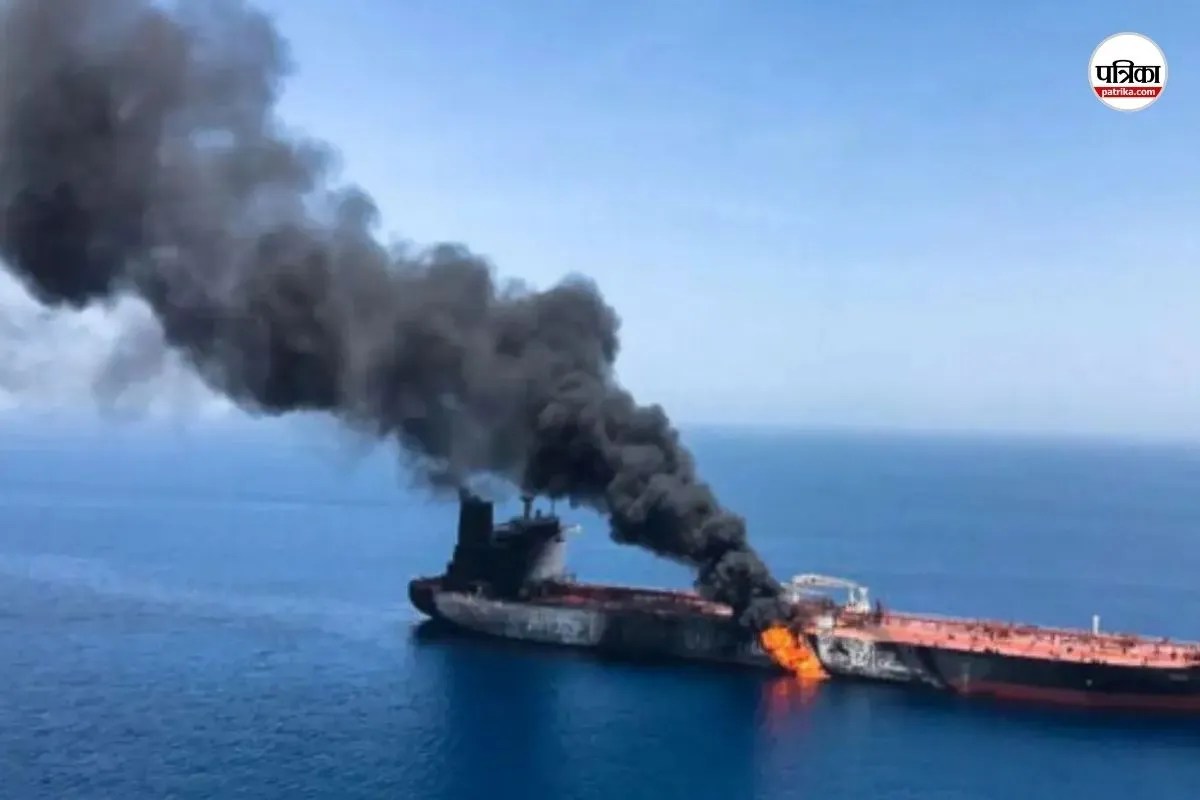
The headlines framed it as a bizarre footnote to a high-stakes counter-terrorism raid. A suspect in the botched RAF Fairford incident reportedly dialed 999 himself shortly before his arrest, sparking breathless media speculation about cold feet, amateurism, or bizarre psychological slips.
Commentators rushed to treat this detail as proof of ineptitude. The narrative wrote itself: bumbling operatives caught in the act, panicking, and accidentally summoning the very authorities hunting them.
It is a comforting story. It reassures the public that modern state-backed threats are managed by clowns, and that our perimeter defenses work like clockwork.
It is also entirely wrong.
Focusing on the absurdity of a suspect calling emergency services misses the actual mechanics of modern security failures. The real story at RAF Fairford is not about an individual's panic. It is about an intelligence apparatus that has grown so bloated on theater, speculation, and retroactive narrative-building that it completely misreads low-level operational reality.
The Lazy Consensus Of The Competence Myth
When multiple suspects are arrested near a sensitive military installation housing strategic assets, the default institutional reflex is to immediately scale the event into a grand geopolitical thriller. State officials point fingers across borders, intelligence sources brief compliant journalists about foreign proxies, and the public is fed a diet of imminent danger.
Then reality trickles out. The vehicles contain little more than petrol containers. The suspects are bailed. The grand conspiracy dissolves into a messy gray area of low-level criminal activity, local trespassing, or chaotic probe operations that bear little resemblance to an elite strike force.
Yet, the 999 call remains the centerpiece of the media circus. Analysts treat it as an anomaly.
Imagine a scenario where an operation was never meant to be a kinetic attack in the traditional sense. Probe tactics—testing response times, mapping camera blind spots, and forcing a visible blue-light reaction—rely on triggering a state response. If a suspect picked up a phone to call emergency services, it wasn't necessarily because they had an existential crisis in a Gloucestershire lane. It was just as likely an intentional stress-test of dispatch protocols, designed to measure how quickly rural constabularies talk to counter-terrorism command hubs.
When you view the incident through the lens of institutional reconnaissance rather than Hollywood terrorism, the 999 call stops looking like a blunder and starts looking like data collection.
Why Perimeter Defenses Fail The Reality Test
We have built a national security infrastructure obsessed with high-end threats while remaining chronically vulnerable to the mundane. Strategic airbases like RAF Fairford represent billions in tactical capability, yet their immediate perimeters rely on a patchwork of sleepy rural roads, civilian reporting networks, and reactive policing.
When a farmer spots suspicious vans at two in the morning, the system scrambles. Households are evacuated. COBRA meets. Politicians issue grave statements.
This is where the theater peaks. Every level of government has a perverse incentive to validate the threat. Admitting that an incident near a vital base might just be chaotic local offending or a cheap reconnaissance probe is bad for budgets and worse for political optics.
Consequently, normal criminal behavior gets swept into the counter-terrorism machinery, and real security blind spots are ignored beneath a mountain of press releases. If an adversary wants to map the friction points of British emergency response, they do not need to hack a mainframe. They just need to park a van near a runway and watch how many hours it takes for the bureaucratic machine to figure out who is in charge.
Dismantling The Intelligence Spectacle
I have watched organizations blow millions on elaborate threat-detection systems while ignoring the simple fact that their human operators are drowning in noise. When every irregular vehicle becomes a state-sponsored terror plot, nothing is a terror plot.
The rush to tie every minor security breach at military installations to foreign state actors is an intellectual lazy tax. It saves analysts from doing the hard, grinding work of investigating local illicit economies, petty supply-chain theft, and low-level gray-zone disruptions.
When a suspect calls 999, stop looking for cinematic irony. Look at the system's reaction time. Look at the panic buying of political narratives. Look at how easily an open democratic society can be forced to lock down its own infrastructure by the mere suggestion of a threat.
The vulnerability isn't that someone picked up a phone. The vulnerability is that we are entirely too eager to write their script for them.