The mainstream media lives for the glowing yellow radiation symbol. Every time a missile lands within a zip code of a Ukrainian nuclear site, the press drafts a collective obituary for the European continent. We saw it with Chornobyl in the opening days of the 2022 invasion. We saw it with Zaporizhzhia. And we see it every time a low-level waste storage facility or an electrical substation near a reactor takes shrapnel.
The narrative is always the same: a catastrophic, continent-spanning fallout cloud is just one stray rocket away.
This is not just lazy journalism. It is a profound misunderstanding of nuclear physics, structural engineering, and the actual mechanics of modern warfare. The "lazy consensus" screams that Ukraine’s nuclear waste facilities are ticking time bombs waiting to unleash a second Chornobyl.
The reality? It is physically impossible for these facilities to cause a continental disaster. The real threat to Ukraine’s nuclear infrastructure is not a catastrophic explosion; it is the mundane, slow-motion strangulation of its power grid. While pundits hyperventilate over spent fuel rods, they are completely missing the actual vulnerability.
The Myth of the Spent Fuel Mushroom Cloud
To understand why the public panic is manufactured, you have to look at what is actually inside a nuclear waste storage facility. The media uses the phrase "nuclear waste" as a catch-all term designed to evoke images of glowing green sludge from The Simpsons.
In the real world, nuclear waste at these sites falls into two categories: low-level waste (such as contaminated clothing, tools, and medical equipment) and high-level waste (spent nuclear fuel).
Let’s dismantle the panic around both.
1. Low-Level Waste Facilities Are Basically Heavy-Duty Junk Yards
When a strike hits a localized low-level waste repository—like the Radon facility near Kyiv early in the conflict—the headlines scream about "nuclear strikes." What they fail to mention is that the radioactive inventory at these sites is incredibly low. If a missile hits a warehouse full of contaminated lab coats, you get a localized fire and some contaminated debris within a radius of a few hundred meters. You do not get a cloud drifting over Berlin. The risk to the public is effectively zero.
2. Spent Fuel Casks Are Literal Fortresses
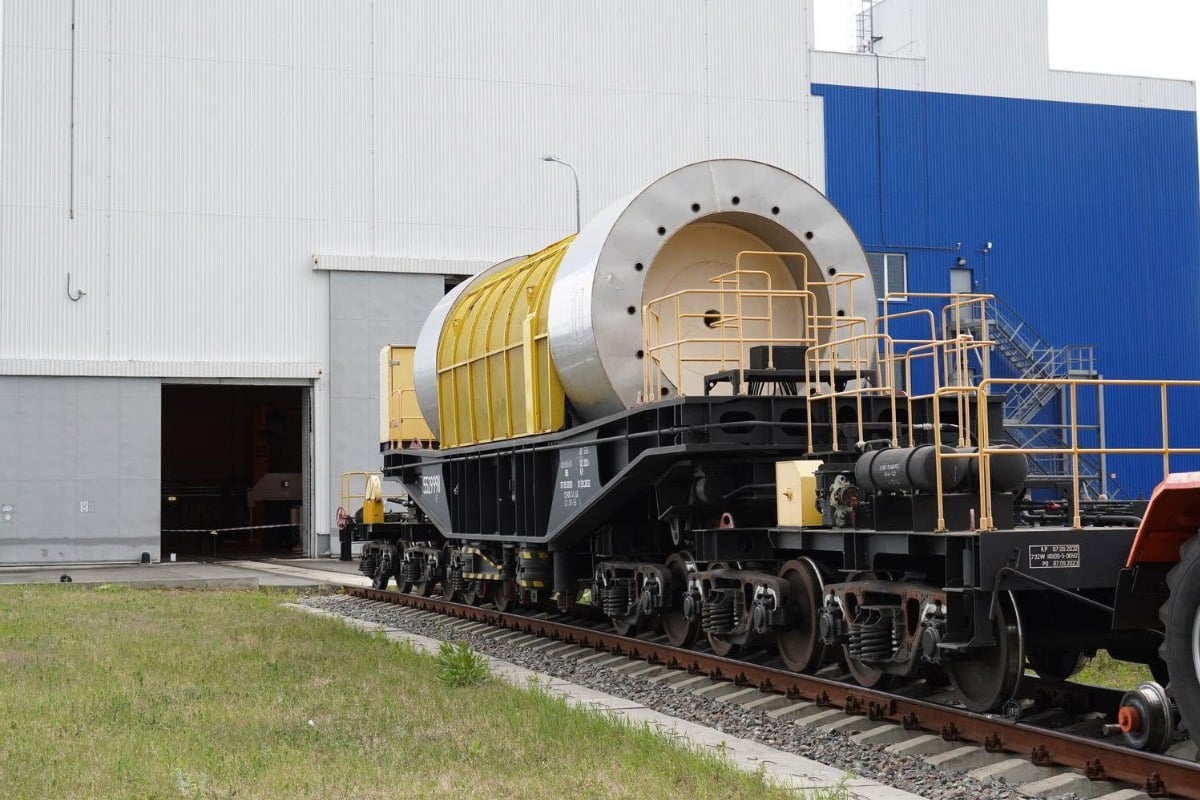
The high-level waste—the spent fuel rods—is stored in Dry Cask Storage Systems (DCSS). If you want to understand how indestructible these things are, stop reading defense blogs and look at the engineering specifications from the International Atomic Energy Agency (IAEA) or the U.S. Nuclear Regulatory Commission.
These casks are not thin metal drums. They are massive, multi-layered cylinders constructed from inner shells of thick steel, wrapped in feet of high-density reinforced concrete, and sealed with massive bolted lids. They are engineered to survive:
- Direct hits from commercial airliner crashes.
- Temperatures exceeding 800 degrees Celsius for sustained periods.
- Explosive overpressures that would flatten a standard brick building.
Imagine a scenario where a Russian Tochka-U ballistic missile scores a direct hit on a dry cask storage pad, like the one at the Zaporizhzhia Nuclear Power Plant. The kinetic energy and explosive force would undoubtedly scar the concrete, destroy monitoring equipment, and create a massive crater. But it would not vaporize the spent fuel. To turn spent fuel into an atmospheric contaminant, you need a sustained, high-temperature driver—like the graphite fire that burned for days at Chornobyl.
Spent fuel in dry casks is cold. It is cooled by passive air flow. It cannot sustain a chain reaction. It cannot explode. Even if a cask is cracked, the contamination is localized to the immediate vicinity. It is a hazardous material cleanup operation, not an apocalypse.
The Real Vulnerability: The Unsexy Grid
While the world stares at the waste casks, the true crisis is happening in the transformer yards. Nuclear power plants are massive energy producers, but they are also massive energy consumers. They require constant, uninterrupted electrical power from the external grid to run their cooling pumps, instrumentation, and safety systems.
When Russia targets Ukraine’s electrical infrastructure—the substations, the transmission lines, the switchyards—they are trying to force Ukrainian nuclear plants into "station blackout" mode.
When a nuclear plant loses external power, it enters a race against time:
[External Grid Failure]
       │
       ▼
[Emergency Diesel Generators Activate] (Fuel limited to days/weeks)
       │
       ▼
[Cooling Pumps Maintain Stable Temperatures]
       │
       ▼
[If Generators Fail -> Core Melt Risk / Spent Fuel Pool Boiling]
This is exactly what happened at Fukushima Daiichi in 2011. The earthquake didn't destroy the reactors; the tsunami wiped out the backup diesel generators and switchgear, cutting off the cooling systems.
If you want to worry about Ukrainian nuclear safety, stop looking at the missile strikes on waste dumps. Start looking at the diesel fuel supply lines for the backup generators at Energoatom’s operating stations. If a plant runs out of diesel while disconnected from the grid, the water in the spent fuel pools (where fuel is kept before it goes into the concrete dry casks) will eventually boil off. That is where a real radiological release could happen, not from a struck concrete cask.
Why the "Nuclear Terror" Narrative Persists
If the physics and engineering point away from a catastrophic waste explosion, why does every news outlet run with the most alarmist angle possible? Because it serves the political calculus of every party involved.
- The Russian Strategy: By striking near these facilities or occupying them, Moscow leverages the West’s deep-seated, irrational radiophobia. They don't need to detonate a weapon; they just need to imply that they might cause an accident, using psychological leverage to slow down Western military aid.
- The Ukrainian Communication Strategy: Kyiv naturally highlights these strikes to emphasize the reckless nature of the Russian invasion. Framing the conflict as a threat to global nuclear safety is a highly effective way to maintain international attention and demand advanced air defense systems like the Patriot or SAMP/T.
- The Media Business Model: "Substation damaged, diesel generators functioning as designed" does not generate clicks. "Nuclear waste facility struck by Russian missiles" drives millions of views.
The Trade-off of Correcting the Narrative
There is a risk in pointing out that these facilities are tougher than people think. The moment you say "a strike on a nuclear waste site won't cause a global disaster," cynics accuse you of minimizing war crimes or downplaying the danger of operating reactors in a war zone.
Let’s be completely clear: firing missiles at or near any nuclear facility is an act of gross irresponsibility. It violates every established international norm, including Article 56 of Protocol I of the Geneva Conventions.
But panicking over the wrong threat makes us stupid. When Western policymakers base their escalatory thresholds on the fear of a fictional nuclear waste explosion, they make poor strategic decisions. They focus air defense assets on protecting concrete casks that can take a beating, rather than protecting the fragile electrical substations that keep the entire system alive.
Stop asking if a Russian missile will turn Kyiv into a radioactive wasteland via a waste dump strike. The answer is no. Start asking how long Ukraine's energy grid can survive a systematic war of attrition before the backup generators run out of fuel. That is the question that matters. Everything else is just noise.