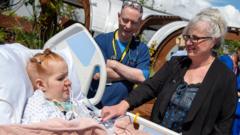
Hospitals are building open-air intensive care units on their roofs because traditional, windowless ICU design actively harms critically ill patients. Prolonged confinement in sealed, artificial environments triggers a psychological and physiological breakdown known as ICU delirium, which spikes mortality rates and extends hospital stays. By moving fragile, life-supported patients into managed outdoor spaces, clinical pioneers are addressing a systemic design flaw that has plagued modern medicine for half a century. This architectural shift is not a luxury wellness trend. It is a calculated, medical intervention designed to reduce sedation, accelerate weaning from ventilators, and fix a hospital infrastructure crisis that isolates patients from the basic biological cues necessary for survival.
The Hidden Cost of the Windowless Ward
For decades, the blueprint of the intensive care unit prioritized sterile containment and machine proximity over human biology. Architects built deep floor plates in hospital cores, locking the critically sickest patients away in fluorescent-lit, windowless cubicles. The air is scrubbed, the temperature is locked, and the ambient noise of alarms is constant.
This environment inflicts severe cognitive trauma. Within days, the brain loses track of night and day. ICU delirium affects up to 80% of mechanically ventilated patients, manifesting as terrifying hallucinations, acute confusion, or profound withdrawal.
[Traditional ICU Isolation] ──> [Circadian Disruption] ──> [Severe ICU Delirium] ──> [Extended Ventilator Reliance]
Delirium is not just a temporary mental state. It is associated with a threefold increase in the risk of death within six months of discharge. When a patient forgets what it is like to be outside, their body begins to fail at a cellular level. The disruption of the circadian rhythm blunts the immune response, alters cortisol spikes, and delays wound healing.
Engineering Medicine Under the Open Sky
Taking a patient attached to a mechanical ventilator, intravenous lines, and continuous cardiac monitors to a rooftop is an operational nightmare. It requires more than just a nice patio. It demands a complete overhaul of mobile medical engineering.
To make an outdoor ICU functional, structural engineers must treat the rooftop as a clinical zone.
The Infrastructure Requirements
- Medical Gas Integration: Weatherproofed ports for oxygen, medical air, and vacuum lines must be built directly into structural pillars. Relying on portable cylinders creates an unacceptable failure point for long-duration exposure.
- Microclimate Shielding: Wind-tunnel effects on high-rise hospital roofs can dislodge critical tubing. Retractable, heavy-duty glass barriers are required to deflect shear winds while preserving natural light.
- Electromagnetic Integrity: Outdoor power columns must deliver continuous, uninterrupted clean energy to life-support systems, shielded against moisture and temperature swings from 10°C to 35°C.
Consider a hypothetical scenario where a clinical team moves a patient on ECMO (extracorporeal membrane oxygenation)—a machine that pumps and oxygenates a patient's blood outside the body—to an outdoor deck. If the ground surface is uneven, vibration can cause catastrophic line dislodgement. If the area lacks instant proximity to a dedicated elevator, a sudden cardiac arrest outdoors becomes fatal. Therefore, these spaces require dedicated resuscitation bays built right next to the garden beds.
The Financial Logic Behind the Concrete Garden
Hospital administrators rarely approve multi-million dollar structural retrofits out of pure altruism. The push for rooftop clinical spaces is increasingly driven by hard economic realities.
| Metric Affected by Delirium | Standard ICU Stays | Rooftop/Mobility Integrated ICU |
|---|---|---|
| Average ICU Days | 7–9 Days | 5–6 Days |
| Sedation Costs per Patient | High (Continuous Infusions) | Low (Targeted Intermittent) |
| Ventilator Disconnection Time | Delayed by cognitive agitation | Accelerated by alert, cooperative state |
| Long-Term Cognitive Decline | Common (Post-ICU Syndrome) | Significantly Mitigated |
Every day a patient languishes in an ICU bed costs a facility thousands of dollars in direct care and lost opportunity costs for elective surgical admissions. Delirium extends those stays. When clinicians use natural light and outdoor exposure to reorient a patient, they can reduce the need for heavy sedative drugs like propofol or dexmedetomidine.
A less sedated patient moves sooner. They participate in physical therapy while still on a ventilator. They breathe on their own faster. The financial return on investment comes from freeing up critical care capacity by getting patients out of the hospital sooner.
The Liability and Safety Paradox
The primary argument against open-air critical care is safety. Infection control departments frequently object to exposing open wounds or central venous catheters to outdoor air, citing the risk of airborne fungal spores like Aspergillus.
However, the data suggests these fears are largely overstated when proper protocols are enforced. A patient with a closed chest or an intact surgical incision face minimal extra risk from clean, moving outdoor air compared to the stagnant biomes of indoor hospital corridors, which often harbor highly resistant bacteria.
The real risk lies in the transition phase. Moving a bed requires a minimum of three staff members: an ICU nurse, a respiratory therapist, and a physician or technician. During the ten-minute transit from the indoor bay to the roof, the patient is at their most vulnerable. If an IV line pulls out in a service elevator, the consequences are immediate. Hospitals navigating this paradigm are finding that the risk of transit is often lower than the guaranteed harm of prolonged sensory deprivation.
Overcoming the Institutional Skepticism
The greatest hurdle to implementing rooftop intensive care is not architectural or financial. It is cultural.
Medical training instills a deep desire for absolute environmental control. In an indoor ICU, every variable is managed. The light never changes, the air is filtered to exact specifications, and the patient is easily watched from a central nurse's station. Moving outside forces clinicians to accept a degree of unpredictability.
Change happens when frontline staff see the immediate clinical impact. When an agitated, combative patient who has been screaming for 48 hours instantly calms down upon feeling the wind on their face, the argument ends. The heart rate drops. The blood pressure stabilizes. This is not mysticism; it is neurobiology. The brain recognizes the vastness of an outdoor space, lowering sympathetic nervous system drive and reducing the physiological panic response that keeps patients trapped in a cycle of critical illness. Hospitals that refuse to adapt their infrastructure will continue to treat the body while inadvertently damaging the mind.