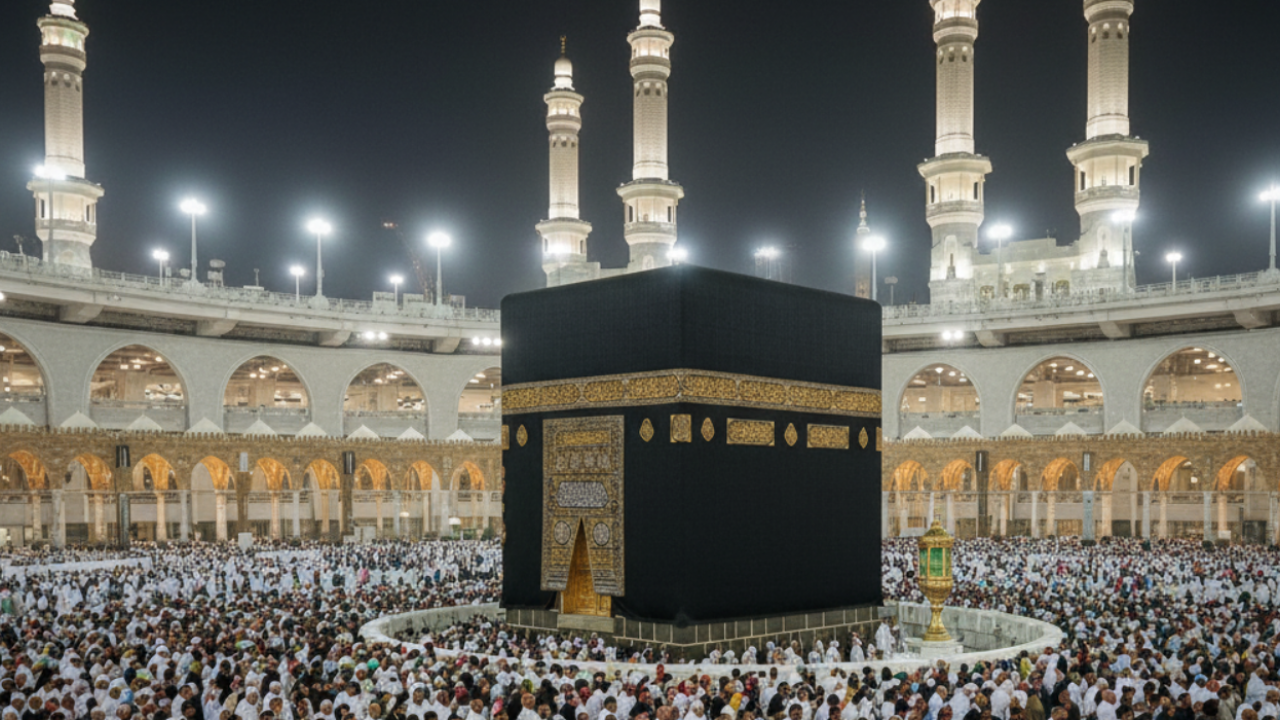
Fatima stared at her kitchen table in Jakarta, the wood grain blurred by a thin veil of tears. On the table sat a weathered leather envelope containing her life savings—a collection of small bills traded and tucked away over fifteen years. For Fatima, and millions like her, these notes weren't just currency. They were the physical manifestation of a lifelong promise to stand before the Kaaba in Makkah. But as she scrolled through her phone, the digital clock of Saudi Arabia’s Ministry of Hajj and Umrah began to tick with a cold, administrative precision.
The dates were set. The gates were closing.
Most people view a visa deadline as a mere administrative hurdle, a chore to be checked off between booking a flight and packing a suitcase. For the pilgrim, however, these dates represent the boundary between a spiritual homecoming and another year of longing. Saudi Arabia has officially announced the timeline for the current Umrah season, and for anyone holding that leather envelope or a digital confirmation, the margin for error has evaporated.
The Midnight Deadline
The Saudi Ministry has established a firm cutoff for Umrah visa applications: the 15th of Dhul Qadah. In the Gregorian calendar, this creates a pressurized window that demands immediate action. But the application is only the first hurdle. The more critical date—the one that keeps travel operators awake at night—is the exit deadline.
All pilgrims performing Umrah this season must depart the Kingdom by the 29th of Dhul Qadah.
Why does this matter so much? Because the lunar calendar does not wait for slow paperwork or delayed flights. As the crescent moon of Dhul Hijjah rises, the entire infrastructure of the Kingdom shifts its weight. The Umrah season must end so the Hajj season—the great pilgrimage—can begin. It is a logistical transition of biblical proportions. Imagine a city of millions attempting to swap its entire population in the span of a few days. That is the reality on the ground in Makkah and Madinah.
Consider the hypothetical case of Omar, a small business owner from Manchester. He booked his "budget-friendly" package through a third-party site that didn't emphasize the exit date. He arrived late in the month, hoping to soak in the quietude of the holy sites. If Omar stays even one day past the 29th of Dhul Qadah, he isn't just a tourist who overstayed a holiday. He becomes a statistical anomaly in a system designed for absolute flow. The penalties for overstaying are not just financial; they include potential bans that could prevent him from ever returning to the Kingdom.
The Invisible Machinery of Mercy
To understand these deadlines, one must understand the sheer scale of the movement. The Saudi authorities aren't being bureaucratic for the sake of power. They are managing the safety of the world. When the Umrah visa window shuts, it allows the Ministry to clear the space, sanitize the pathways, and reset the security protocols for the influx of Hajj pilgrims.
It is a choreographed dance of millions.
If you are planning your journey, the 15th of Dhul Qadah is your "point of no return." By this date, your digital footprint must be firmly lodged in the Nusuk platform. The Nusuk app has become the heartbeat of the modern pilgrimage. It is no longer enough to simply show up with a prayer rug and a heart full of hope. You need the QR code. You need the permit. You need to respect the slot.
The transition from Umrah to Hajj is like a tide going out so a tsunami of grace can come in. If you are caught in the middle, you risk being swept away by regulations that have become increasingly strict to prevent the overcrowding tragedies of decades past.
The Cost of Hesitation
There is a specific kind of anxiety that settles in the chest of a traveler who realizes they missed a window. It’s the "what if." What if the visa isn't processed in time? What if the flight is canceled on the 28th of Dhul Qadah?
The Ministry has been clear: the Umrah visa does not grant the right to perform Hajj. This is a common point of confusion that leads to heartbreak every year. Thousands of people arrive on an Umrah visa, thinking they can simply "stay over" for the Hajj rituals. They can't. The systems at the entry points—Jeddah, Madinah, and the land borders—are now integrated with AI that flags these discrepancies instantly.
If your visa says Umrah, your heart might be ready for Hajj, but the electronic gates will remain closed.
To navigate this, the smart pilgrim acts with the urgency of a desert traveler seeking an oasis before sunset. You don't wait for the 14th of Dhul Qadah to apply. You apply now. You ensure your passport has at least six months of validity—a standard rule that still trips up the most seasoned travelers. You ensure your vaccination records are uploaded and verified. These aren't just "facts." They are the keys to the kingdom.
A Journey of Seconds and Centuries
When Fatima finally clicked "submit" on her application, she wasn't just interacting with a database in Riyadh. She was participating in a tradition that spans fourteen centuries, now governed by the most advanced digital logistics on the planet.
The silence of the prayer hall in the early morning hours, the scent of oud in the streets of Madinah, and the cold marble under bare feet at the Kaaba—all of these experiences are protected by these deadlines. The dates exist so that the experience remains sacred rather than chaotic.
The clock is currently at 11:59 for many. The 15th of Dhul Qadah is approaching. The 29th is the hard ceiling.
For those who have waited a lifetime, like Fatima, these dates are the final test of patience and preparation. The leather envelope is empty now, the money spent on a ticket and a dream. All that remains is the flight, the prayer, and the hope that the departure gate doesn't close before the soul is ready.
The desert sun rises whether we are ready or not, and the moon will mark the end of the season with cold, celestial indifference to our excuses.
Fatima looked at her reflection in the darkened screen of her phone. She was no longer a woman in a kitchen in Jakarta. She was a pilgrim in waiting. The dates were clear. The path was set. The only thing left to do was move before the window turned back into a wall.