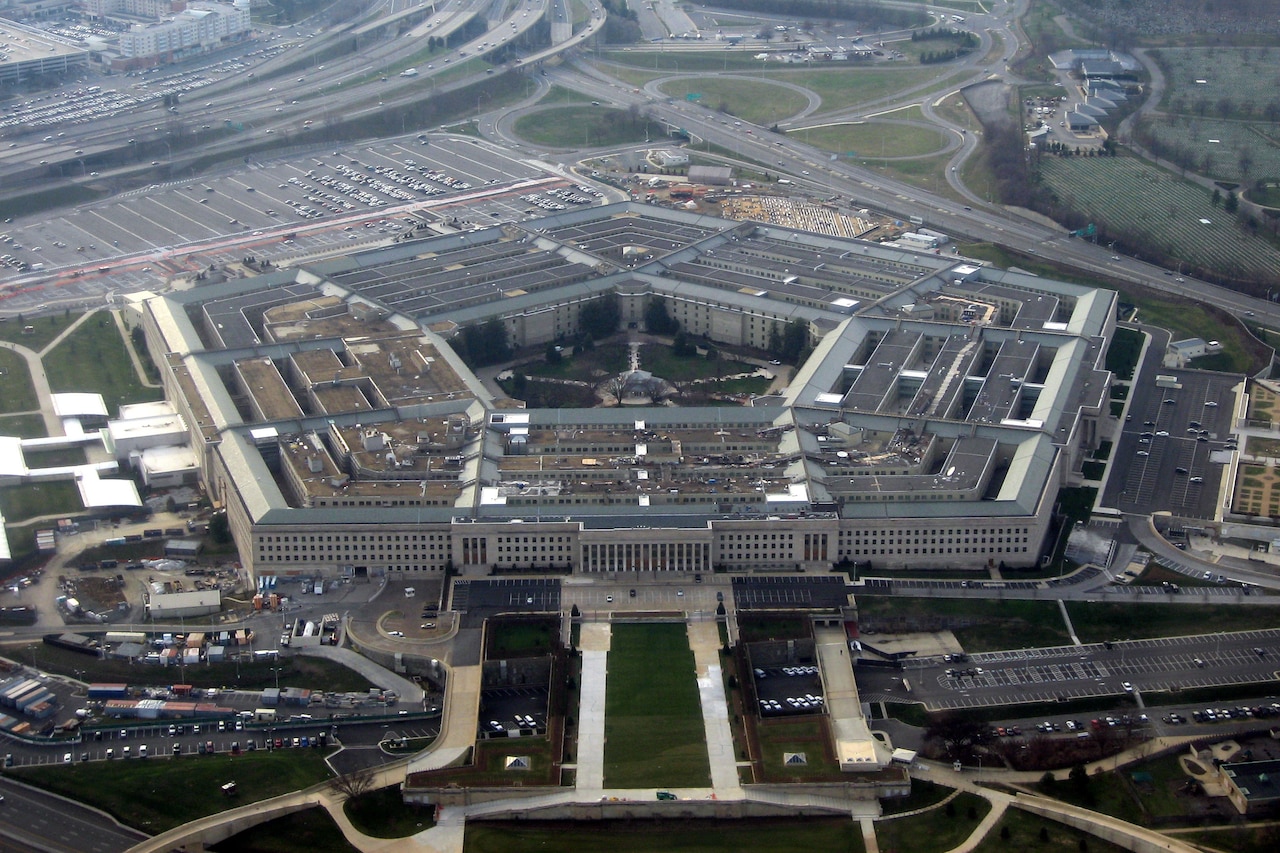
At three in the morning inside Cheyenne Mountain, the air tastes faintly of recycled ozone and stale dark-roast coffee.
For nearly seven decades, two nations have shared that exact same breath. Beneath two thousand feet of Colorado granite, Canadian and American officers sit elbow-to-elbow, watching the ceiling of the world on glowing green screens. They are the North American Aerospace Defense Command—NORAD—a binational nervous system built on a single, radical premise: that an attack on Ottawa is an attack on Washington, and a shadow crossing the Arctic ice is a shadow falling across every backyard from Anchorage to Miami. Read more on a related issue: this related article.
I spent four years working alongside defense analysts in northern Ontario, watching how that invisible architecture actually functions when the wind howls at forty below zero. You learn quickly in the High North that alliances aren't forged in marble halls or signed with ceremonial pens. They are bolted together in the dark by people who trust the person sitting next to them with their lives, their airspace, and their sovereign secrets.
Trust. More reporting by The Guardian delves into related views on this issue.
It takes sixty-eight years to build a reflex like NORAD, and only a handful of reckless sentences to make the muscle hesitate.
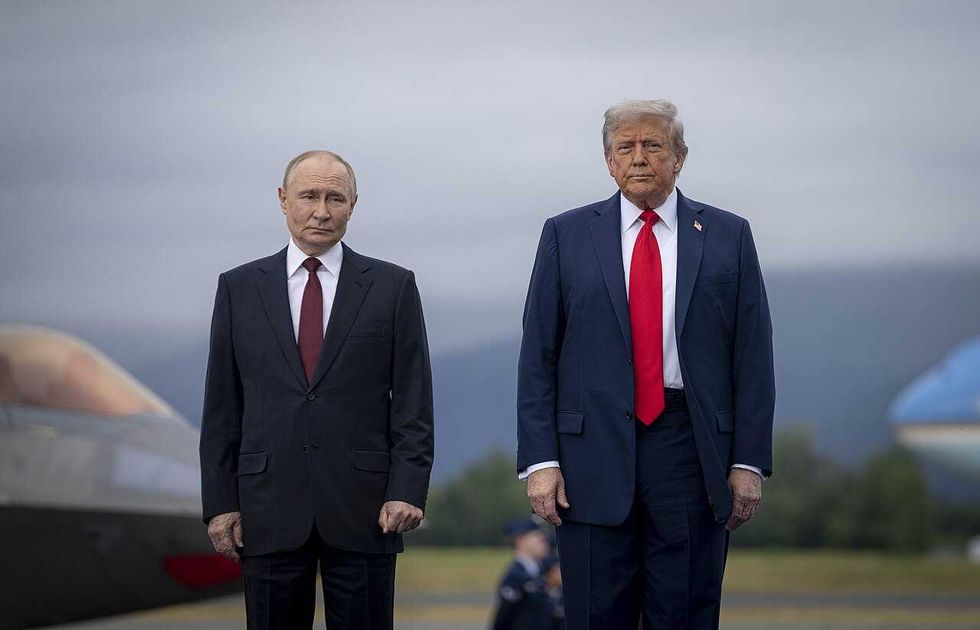
When Donald Trump publicly flirts with Vladimir Putin—praising the Russian autocrat's strategic cunning, casting doubt on Western intelligence agencies, and treating America’s oldest democratic neighbors like delinquent tenants—pundits in Washington usually treat it as political theater. They call it "playing footsie with Putin." They laugh at the phrasing, dissect the cable-news soundbites, and move on to the next news cycle by Tuesday.
Up north, nobody is laughing.
The Architecture of an Unspoken Promise
To understand what happens when the White House signals warmth toward the Kremlin while lobbing tariff threats and annexation jokes at Ottawa, you have to understand what NORAD actually is.
It is not a standard treaty. Most military alliances, including NATO, are promises to help after a crisis begins. NORAD is an integrated organ. Established in 1957 at the height of the Cold War, it is the only binational military command in the world. A Canadian general routinely commands American fighter jets; an American general routinely commands Canadian radar stations. If an unidentified aircraft crosses the Beaufort Sea at Mach 2, there is no time to call a parliament or convene a congressional committee. The command structure is fused at the bone.
Think of it like two neighbors who have spent decades building a shared firewall between their adjoining wooden houses, splitting the cost of the bricks, wiring their smoke detectors into a single alarm panel, and handing each other the spare keys to their front doors. Now imagine one neighbor standing on the front lawn, loudly admiring the arsonist down the street, while telling the other neighbor that their shared wall is a bad deal and maybe their house shouldn't even be independent.
You don't tear down the bricks overnight. You just stop handing over the spare keys.
Consider a hypothetical scenario—one that defense planners in Ottawa and Colorado Springs quietly game out behind closed doors today. Let’s call her Major Sarah Tremblay, a Canadian intelligence liaison stationed in the continental command center. For ten years, Sarah’s job has been absolute candor: feeding raw signals intelligence gathered from Canada’s vast Arctic listening posts directly into the American defense grid.
Suddenly, the political winds in Washington shift. The Commander-in-Chief openly questions the value of traditional alliances, praises Vladimir Putin’s worldview, and signals that Russian territorial ambitions might be negotiable. Sarah doesn't receive a dramatic order to pack her bags. Instead, a subtle, freezing fog rolls into the room. Her superiors in Ottawa begin asking quiet, agonizing questions. If we share our most sensitive Arctic surveillance data today, where does it end up tomorrow? If Russia tests our northern perimeter with a long-range bomber, will the White House back the interception, or will it ask what Canada has done for Washington lately?
That hesitation is the real crisis. In aerial defense, where hypersonic glide vehicles can cover a thousand miles in ten minutes, a three-minute political hesitation is indistinguishable from surrender.
Why the Ice Is Melting Faster Than the Politics
The timing could not be more perilous, because the physical geography separating North America from Russia is disappearing.
For most of human history, the Arctic Ocean was an impenetrable fortress of multi-year sea ice—a natural moat that protected the northern flank of both Canada and the United States. Today, climate change is melting that moat at nearly four times the global average. New shipping lanes are opening. Rare earth minerals, oil reserves, and pristine fishing grounds are becoming accessible for the first time in human memory.
Russia saw this coming twenty years ago. While Washington was bogged down in desert wars in Iraq and Afghanistan, Moscow embarked on the largest military buildup in the Arctic since the collapse of the Soviet Union. Russia reopened dozens of Cold War-era bases, built a fleet of nuclear-powered icebreakers that dwarfs the rest of the world combined, and deployed advanced S-400 air defense systems and hypersonic missiles along its northern coastline.
Right now, the Russian Northern Fleet sits just across the polar cap, armed with submarines capable of launching nuclear warheads over the North Pole directly toward the American heartland.
What stands between those submarines and the cities of the Midwest? Not a wall on the southern border. It is the North Warning System—a chain of fifty-four unmanned radar stations stretching across three thousand miles of desolate Canadian tundra, from the Yukon to Labrador.
Those radars are aging. Built in the late 1980s, they struggle to detect modern stealth aircraft and low-flying cruise missiles. Modernizing them—replacing decaying Cold War dishes with over-the-horizon radar and space-based sensors—is a multibillion-dollar megaproject that requires seamless, decades-long financial and technological commitment between Washington and Ottawa.
I remember standing near one of those remote radar domes outside Cambridge Bay, Nunavut, a few winters ago. The silence out there isn't just an absence of noise; it is a physical weight pressing against your eardrums. Looking at that solitary white golf ball sitting on the frozen tundra, you realize a profound truth that rarely penetrates the Beltway: the United States cannot defend its own homeland without Canadian territory. Geography makes it mathematically impossible. To intercept a Russian missile before it reaches Chicago or New York, you have to see it over Nunavut.
The High Cost of Performative Loyalty
So why would any American leader jeopardize the very shield protecting American cities?
The answer lies in a fundamental misunderstanding of how power works. In Trump’s transactional worldview, every alliance is a ledger sheet. If a partner isn't paying an arbitrary percentage of GDP, or if a trade balance shows a deficit, the relationship is framed as a swindle. Meanwhile, strongmen like Putin are viewed through a lens of personal fascination—leaders unburdened by parliaments, free presses, or messy democratic consensus.
I won't pretend the mechanics of defense spending aren't frustrating. For years, successive Canadian governments did underinvest in their military, leaning heavily on the American security umbrella while letting their own procurement budgets languish. Americans had every right to demand that Ottawa step up, pay its fair share, and modernize its northern infrastructure. Pushing an ally to carry more weight is healthy statecraft.
Humiliating an ally while cozying up to the adversary you built the alliance to deter is something else entirely.
When Trump suggests that Canada should become the "51st state," or threatens crippling twenty-five percent tariffs that would crater the integrated North American auto and energy sectors, he isn't forcing Ottawa to spend more on defense. He is forcing Canadian leaders to look at the United States as a strategic risk factor rather than a guarantor of security.
Look at the psychological shift already unfolding across the border. In Toronto, Montreal, and Vancouver, the conversation around defense has transformed overnight. For decades, Canadian voters resisted military spending because they believed their geography and their American neighbors made them untouchable. Now, Canadians are watching Washington flirt with the Kremlin while threatening economic warfare against Ottawa.
The result isn't submission. It is diversification.
Quietly, urgently, Canadian defense officials are looking across the Atlantic and the Pacific. They are exploring deeper intelligence-sharing agreements with European allies, reconsidering single-source American defense contracts like the F-35 fighter jet program, and asking whether their sovereign survival requires hedging against Washington’s unpredictability.
This is how great alliances die—not with a dramatic declaration of war, but with a thousand quiet bureaucratic pivots. A procurement contract goes to a European firm instead of an American one. An intelligence briefing gets watered down before crossing the border. A joint Arctic exercise gets scaled back because the political optics are too toxic back home.
What Putin Sees When He Looks at North America
In Moscow, Vladimir Putin doesn't need to fire a single shot to win this round.
For decades, the primary objective of Russian foreign policy has been simple: fracture Western unity. In the Kremlin’s strategic doctrine, the United States is only an insurmountable superpower when it acts as the head of a cohesive coalition of wealthy, technologically advanced democracies. Alone, even the strongest nation has blind spots. Together, the North Atlantic and North American alliances form a geopolitical fortress.
When Putin watches an American president praise his leadership, echo Kremlin talking points about NATO, and pick public fights with Canada, he sees the fortress cracking from the inside.
Consider the sheer absurdity of the trade-off. What does the United States gain from playing footsie with Putin? Russia’s economy is roughly the size of Italy’s, hollowed out by sanctions, demographic collapse, and a grueling war of attrition in Ukraine. Russia buys almost nothing from American factories. It shares no democratic values with the American people. Its intelligence services actively target American infrastructure, election systems, and military personnel.
Now weigh that against what America risks losing in Canada. Canada is the largest export market for thirty-six U.S. states. Over two and a half million dollars' worth of goods cross the U.S.-Canadian border every single minute. Canadian crude oil, uranium, critical minerals, and hydroelectricity keep American lights on and American defense factories running. And when American towers fell on September 11, 2001, it wasn't Moscow that opened its airports to stranded American planes and welcomed terrified American travelers into living rooms from Gander to Halifax.
It was Canada.
That history matters. When you stand in the snow in northern Ontario or look up at the radar screens in Colorado Springs, you realize that national security isn't an abstract game played on a chessboard by charismatic strongmen. It is a living web of human trust, painstakingly maintained by ordinary people working night shifts in cold places so the rest of us can sleep soundly.
The View from the Frozen Perimeter
I still think about an old Royal Canadian Air Force technician I met in North Bay, Ontario, right before I left the region. He had spent thirty years maintaining radar relays in places where the sun disappears for two months every winter. His hands were permanently chapped from the dry Arctic air, and he wore a faded NORAD patch sewn onto the shoulder of his parka—half Maple Leaf, half Stars and Stripes, stitched together seamlessly down the center.
He told me that the hardest part of his job wasn't the cold or the isolation. It was the constant battle against frost heave—the way freezing water slowly pushes steel foundations out of the earth, millimeter by millimeter, until an entire tower leans so far it can no longer hold a signal. You don't notice it happening day to day. Everything looks solid until the moment the connection drops.
That is where North American defense stands right now.
The radar domes are still spinning on the tundra. The screens inside Cheyenne Mountain are still glowing green. American and Canadian officers are still drinking the same bitter coffee at three in the morning, watching the northern horizon for shadows.
Beneath their boots, though, the ground is shifting. Every careless compliment paid to an autocrat in Moscow, every threat leveled at a neighbor in Ottawa, drives another wedge of ice beneath the foundation. You can pull two nations apart one millimeter at a time, convincing yourself that the structure is too big to fall—until the night a shadow crosses the polar ice, and the signal finally goes dark.