Silence.
That is what hits you first inside a Massachusetts superior courtroom before the gavel drops, a heavy, pressurized quiet that smells faintly of floor wax, damp wool coats, and decades of grief. For anyone who has ever sat on those hard wooden benches waiting for a judge to decide the fate of a broken family, time stops moving in straight lines. It pools at your ankles.
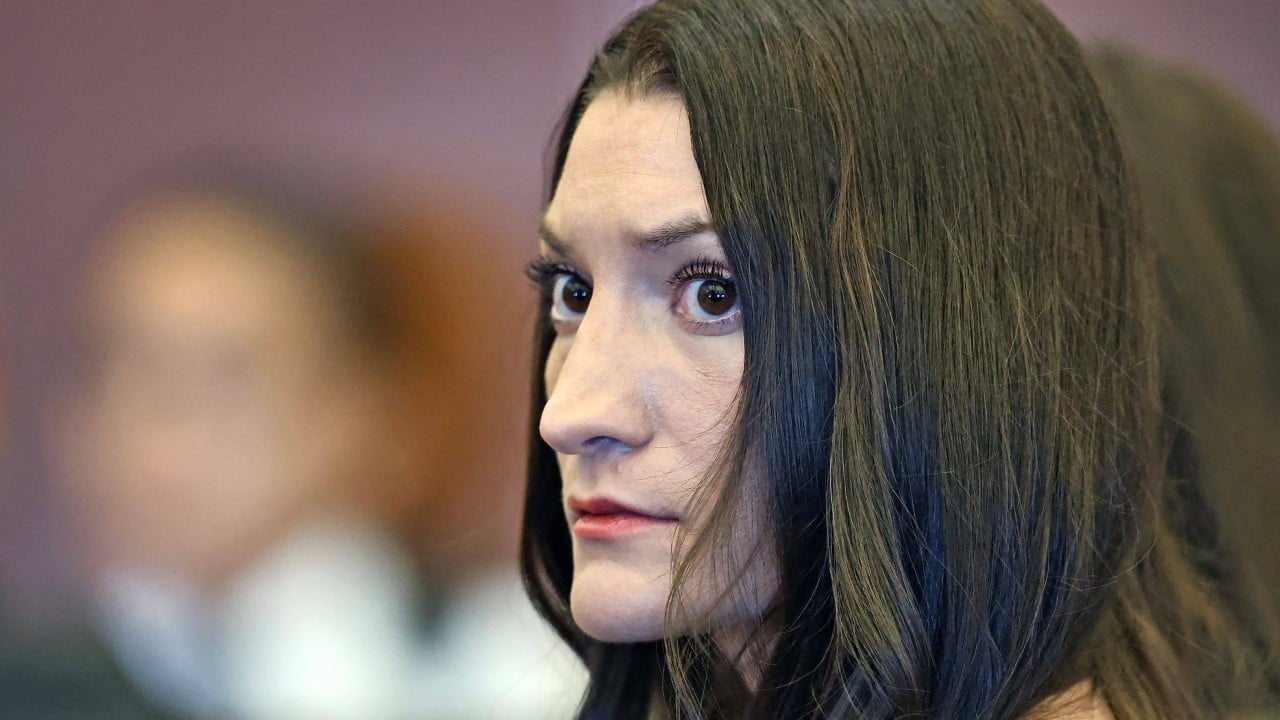
When Lindsay Clancy returns to court to seek the dismissal of charges that she killed her three young children, the fluorescent lights of the justice system cast a stark, unforgiving glare over a tragedy that refuses to fit neatly into a legal brief. Outside the courthouse doors, the headlines reduce a shattered universe into a single, sharp line of type: a mother, three lost lives, a motion to dismiss. Inside, the air is thick with questions that statutes were never designed to answer.
The Architecture of a Motion to Dismiss
To understand why a defense team stands before a judge asking to throw out indictments in a case of unimaginable loss, you have to strip away the television drama of a criminal trial and look at the cold machinery of pretrial law. A motion to dismiss is not a verdict of innocence. It is a challenge to the foundation of the prosecution's house before the roof is even raised.
In the Commonwealth of Massachusetts, prosecutors secure indictments through a grand jury—a closed-door proceeding where the state presents its evidence to ordinary citizens to establish probable cause. Under settled legal precedent, specifically the standards established in cases like Commonwealth v. McCarthy and Commonwealth v. O'Dell, a grand jury must hear enough evidence to justify an arrest, and that evidence cannot be tainted by false, deceptive, or unfairly impaired testimony that distorts the truth.
Consider what happens next when a defense attorney files a motion to dismiss. They are arguing one of two fundamental flaws. Either the evidence presented to the grand jury failed to meet the basic legal threshold for the charges brought—first-degree murder, strangulation, assault and battery with a dangerous weapon—or the integrity of the grand jury process itself was compromised because critical, exculpatory context was withheld or mischaracterized.
Think of a grand jury presentation like a photograph taken through a keyhole. The law allows the prosecutor to choose where to aim the camera, and they do not have to show every corner of the room. Yet if the prosecutor crops the image so tightly that a blurry shadow looks like a weapon when a wider angle would show a medical crisis, the court has a duty to intervene.
The Invisible Fracture Inside Postpartum Psychosis
We want monsters. Monsters are comforting because they live in the dark, far away from our own kitchen tables, our own medicine cabinets, our own sleepless nights. If a crime is committed by pure evil, we are safe by virtue of being decent people.
What happens when the person sitting at the defense table was, by every account from neighbors, colleagues, and her own husband, a devoted labor and delivery nurse who loved her children fiercely?
Here is where the clinical reality of severe postpartum psychiatric illness collides head-on with the blunt instrument of criminal intent. To convict someone of first-degree murder in Massachusetts, the state must prove beyond a reasonable doubt that the defendant acted with deliberate premeditation or extreme atrocity or cruelty—and crucially, that she possessed the mental capacity to form that intent.
To grasp how a mind can turn against everything it loves, imagine a house whose internal wiring has suddenly reversed polarity. You flip the switch expecting light in the nursery, and instead, an electrical fire erupts inside the walls. To an outsider standing on the sidewalk, the house is simply burning down. To the person trapped inside, the switches no longer obey the laws of physics.
Postpartum psychosis is rare, striking roughly one to two out of every thousand mothers after childbirth. Unlike the far more common "baby blues" or even severe postpartum depression, psychosis severs a person's tether to shared reality. Hallucinations, paranoid delusions, rapid mood swings, and severe confusion take over the command center of the brain. In the weeks leading up to January 2023 in Duxbury, Massachusetts, Lindsay Clancy was reportedly prescribed a dizzying cascade of psychiatric medications—at least a dozen different drugs over a matter of months—while seeking inpatient and outpatient care for severe mental distress.
I remember the first time I sat beside a family member in a psychiatric intake unit, watching the fluorescent hum reflect off linoleum floors while a triage nurse read down a list of prescriptions that contradicted one another like warring generals. You realize in that moment that modern medicine, for all its brilliance, often treats the postpartum brain like a locked safe—spinning the dial left, then right, adding a sedative here, an antidepressant there, hoping the tumblers click before the structure gives way.
What the Legal Battle Really Tests
When Lindsay Clancy's defense attorneys step up to the lectern to argue for dismissal, they are navigating a treacherous legal terrain. Under Massachusetts law, questions of criminal responsibility—what the public colloquially calls the insanity defense—are almost always reserved for a trial jury, not a judge ruling on a pretrial motion. Under the McHoul standard, a defendant is not criminally responsible if, at the time of the conduct, as a result of a mental disease or defect, she lacked substantial capacity either to appreciate the criminality of her conduct or to conform her conduct to the requirements of law.
So why push for dismissal now?
Because the grand jury sits at the gateway of the entire prosecution. If the defense can show that the evidence laid before the grand jurors lacked sufficient proof of the specific intent required for first-degree murder, or that the prosecution omitted glaring, undeniable psychiatric evidence in a way that misled the panel, a judge has the authority to pare back the charges or dismiss indictments outright.
Look closely at the timeline prosecutors have relied upon: the alleged online searches for ways to kill, the phone call that sent her husband Patrick Clancy out of the house to pick up takeout food and medication, the use of exercise bands. To a prosecutor, those steps look like calculation—the classic footprint of deliberate premeditation.
To a forensic psychiatrist, those very same actions can look entirely different. Delusional thinking is rarely chaotic on the surface; it is often terrifyingly methodical. A person gripped by command hallucinations or severe psychotic paranoia can plan, drive, speak calmly on a phone, and execute a sequence of actions with chilling precision, all while operating inside a waking nightmare where they believe they are saving their children from a fate worse than death.
Two observers looking at the exact same set of facts. One sees cold strategy. The other sees a catastrophic neurological collapse.
The Weight Carried by the Living
In any courtroom drama, the cameras linger on the accused, searching for a flinch, a tear, a flicker of recognition. Yet the true gravitational center of the room belongs to the absent and the surviving.
Cora was five. Dawson was three. Callan was eight months old.
Their names are not legal concepts. They are backpacks left by a mudroom door, half-finished drawings taped to a refrigerator, the specific weight of a sleeping toddler against a shoulder at two in the morning. No motion to dismiss, no psychiatric evaluation, no appellate ruling can ever restore a single breath to those three children.
And then there is Patrick Clancy, the father who walked back into his Duxbury home with takeout bags in his hands and found silence where laughter should have been. Days after the tragedy, he published a statement forgiving his wife, describing the real Lindsay as a woman defined by kindness and maternal devotion before illness hollowed her out. That act of public grace stunned a culture addicted to outrage, forcing millions of strangers to confront a question they desperately wanted to avoid: how do you punish someone who is already serving a life sentence inside her own memory?
Legally, Patrick Clancy's forgiveness has zero bearing on the Commonwealth's case. Crimes are prosecuted in the name of the state, not individual victims, because society asserts a collective interest in accountability and the preservation of human life. A district attorney cannot simply drop murder charges because a grieving spouse asks for mercy.
Yet culturally and emotionally, his words hang over every hearing like a second indictment—not of the defendant, but of how poorly we understand maternal mental health until it ends in catastrophe.
Why This Hearing Matters Beyond One Town
History shows that courts struggle mightily when medicine moves faster than statutory law. For centuries, Anglo-American jurisprudence treated madness as a binary switch: either you were a raving lunatic incapable of tying your own shoes, or you were a rational actor fully accountable for every choice. Modern neuroscience has demolished that binary, revealing a spectrum of acute brain dysfunction where perception, impulse control, and reality testing fracture under hormonal and chemical storms.
Still, the law moves at the pace of glaciers. Unlike the United Kingdom, which enacted the Infanticide Act more than a century ago—recognizing that a mother whose mind is disturbed by the effects of giving birth or lactation should face manslaughter charges and psychiatric treatment rather than a murder conviction—the United States largely forces these tragedies through the same narrow funnel as gang shootings and contract killings.
Every time a case like Lindsay Clancy's returns to a courtroom motion session, that structural mismatch groans under the strain. Whether a judge denies the motion and sends the case barreling toward a high-stakes jury trial, or trims the indictments based on the grand jury record, the ruling will ripple outward into hospital maternity wards, psychiatric clinics, and legislative chambers across the country.
A mother sitting alone in a darkened bedroom at 3:00 a.m., terrified by thoughts she cannot confess to her pediatrician because she fears someone will take her baby away, is watching how this society treats a mind that breaks.
Outside the courthouse in Plymouth County, the wind rattles the bare branches against the brick facade, and reporters adjust their microphones on the concrete steps, waiting for a clerk to read a ruling into the record. Inside, a woman sits motionless in a wheelchair, flanked by attorneys, facing a ledger that no human court can ever truly balance.


