Smell.
That is the first thing that hits you when you walk past the loading dock of a coastal processing plant at five in the morning. It is not the crisp, briny scent of a postcard vacation. It is heavy, metallic, and unapologetic—the aroma of forty tons of Atlantic cod and haddock meeting a stainless-steel filleting line.
For decades, we have looked at that dock and seen a miracle of modern food logistics. White, boneless fillets glide onto Styrofoam trays, wrapped in plastic, destined for supermarket coolers thousands of miles inland. We celebrate the efficiency. We praise the protein.
We rarely look at the bins underneath the conveyor belts.
In those bins lies the other half of the fish. Literally. When a commercial processor takes a whole fish out of the North Atlantic, roughly fifty to sixty percent of that animal never makes it to a dinner plate. Heads, frames, skins, fins, viscera—millions of metric tons of nutrient-dense biomass every single year—are scraped aside. Historically, we have treated this bounty like toxic sludge, paying fortunes to haul it to landfills or dumping it back into harbor waters where it chokes local oxygen levels and alters marine ecosystems.
I spent three summers working near the docks in Nova Scotia during my twenties, and that waste used to haunt me. You watch fishermen risk their lives in brutal winter swells to haul these creatures from the deep, only to watch half of their catch get bulldozed into a dumpster behind the cannery. It felt like a moral failure disguised as an accounting line item.
Most people accept that waste as the unavoidable cost of doing business. Ramla Hammoud looked at those bins and saw a recipe.
The Anatomy of an Overlooked Goldmine
To understand what Ramla Hammoud and her university team in Canada have accomplished, you first have to unlearn what you think you know about "garbage."
Waste is rarely an objective truth; usually, it is just a failure of imagination paired with a logistical bottleneck. Think of a walnut. If you only know how to eat the shell, the nut inside looks like a useless lump of fat. For the commercial seafood industry, the fillet is the shell, and the remaining sixty percent is the nut we have been throwing in the trash.
That discarded fish biomass is packed with marine collagen, omega-3 fatty acids, calcium, phosphorus, and highly digestible proteins. If you tried to sell those nutrients in a boutique supplement store, you could charge sixty dollars for a tiny glass jar. Yet, because those nutrients are attached to a fish head or a spine, processors have to pay tipping fees just to get rid of them.
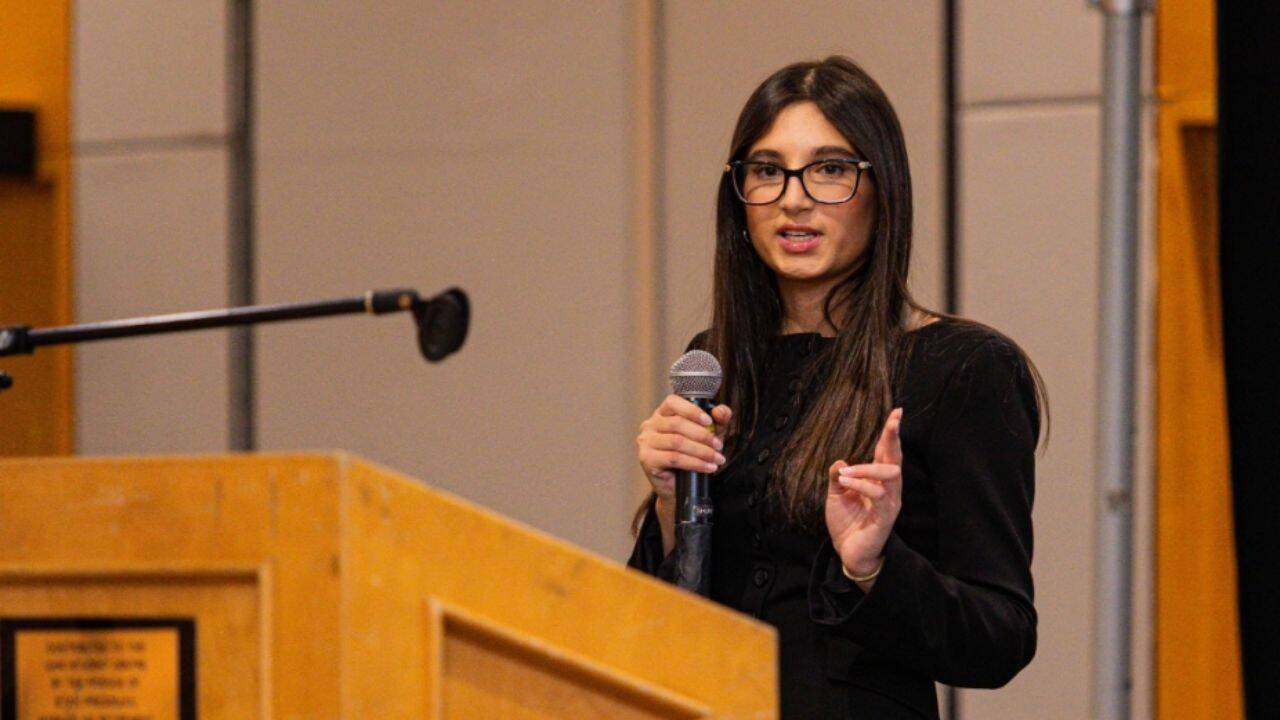
Enter Hammoud, a graduate researcher whose curiosity refused to stay neatly inside a textbook. Working alongside a dedicated team of fellow students and faculty mentors at a Canadian university, she began asking a deceptively simple question: Why are we starving the soil and stuffing landfills with marine protein while simultaneously strip-mining the planet to feed our pets?
The pet food industry has a dirty secret that rarely makes it onto the glossy bags in the store aisle. Commercial dog treats and kibble rely heavily on land-based agriculture—specifically, factory-farmed beef, chicken, and soy. Raising cattle and poultry for pet treats requires staggering amounts of freshwater, arable land, and synthetic fertilizers, all while generating massive greenhouse gas emissions. Meanwhile, the oceans are sitting on a mountain of pre-harvested, wildly nutritious protein that is rotting in dumpsters.
Hammoud’s team decided to build a bridge between the dock and the dog bowl. Their vehicle? A humble, crunchy dog biscuit.
Inside the Lab Where Science Smells Like Low Tide
Turning raw fish frames into a shelf-stable, palatable dog treat is not as simple as tossing a cod head into a blender and turning on an oven. If you have ever left a piece of salmon on your kitchen counter for two hours, you know the enemy: oxidation.
Marine fats are notoriously volatile. The very omega-3 fatty acids that make fish oil miraculous for a dog’s coat and joints are also wildly unstable when exposed to heat, light, and air. They turn rancid quickly, producing an odor that would make even the most enthusiastic Labrador turn away in disgust—and make any human owner ban the treat bag to the garage.
Imagine, for a moment, standing inside the university food-science laboratory during the early trials. Let’s picture a hypothetical Tuesday afternoon in that lab, grounded in the real chemical hurdles every food scientist faces when working with marine byproducts.
The stainless-steel counters are lined with dehydration trays, industrial grinders, and moisture analyzers. When the first batch comes out of the drying oven, the team leans in, clipboards ready. The texture is brittle, crumbling into dust at the slightest touch. Worse, the aroma is aggressive—less like a gourmet snack and more like a sun-baked pier in August. If a dog owner opens a pouch and gets hit with that smell, the product is dead on arrival, no matter how sustainable it is.
This is where the grind of real innovation happens. It is not a lightning bolt of genius; it is months of tedious calibration.
Hammoud and her teammates had to experiment with precise dehydration temperatures to lock in the omega-3s without scorching the proteins. They had to mill the dried fish frames down to a fine, uniform powder so that sharp bone fragments would never pose a hazard to a dog’s digestive tract, turning potential danger into a bioavailable calcium boost. Then came the formulation dance: pairing the marine flour with simple, digestible binders—like oats, pumpkin, or sweet potato—that could temper the fishy aroma while creating a satisfying crunch.
Every variable changed the outcome. Too much moisture, and mold blooms in the bag within a week. Too little, and the biscuit shatters like glass. Too much heat, and the delicate fatty acids break down, stripping away the anti-inflammatory benefits that make fish superior to cornmeal in the first place.
Through iteration after iteration, the team dialed in the exact ratios. They ran nutritional assays to prove the protein and mineral counts. They tested shelf stability. And finally, they brought in the toughest critics on earth: dogs.
Why Your Dog’s Treat Bag Matters More Than You Think
You might be wondering if a handful of university students baking fish biscuits in Canada can actually dent a global waste crisis. It is a fair question. When you look at the sheer scale of global seafood waste—estimated by the United Nations Food and Agriculture Organization at tens of millions of tons annually—a tray of dog treats looks like a teacup poured into a forest fire.
But that is the wrong way to measure the impact of circular design.
Consider what happens when a local processing plant stops paying to haul its waste to a landfill and starts selling that same biomass to a regional pet-treat manufacturer. Suddenly, the economics of the entire coastline shift. A cost center becomes a revenue stream. Small coastal towns, which often struggle with seasonal employment and tight margins, gain a value-added manufacturing niche right in their own backyard.
Now look at the other end of the supply chain: the living room floor.
Over the last decade, veterinary clinics have seen a steady climb in canine skin allergies, chronic inflammation, and digestive sensitivities. Many of these issues trace back to the ultra-processed, grain-heavy fillers and low-grade rendered meats that dominate mass-market pet treats. Marine proteins, by contrast, are considered "novel" or hypoallergenic for many dogs. The natural EPA and DHA fatty acids found in Atlantic fish waste actively calm skin irritation, lubricate aging joints, and support cognitive function in senior dogs.
When you hand your dog a biscuit made from upcycled fish frames, you are not engaging in charity for the planet. You are giving your animal cleaner, higher-grade nutrition than what sits in ninety percent of commercial treat bags—and you are doing it without clearing a single acre of forest for cattle pasture.
The Invisible Resistance to What We Throw Away
If this makes so much economic and biological sense, why aren't grocery store shelves already lined with upcycled marine pet food?
Because human psychology is stubborn.
We have been conditioned for generations to equate "byproduct" with "inferior." In the 1990s and early 2000s, pet food marketing campaigns spent hundreds of millions of dollars teaching consumers to fear the word byproduct on an ingredient label. They trained us to believe that unless an ingredient looks like a boneless chicken breast we would grill for ourselves, it is trash.
That marketing worked too well. It blinded us to a basic biological truth: wild canines do not fillet their prey. When a wolf takes down an elk, it eats the muscle, yes, but it also devours the organ meats, crunches the cartilage, and gnaws the marrow-rich bones. Those are the exact parts where the dense micronutrients live. By demanding that our pets eat only the muscle cuts that humans prefer, we have starved them of natural minerals while doubling our agricultural footprint.
Hammoud’s project quietly dismantles that prejudice. By taking parts of the fish that humans refuse to eat—the frames, skins, and trimmings—and transforming them through clean, transparent food science, her team proves that "waste" is simply food in the wrong place.
There is also a logistical hurdle that few people talk about. Fish spoils fast. Unlike grain, which can sit in a silo for months waiting for a buyer, fish trimmings begin degrading the moment the knife hits the cutting board. To turn fish waste into dog biscuits at scale, you cannot truck raw heads across three provinces. You have to build micro-processing hubs right next to the docks, dehydrating and stabilizing the biomass within hours of harvest.
That requires investment, regulatory clarity, and young minds willing to get their hands dirty in industries that aren't glamorous. It is easy to get venture capital for a sleek software app. It is much harder to get applause for standing in a lab figuring out how to deodorize ground haddock spines.
The Quiet Power of Student Grit
There is something deeply moving about the fact that this breakthrough came out of a university team rather than a multinational conglomerate.
Big corporations are notoriously bad at solving waste problems because their supply chains are locked into twenty-year contracts and massive capital equipment. Re-engineering a factory line to capture fish frames requires tearing down processes that already turn a steady profit. Inertia wins almost every time.
Students don't have legacy infrastructure to protect. They have fresh eyes, stubbornness, and a visceral awareness that they are the ones who will inherit the environmental bill we have been running up for the last century.
When Ramla Hammoud and her teammates stood over those ovens, testing moisture levels and tweaking recipes, they were practicing a form of practical optimism. They weren't waiting for a sweeping international treaty to fix ocean waste. They weren't writing white papers about sustainability from an air-conditioned corner office. They took a stinking, expensive problem sitting on the docks of their own country, applied rigorous food science, and turned it into something a dog would beg for.
The next time you walk down the pet aisle, pick up a bag of treats and flip it over. Read the fine print. Ask yourself how many gallons of water, how many acres of monocrop corn, and how many miles of diesel trucking it took to press those little brown bones into shape.
Then picture a cold morning on a Canadian pier. Picture the silver flash of a catch coming off the boat, the rhythmic flash of the filleting knives, and the bins underneath the table—no longer overflowing with garbage bound for a hole in the ground, but filled with clean, golden potential, waiting to be baked into something good.