Walk down the center aisle of a hardware store in northern Ohio on a Tuesday morning, and you will see the architecture of global diplomacy sitting on a pallet.
A box of drywall screws. A brushless cordless drill. A roll of insulated copper wire. For the better part of ten years, the price tags clinging to those shelves have been the silent casualties of a cold, grinding friction between the two largest economies on earth. When politicians in Washington or Beijing speak in abstractions—tariffs, trade deficits, supply chain decoupling—the translation happens at the cash register in towns like Elyria or Toledo.
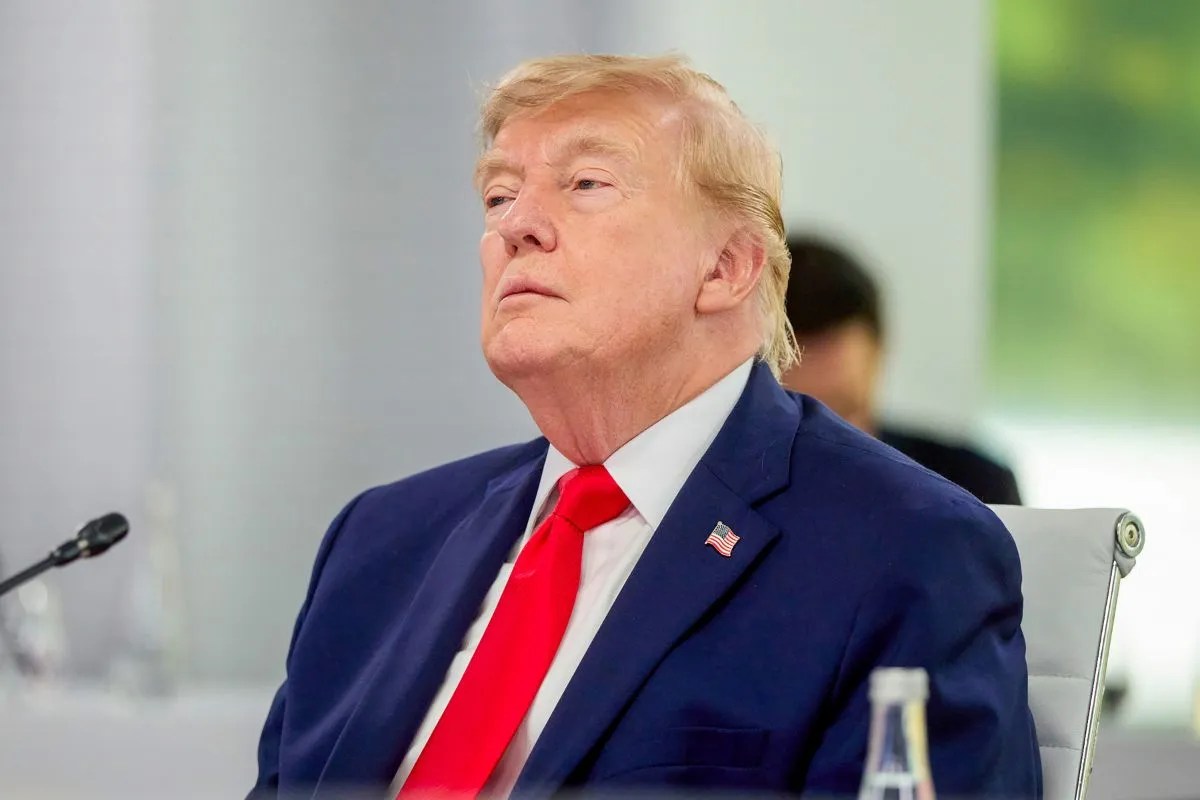
That is why a single remark from President Donald Trump, delivered with characteristic offhand certainty, sent an immediate ripple through trading floors, factory break rooms, and diplomatic corridors alike.
"We’re doing very well with China," Trump told reporters, signaling that his administration is actively eyeing multiple deals ahead of what would be Chinese President Xi Jinping’s first visit to the White House in a decade.
Wait. A decade.
Let that number sit for a second. Ten years is an eternity in modern statecraft. The last time Xi Jinping walked across the South Lawn for a formal White House reception, Barack Obama was in office, the iPhone 6 was the pinnacle of consumer technology, and the phrase "trade war" belonged to history textbooks rather than daily news alerts. Since then, the relationship between the United States and China has hardened into something resembling a permanent frost—a cycle of retaliatory tariffs, export controls on semiconductors, suspicion over TikTok, and tense naval standoffs in the South China Sea.
Now, suddenly, the door to the Oval Office is cracking open again. And behind the diplomatic choreography lies a high-stakes gamble that touches everything from the soybeans rotting in Midwestern silos to the microchips powering the phone in your pocket.
The Weight of Ten Years
To understand why this potential summit feels so combustible, you have to remember what happened the last time these two leaders sat across from each other in Washington.
During the first Trump administration, diplomacy with Beijing was a whiplash experience. One week brought threats of sweeping levies on hundreds of billions of dollars in Chinese goods; the next brought praise for personal chemistry at Mar-a-Lago. Eventually, that friction culminated in the Phase One trade deal in early 2020—an agreement designed to halt escalating tariffs in exchange for massive Chinese purchases of American agricultural and manufactured goods.
Then the pandemic hit. Supply chains snapped. Promises evaporated. And over the subsequent years, both Washington and Beijing quietly accepted a new reality: the era of easy globalization was dead.
Consider a hypothetical character to make this tangible—let’s call him Marcus, a second-generation owner of a mid-sized precision stamping plant outside Grand Rapids, Michigan. In 2016, Marcus bought specialized steel components from Shenzhen and sold finished parts to automotive suppliers in Detroit. By 2022, tariff surcharges had eaten nearly forty percent of his operating margin. He couldn't pass all the costs on to his buyers without losing contracts, and he couldn't easily find domestic suppliers capable of matching the volume he needed. Every time a headline flashed about deteriorating U.S.-China relations, Marcus didn't see geopolitics. He saw payroll.
Multiply Marcus by fifty thousand small and mid-sized business owners across the American heartland, and you begin to grasp the invisible pressure building beneath the surface of Trump’s declaration that things are going "very well."
What "Multiple Deals" Actually Means
When a U.S. president speaks of "multiple deals" on the eve of a historic summit, the phrasing is deliberate. It suggests a move away from the grand, all-encompassing treaties of the twentieth century—massive agreements that take years to negotiate and often collapse under their own weight—toward modular, transactional bargains.
Think of it less like a marriage vow and more like a series of separate leases signed in the same building.
If one lease falls through, the whole structure doesn't necessarily burn down. According to policy analysts and trade observers tracking the administration's signals, the conversations ahead of Xi’s anticipated visit likely orbit three distinct arenas:
- Agricultural and Energy Purchasing Commitments: American farmers have long been the primary target of Chinese retaliatory tariffs. Securing renewed, enforceable commitments from Beijing to buy U.S. soybeans, corn, pork, and liquefied natural gas offers an immediate, tangible win that plays directly to rural constituencies.
- Tariff Calibration and Industrial Exemptions: While broad tariffs remain a central pillar of Trump’s economic philosophy, targeted adjustments—or structured frameworks that trade tariff relief for specific market access—give both sides room to claim victory without appearing to capitulate.
- Technology, Fentanyl Precursors, and Operational Guardrails: Beyond pure trade, Washington has consistently pressed Beijing to crack down on the chemical precursors used to manufacture illicit fentanyl, while Beijing seeks predictability regarding U.S. restrictions on advanced semiconductors and Chinese tech firms operating on American soil.
Here is the honest truth, though, and any seasoned diplomat will admit it behind closed doors: the gap between announcing "multiple deals" and enforcing them is wide enough to drive a container ship through.
I remember watching the rollout of previous trade frameworks from the sidelines of financial markets—the breathless cable news banners, the immediate surge in industrial stocks, followed months later by the quiet realization that customs data didn't match the press releases. That history breeds a healthy, necessary skepticism. When leaders promise progress, ordinary people are right to ask whether the ink will actually hold once the cameras leave the Rose Garden.
The Choreography of Face
Diplomacy between Washington and Beijing is never merely about spreadsheets; it is profoundly about theater, status, and what Chinese political culture calls mianzi—face.
For Xi Jinping, accepting an invitation to the White House after a ten-year absence is not a casual decision. In Beijing, domestic legitimacy is tightly bound to the perception that China stands as an equal superpower, unbowed by Western pressure. Xi cannot arrive in Washington looking like a supplicant asking for tariff relief, especially while China navigates its own domestic headwinds—a sluggish property sector, youth unemployment, and mounting debt among local governments.
Conversely, Donald Trump thrives on the optics of the dealmaker—the leader who brings formidable adversaries to the table through sheer leverage and unpredictability. For Trump, hosting Xi at the White House provides a monumental stage to demonstrate that his hardline posture yields results where traditional diplomacy stalled.
Notice how those two political needs collide and, paradoxically, align.
Both men need to walk out of the West Wing able to tell their respective nations that they stood firm and won concessions. That mutual necessity is precisely what makes a flurry of smaller, targeted agreements so attractive. Beijing can highlight renewed diplomatic respect and stabilized trade channels; Washington can point to concrete purchasing numbers, enforcement pledges, and strategic concessions.
The Invisible Stakes in the Room
Yet if you zoom out from the press briefings and the motorcades, the stakes of this visit extend far beyond tariff schedules.
Every relationship between rival superpowers eventually faces a fundamental question: Are we managing competition, or are we drifting toward confrontation?
Over the last decade, the guardrails between the United States and China wore dangerously thin. Military-to-military communication channels were frozen for months at a time. Misunderstandings over reconnaissance balloons, naval patrols near Taiwan, and cyber intrusions escalated rapidly because there was no reliable habit of top-level dialogue to cool the temperature.
Think of the relationship like two massive freight trains running on parallel tracks that occasionally merge onto a single bridge. For years, the engineers stopped talking on the radio. Both kept their hands on the throttle, betting the other would brake first. A White House summit doesn't magically build a second bridge, and it certainly doesn't turn rivals into allies. What it does—if it works—is turn the radio back on.
Consider a second hypothetical scenario: Sarah, a logistics coordinator at the Port of Los Angeles. On any given shift, she watches cranes lift thousands of forty-foot containers off vessels arriving from Ningbo and Shanghai. When relations freeze, volume swings wildly—companies front-load shipments in panic before tariff deadlines, choking warehouses, and then orders vanish overnight, leaving dockworkers with cut hours and truckers idling without loads. Stability at the top doesn't mean everything becomes cheap overnight. It means predictability. It means Sarah’s port, Marcus’s factory in Michigan, and the hardware store in Ohio can plan six months ahead without guessing which way the political wind will blow on Friday afternoon.
The Shadow of Skepticism
Still, excitement over a diplomatic thaw should never blind us to the structural realities that haven't budged an inch.
Even if Trump and Xi sign half a dozen agreements during a White House visit, the deeper rivalry remains intact. The United States is not going to surrender its lead in artificial intelligence or advanced chip manufacturing. China is not going to abandon its ambitions in green energy, electric vehicles, or regional dominance in the Indo-Pacific. Bipartisan consensus in Washington still views Beijing as America’s primary strategic competitor, meaning any deal struck in the Oval Office will face immediate scrutiny from Congress, national security hawks, and labor unions.
There is also the ghost of past promises. In the 2020 Phase One agreement, China committed to purchasing an additional $200 billion in U.S. goods and services over two years. By the time the clock ran out, Beijing had fulfilled less than sixty percent of that target. Defenders pointed to the global pandemic as an act of God that upended trade; critics argued that Beijing never intended to follow through once the immediate tariff threat subsided.
That memory lingers like smoke in a room long after the fire is out. If new deals are announced ahead of or during Xi’s visit, the real test will not happen during the state dinner. It will happen six, twelve, and eighteen months later, buried in the monthly import-export tables released by the U.S. Census Bureau.
A Moment on the Edge
We live in an era that rewards cynicism. It is easy to look at diplomatic pageantry—the military honor guards, the flags snapping in the breeze along Pennsylvania Avenue, the carefully curated soundbites—and dismiss it all as empty theater.
And maybe, if the negotiations falter behind closed doors, it will prove to be just that. Statecraft is messy, fragile, and frequently undone by domestic politics or sudden international crises. Nobody can guarantee that a handshake in Washington will lower the price of groceries in Nebraska or secure the supply of rare earth minerals needed for American defense contractors.
Yet history rarely turns on certainty. It turns on moments when two leaders decide that the cost of standing still has finally exceeded the risk of stepping forward.
Ten years ago, the world looked entirely different when Xi Jinping last stepped through the doors of the White House. The decade since has taught both nations how expensive distrust can be—measured not just in billions of dollars of lost trade, but in shuttered workshops, strained family budgets, and a constant, low-grade anxiety that two nuclear-armed giants might stumble into a crisis neither knows how to stop.
Somewhere in northern Ohio right now, a store clerk is taping a new price label onto a box of drywall screws, while four thousand miles away, cranes are loading steel containers onto a ship bound for the California coast—two tiny, ordinary threads waiting to see whether the men in Washington will pull them taut, or finally begin to untangle the knot.