At four in the morning in a cold industrial estate outside Oldham, the lorries are already idling.
Let us invent a driver to stand beside one of them. Call him Arthur. He is fifty-four, drinks tea out of a dented steel flask, and has spent three decades hauling precision-engineered valves from Greater Manchester to machine shops in Bavaria and northern Italy. For twenty-five of those years, his job was simple: load the trailer, drive to Dover, roll onto a ferry, and keep moving until he hit the Alps. Then came the paperwork. Customs declarations, rules-of-origin certificates, sanitary checks, and sudden, inexplicable twelve-hour queues on the M20 where the only things moving were the seagulls circling the cab roofs.
Arthur does not care about Westminster speeches. He cares about whether his freight arrives in Munich before Friday afternoon so his client does not cancel the contract and source the parts from a factory in Czechia instead.
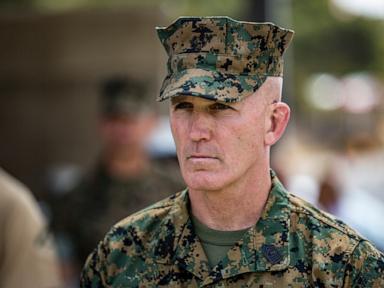
Yet in late 2026, the political weather shifting around Arthur’s cab has suddenly changed temperature. Andy Burnham, the Mayor of Greater Manchester—long nicknamed the "King of the North" and widely viewed as one of the sharpest barometers of Labour’s political instincts—has said out loud what ministers in London have spent years tiptoeing around. Following the government’s newly struck reset deal with Brussels, Britain is not stopping at minor technical fixes. The UK is actively preparing to explore even closer ties with the European Union.
Silence. For years, that single idea was treated in British politics like a live grenade with the pin half-pulled. Now, it is policy in plain sight.
The Architecture of a Slow Thaw
To understand why Burnham’s remarks carry so much weight, you have to strip away the theatrical slogans that dominated British public life from 2016 onward and look at the cold arithmetic of proximity. Geography is stubborn. You can sign trade deals with countries on the far side of the Pacific, and ministers certainly have, flying thousands of miles for handshake photo-ops in Tokyo or Canberra. Still, gravity wins in economics just as reliably as it does when you drop a spanner on a concrete floor. Nearly half of all British trade still goes to and from the twenty-seven nations sitting twenty-one miles across the English Channel.
When the current Labour government entered Downing Street, it inherited a relationship with Brussels held together by chewing gum, legal acrimony, and the bare-bones Trade and Cooperation Agreement negotiated in the frantic final weeks of 2020. That treaty prevented tariffs on goods, which sounded comforting on the evening news, but it erected a towering wall of non-tariff barriers—regulatory friction, border inspections, and mutual non-recognition of professional standards—that acted like sand poured directly into the gearbox of British industry.
For months, the government insisted its red lines were carved in granite. No return to the single market. No return to the customs union. No freedom of movement. Instead, ministers promised a sensible "reset" built around a veterinary agreement to ease food checks, closer defense and security cooperation, and smoother youth mobility schemes.
Then the ink dried on that initial deal, and reality knocked on the door again.
Economists at the Office for Budget Responsibility have repeatedly estimated that leaving the EU’s single market and customs union shaved roughly four percent off the UK’s long-run productivity. Four percent sounds abstract until you translate it into missed hospital upgrades, stalled railway lines in the North of England, and small manufacturers quietly closing their doors because exporting to France has become as complex as exporting to Kazakhstan. Treasury officials looking at sluggish growth forecasts do not see ideological victories or defeats. They see tax receipts that refuse to rise fast enough to pay for an aging population.
And this is where Andy Burnham steps onto the stage, not as a rogue backbencher shouting from the sidelines, but as an executive leader governing a region of nearly three million people whose economic survival depends on investment, exports, and universities.
Why Manchester Speaks Before Whitehall
I remember standing in a rain-slicked street in central Manchester a few years ago, watching a local baker explain why he had stopped shipping specialty sourdough mixes to independent cafes in Dublin and Amsterdam. He wasn't angry at Brussels, nor was he waving a flag. He was simply exhausted. A single pallet required hours of administrative form-filling and veterinary sign-offs that cost more than the profit margin on the flour itself. Multiply that quiet surrender across tens of thousands of British businesses, and you begin to see the invisible bleed that has defined the post-Brexit decade.
Burnham sees those spreadsheets every week. Greater Manchester has spent the past decade trying to reinvent itself as a northern powerhouse of advanced manufacturing, digital tech, and life sciences. Yet every time local leaders pitch foreign investors on setting up a European headquarters in Salford or Stockport, the same question hangs in the air across the boardroom table: How easily can we move goods, data, and specialists into the EU?
When Burnham signals that the UK will explore even closer alignment after securing its initial agreement with Brussels, he is acting as a scout sent ahead of the main column. In British politics, regional mayors—especially one with Burnham’s national profile and rumoured leadership ambitions—often test the ice before Downing Street commits its full weight.
Consider what happens next in that political dance. If Burnham says the quiet part out loud and the sky does not fall—if the tabloid backlash turns out to be a damp squib rather than a firestorm—then ministers in Whitehall gain room to breathe. Public opinion in Britain has already shifted dramatically since the referendum a decade ago. Polling consistently shows a clear majority of voters now view the exit from the EU as a mistake that damaged the economy, and an even larger majority favors closer trade and security ties, even if full membership remains off the table for the foreseeable future.
Voters are tired. They are tired of constitutional trench warfare, tired of watching food prices climb while supermarket shelves occasionally look sparse, and tired of politicians pretending that putting friction between Britain and its closest neighbors was somehow a favor to working people.
The Invisible Web of Alignment
So what does "even closer ties" actually mean in practice, away from the television cameras?
Think of the European single market not as a political flag, but as a shared electrical grid. When Britain unplugged itself, it didn't stop needing electricity; it simply forced every appliance maker, farmer, and software engineer to build an expensive adapter every time they wanted to plug into the wall next door.
Moving closer means quietly throwing away those adapters, one sector at a time.
First comes regulatory alignment on industrial goods and chemicals. Right now, a British manufacturer often has to test and certify a product twice—once for the UK market and once for the EU—even though the rules are still ninety-nine percent identical. Agreeing to mirror European standards dynamically eliminates that duplicate cost overnight. It means a medical device company in Leeds or an aerospace supplier in Derby can build once and sell across an entire continent of 450 million consumers.
Second comes mutual recognition of professional qualifications. Right now, a British architect, engineer, or touring musician faces a labyrinth of national work permits and local licensing boards just to work for three weeks in Spain or Germany. Restoring reciprocal recognition allows British talent—one of the country’s genuine global strengths—to flow outward again without drowning in consular paperwork.
Third is energy and carbon market linkage. Britain and Europe share the North Sea wind farms and the subsea interconnectors that keep the lights on when the wind drops in winter. Linking the UK and EU emissions trading schemes prevents British steel and cement exporters from being hit with punitive European carbon border taxes that would otherwise price them out of continental construction projects.
None of these steps requires tearing down the Westminster Parliament or hoisting a blue flag over Dover Castle. Yet taken together, they represent a profound strategic pivot: an admission that sovereignty without prosperity is a hollow prize, and that a medium-sized island economy cannot thrive by building walls around itself in an era of ruthless global trade blocs.
The Trap of Half-Measures
Still, we should be honest about the risks. Anyone who tells you this path is smooth is selling you a fairy tale.
Brussels is not a charity, and European negotiators have long memories. For years, EU officials watched British politicians treat the single market like an à la carte restaurant menu—demanding all the benefits of frictionless access while refusing the obligations, budget contributions, and shared judicial oversight that hold the entire enterprise together. Brussels has a phrase for this: "cherry-picking." And they hate it.
Every step closer to the European orbit comes with a price tag that British politicians still struggle to explain to voters. If Britain wants frictionless trade in goods, it will likely have to accept rules written in Brussels without having a seat at the table where those rules are drafted—becoming what critics call a "rule-taker." If British universities and businesses want deeper integration, European capitals will demand concessions in return: expanded youth mobility visas allowing young Europeans to live and work in the UK for several years, long-term guarantees on EU fishing boats operating in British waters, and financial contributions to shared European programs.
Here is the real tension sitting beneath Burnham’s optimism. The closer Britain edges toward the single market without actually rejoining it, the sharper the democratic paradox becomes. You obey the rules to save the economy, yet you surrender your vote on how those rules are made. For a country that spent years arguing about "taking back control," explaining why dynamic alignment makes sense requires a level of political candor that Westminster rarely musters.
There is also the global backdrop to consider. Britain is not rethinking its European relationship in a vacuum. Across the Atlantic, American trade policy has grown more protectionist and unpredictable, reminding London that a "special relationship" with Washington will never compensate for cold relations with Paris, Berlin, and Warsaw. Meanwhile, war on Europe’s eastern flank has forced London and Brussels to recognize that British intelligence, nuclear deterrence, and naval power are inseparable from European security. Tanks and cyber defenses do not care about customs boundaries.
Back to the M20 at Dawn
Let us return to Arthur, standing beside his idling lorry outside Oldham as the sky turns from black to bruised grey.
He does not read treaties. He will never sit in a committee room in Brussels or attend a Labour Party conference fringe event in Liverpool. Yet Arthur knows, with the unerring instinct of someone who earns his living by the mile, when a road is closed and when a detour is slowly being cleared.
For ten years, Britain tried to pretend that history and geography were optional—that an island could tow itself out into the middle of the Atlantic and prosper on nostalgia alone. The experiment was loud, expensive, and exhausting. Now, without fanfare or triumphalism, the tide is turning back toward the continent.
Arthur twists the cap back onto his steel flask, climbs up into the cab, and checks his mirrors. Ahead of him lies the long haul south toward the Channel, where the ferries are still running, the cranes are still swinging, and two estranged neighbors are finally admitting they still need each other to keep the lights on.