The coffee maker in a suburban Greater Montreal kitchen clicks off at exactly 6:30 AM. For five years, this sound marked the start of a predictable routine: quick breakfast, a glance at the local housing listings, and a hopeful conversation about backyard fences, extra bedrooms, or a shorter commute into the city.
Lately, the silence that follows the click is heavier.
Across the Montreal metropolitan area, thousands of families are looking at those same listings and quietly closing their laptops. The dream of moving hasn't vanished. It has simply been put on ice.
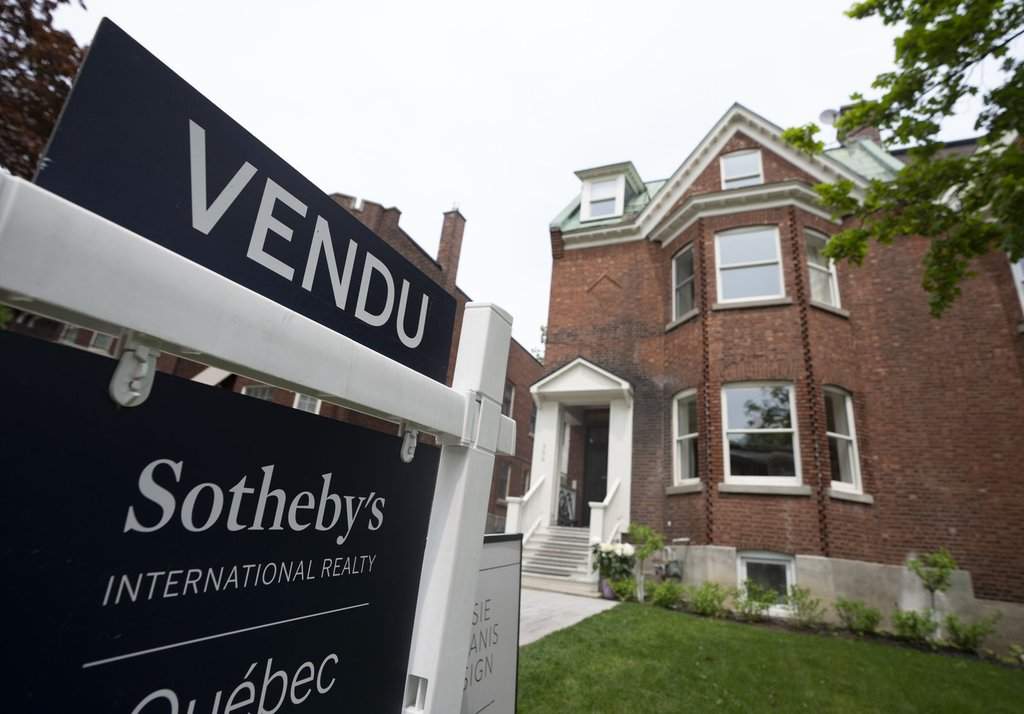
The numbers released by the Quebec Professional Association of Real Estate Brokers tell a stark, mathematical story: home sales across the region dropped by nearly 7 per cent this May compared to the same time last year. It is a statistic that sounds clinical on an evening news broadcast. But behind that single digit sits a complex web of human anxiety, shifting plans, and the invisible weight of economic pressure.
The Friction of the Fifty-Basis-Point Wall
To understand why the streets of Laval, Longueuil, and the Island of Montreal are seeing fewer moving trucks, we have to look past the open-house signs and examine the math driving the decision-making.
Imagine trying to run a marathon while wearing a weighted vest. Every step takes more energy; every mile feels twice as long. That vest is the current interest rate environment. For nearly a decade, buyers adjusted to a world where borrowing money was remarkably inexpensive. A mortgage was a manageable line item, a predictable variable in the monthly budget.
Then the financial weather changed.
The Bank of Canada’s aggressive campaign to tame inflation pushed interest rates to heights not seen in a generation. When a five-year fixed rate hovers around five or six per cent instead of two, the entire geometry of a household budget warps. A family looking at a modest $500,000 property suddenly faces monthly payments hundreds of dollars higher than they would have just a few years ago.
That extra money doesn't just vanish from a spreadsheet. It is carved directly out of grocery budgets, summer camp fees, and retirement savings.
This is the psychological wall that buyers hit in May. It isn't that people stopped wanting to own homes. It is that the math stopped making sense. The gap between what a property is worth and what a family can afford to pay to borrow the money to buy it has become a chasm.
The Stagnant Dance of Buyer and Seller
Real estate is often described as a marketplace, but it functions more like a dance. For a transaction to happen, two people must agree on the value of a single piece of the world. Right now, that dance has turned into an awkward, stationary standoff.
Consider the seller's perspective. Many current homeowners locked in historically low mortgage rates during the pandemic. If they sell their current home to move up to a larger one, or even to downsize, they must give up that precious, low-rate mortgage and take on a new one at today's punishing prices. They look at the market and decide to wait. They renovate the basement instead. They stay put.
This creates a secondary squeeze: a lack of fresh inventory in the specific price brackets that young families need most.
On the other side stand the buyers. They are tired. They have spent the last few years navigating bidding wars, skyrocketing prices, and now, relentless borrowing costs. They are no longer willing to stretch their finances to the absolute breaking point for a property that requires a kitchen remodel. They are exercising a quiet, powerful form of resistance. They are walking away from the negotiation table.
The result of this dual hesitation is the 7 per cent decline. It represents the moments where a buyer looked at an offer sheet, looked at their bank account, and chose the safety of the status quo.
The Micro-Markets of the Metropolis
The slowdown isn't hitting every neighborhood with the same intensity. The Montreal market is a patchwork quilt, and some sections are tearing faster than others.
In the condo market, particularly downtown and near the major transit axes, the air is noticeably cooler. For years, young professionals and investors snapped up high-rise units almost faster than developers could pour the concrete. Today, with investor cash flow squeezed by those same interest rates and the rise of remote work altering the necessity of downtown living, condos are sitting on the market longer.
Single-family homes in the outer rings—the off-island suburbs where buyers once fled for space—retain a bit more friction. There is still a fundamental shortage of dirt and walls in Greater Montreal. The desire for a patch of grass remains a powerful motivator, stubborn enough to resist even the harshest economic headwinds.
Yet, even in these desirable pockets, the frenzied atmosphere of 2021 is a distant memory. The days of waived home inspections, blind bidding wars, and properties selling in forty-eight hours for $100,000 over asking have largely dissolved. Buyers who do step into the arena are acting with a deliberate, sometimes agonizing caution. They demand inspections. They negotiate on price. They take their time.
The Broader Cost of a Paused Market
When housing slows down, the ripples extend far past the real estate brokerages and notary offices. A housing market is an engine for a broader local economy.
When a home sells, a chain reaction begins. The buyers hire local movers. They buy paint from the neighborhood hardware store. They hire contractors to fix the roof, buy new appliances, and purchase furniture to fill the extra rooms. They spend money at the cafes and restaurants near their new address to celebrate the move.
When sales drop by nearly 7 per cent in a month, that entire economic ecosystem feels the chill. The contractor notices fewer calls for major renovations. The furniture store sees inventory sit on the showroom floor a little longer. It is a slow, systemic deceleration that mirrors the broader economic pressures the province is facing.
We are witnessing a collective recalibration. An entire region is learning to live with the reality that money has a cost again. The easy-credit era was an anomaly, but human beings adapt quickly to comfort. Stripping that comfort away is a painful, awkward process.
The View from the Kitchen Table
The evening sun sets over the duplexes of Rosemont and the single-family homes of West Island, casting long shadows across quiet streets. In those homes, the conversations continue, but the tone has shifted from ambition to calculation.
People are checking the news, waiting for a signal. They watch the central bank’s announcements with the intensity once reserved for playoff hockey. A quarter-percentage-point drop here or there won't instantly fix the market, but it represents hope. It represents the possibility that the weighted vest might get a little lighter.
Until then, the laptops remain closed on many kitchen tables after breakfast. The listings can wait. The dream isn't dead, but for the thousands of families who chose not to buy in May, it is safely tucked away in a drawer, waiting for a season when the math behaves a little more kindly to the human heart.


