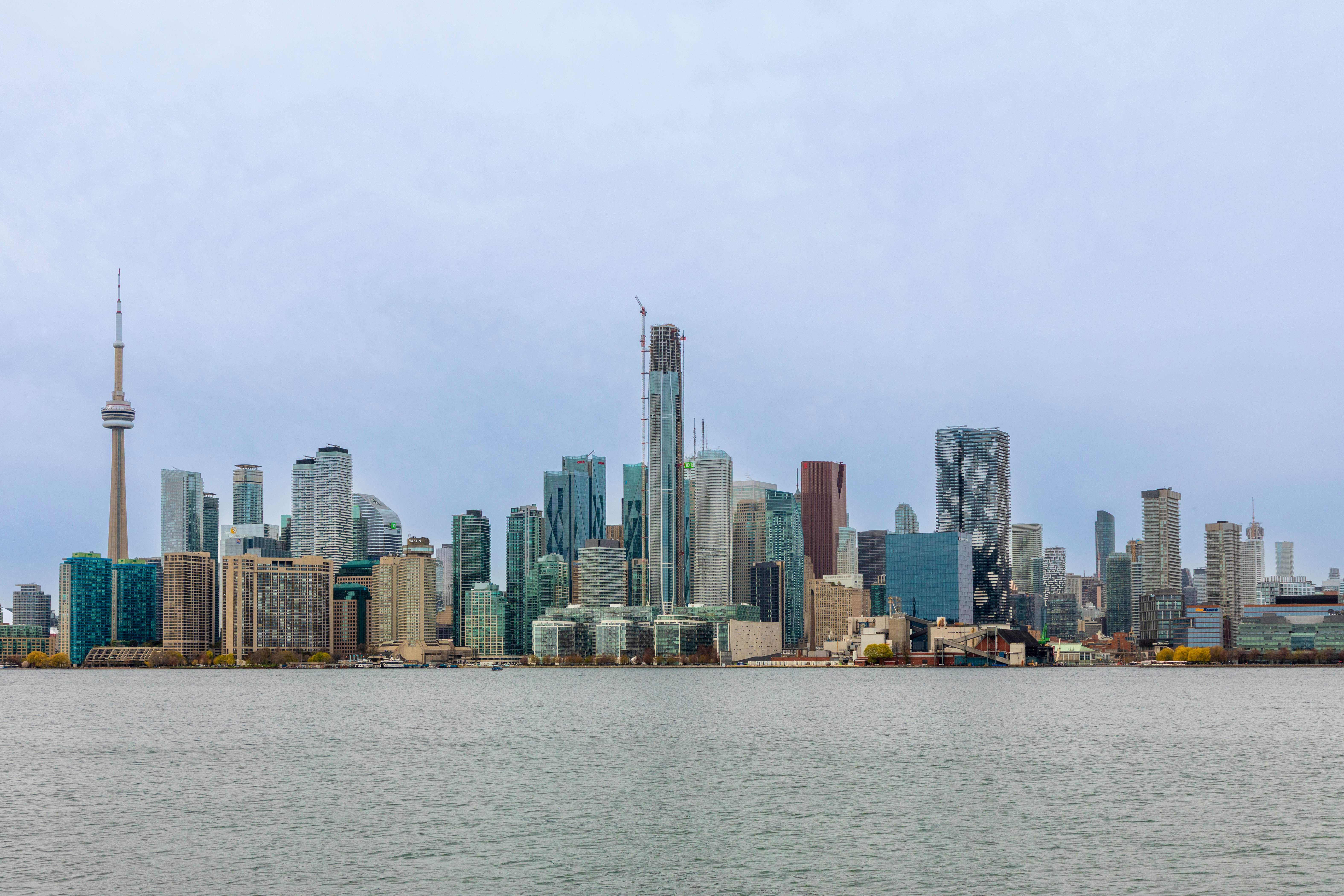
After nearly three years of steady declines and stalled asking prices, rents in Toronto and Vancouver have ticked upward again. The brief cooling period that gave tenants breathing room since 2023 has hit a structural wall. While headline reports point to a simple rebound in asking prices, the actual mechanism driving this shift is a severe supply bottleneck colliding with changing immigration math and frozen construction pipelines. Landlords are regaining pricing power not because wages are surging, but because the pipeline of new purpose-built rentals and investor-owned condos has effectively seized up.
For almost thirty-six months, renters in Canada's two most expensive cities experienced an unusual anomaly. Following the post-pandemic surge that pushed one-bedroom apartments to record highs in 2022 and early 2023, asking rents drifted downward or flatlined. High interest rates forced over-leveraged condo investors to compete for a shrinking pool of qualified tenants, while federal caps on international students and temporary foreign workers tempered immediate population growth in urban cores. Many renters assumed the market had finally broken in their favor. That assumption missed how real estate cycles actually work. You might also find this related article insightful: When Your Trust Protector Has More Power Than Your Heirs.
The Illusion of the Three-Year Breather
A falling asking rent does not mean housing has become affordable. It simply means the market is digesting a previous price shock. Between 2023 and late 2025, landlords in Toronto and Vancouver offered move-in incentives—one or two months of free rent, waived parking fees, or discounted utilities—to mask lower effective yields without permanently lowering their base rates on paper.
Banks value commercial and multi-family properties based on their net operating income. If a building owner slashes base rents by 15 percent, the appraised value of the asset drops, triggering refinancing headaches when mortgages come up for renewal. By using temporary incentives instead of permanent cuts, institutional landlords kept their on-paper valuations intact while waiting out the slump. Once the excess inventory of newly completed condos was absorbed, those incentives vanished overnight. The base rent remained, and the upward climb resumed from an already elevated floor. As discussed in recent articles by Bloomberg, the implications are notable.
Consider a hypothetical example of how this plays out in a mid-rise Toronto building. Suppose a property manager lists a unit at $2,600 a month during a slow winter, offering two months free to attract a tenant. The tenant's effective monthly cost is roughly $2,167. Twelve months later, when the lease renews or a new tenant applies, the incentive is gone, and the landlord nudges the asking price to $2,650. To the market tracker, that looks like a modest 1.9 percent increase. To the renter looking for a new lease, it feels like a $483 monthly jump.
How the Construction Pipeline Froze
To understand why rents are rising again now, you have to look at the decisions developers made three years ago. Real estate supply moves on a massive lag. The apartments hitting the market today were financed and excavated when borrowing costs were near zero.
When central banks aggressively hiked interest rates to combat inflation, the math for new high-rise construction collapsed. Construction financing became prohibitively expensive. At the same time, municipal development charges, material costs, and skilled labor shortages pushed the break-even price for new condo units well above what local buyers could afford.
Pre-construction sales in the Greater Toronto Area and Metro Vancouver ground to a near halt. In Canada, banks generally require developers to pre-sell 70 to 80 percent of a residential tower before releasing construction loans. Without pre-sales, shovels stay in the ground.
The Condo Investor Exodus
For the past two decades, private mom-and-pop investors acted as the shadow rental developers for both cities. They bought pre-construction condos, carried the mortgage during construction, and rented the units out upon completion. That model is broken.
With mortgage rates settling well above the ultra-low levels of the previous decade, a newly closed condo in downtown Toronto or Vancouver routinely generates negative cash flow of $800 to $1,500 per month. Small investors stopped buying. Developers responded by canceling projects, shelving phases, or converting planned condominiums into purpose-built rental towers—many of which remain stalled while builders wait for lower interest rates or deeper government tax breaks.
The result is an incoming supply cliff. Fewer completions in 2026 and 2027 mean the existing pool of rental stock faces zero meaningful competition from shiny new builds. When supply stops growing in cities that remain primary economic engines, prices only move in one direction.
Demographic Gravity Versus Policy Caps
Much was made of federal efforts to curb non-permanent resident arrivals, particularly international students and temporary workers. On paper, reducing the inflow of newcomers should reduce immediate pressure on entry-level apartments and basement suites. In practice, the effect was temporary and unevenly distributed.
While student-heavy neighborhoods near major universities saw brief spikes in vacancy rates, core professional hubs did not experience a mass exodus. Domestic migration patterns shifted as return-to-office mandates hardened across the financial, tech, and media sectors. Workers who had decamped to smaller, cheaper towns during the remote-work era found themselves forced back within commuting distance of Bay Street and downtown Vancouver.
At the same time, high home prices and strict mortgage stress tests kept tens of thousands of middle-income households trapped in the rental market. Normally, a thirty-something couple earning a combined $180,000 would exit the rental pool by purchasing a starter townhouse or two-bedroom condo. Today, the down payment hurdle and monthly carrying costs of ownership remain out of reach for anyone without generational wealth. Those households stay put, occupying larger rental units and preventing the natural churn that frees up cheaper apartments down the chain.
The Rent Control Trap
Both Ontario and British Columbia have strict forms of rent control, though their mechanics differ. In British Columbia, annual rent increases are capped at a rate tied to inflation, regardless of when the building was constructed. In Ontario, units first occupied after November 15, 2018, are exempt from rent control entirely, allowing landlords to raise rents to whatever the market will bear once a year.
These policies create a stark two-tier market that actually accelerates upward pressure on vacant units.
- Locked-in tenants: Renters who secured an apartment in 2020 or 2021 under rent control are paying hundreds of dollars below current market rates. They cannot afford to move, even if their family grows or their commute worsens, because re-entering the open market means absorbing a massive price hike.
- Turnover spikes: Because turnover has plummeted, landlords rely heavily on the few units that do become vacant to reset rents to current market levels and cover rising property taxes, insurance premiums, and maintenance costs.
- The post-2018 volatility: In Toronto, tenants living in newer buildings face unpredictable renewal notices. When market rents tick up even slightly, landlords in non-rent-controlled buildings aggressively test the ceiling, pushing price-sensitive renters back into the hunt for older, rent-controlled stock.
This dynamic starves the open market of inventory. Vacancy rates in both cities remain well below the 3 percent threshold economists generally consider healthy for a balanced market. When vacancy hovers around 1.5 to 2 percent, any minor uptick in demand immediately translates into bidding wars and higher asking rents.
What the Headline Numbers Miss
Monthly rental reports from listing platforms capture asking rents—what landlords hope to get for vacant units listed online. They do not capture the entire market, nor do they reflect the quiet deterioration in housing quality that accompanies rising prices.
In both Toronto and Vancouver, the average square footage of newly built apartments has shrunk steadily over the last ten years. A "one-bedroom" unit today is frequently a 480-square-foot box with a sliding glass door separating the sleeping area from the kitchen. When reports state that average rents are rising again, renters are often paying more money for less livable space.
Furthermore, listing data skews toward newer, professionally managed buildings and investor condos, which frequently advertise online. Purpose-built older apartments—the low-rise brick buildings from the 1960s and 1970s that form the backbone of affordable urban housing—often fill vacancies through waiting lists or word of mouth. Yet even in this legacy tier, institutional buyers have aggressively acquired older buildings, renovated units upon turnover, and repositioned them at higher price points.
The Regional Divergence
While Toronto and Vancouver share the headline, the underlying pressures in each city carry distinct local flavors.
Toronto's market is heavily dictated by its massive pipeline of investor-owned condominiums. Over the last two years, a record number of condo units reached completion, temporarily flooding the market with supply and driving the three-year softening in rents. Now that the wave of completions is cresting and new starts have collapsed, Toronto is transitioning rapidly from an oversupplied investor market back to a tight, landlord-favored environment.
Vancouver faces a much more rigid geographical and regulatory box. Surrounded by water, mountains, and protected agricultural land, Vancouver simply cannot sprawl outward the way the Greater Toronto Area does. Municipal zoning reforms aimed at allowing multiplexes on single-family lots will take a decade to meaningfully alter the housing stock. Consequently, Vancouver's rental floor is harder, and its rebounds tend to be sharper and faster whenever demand ticks upward.
The Myth of the Imminent Crash
Every time rent growth pauses, a chorus of commentators predicts an imminent crash in both property values and rental rates. The logic seems straightforward: if local incomes cannot support $2,800 one-bedroom apartments, prices must eventually fall to meet local wages.
This ignores how globalized, supply-constrained housing markets function. Rents do not need to align with the median individual income of a city if the supply of housing is restricted enough to match the top 20 or 30 percent of earners—or if tenants are willing to sacrifice savings, share bedrooms, and live with roommates well into their thirties.
Households adapt to high housing costs by crowding. Two single professionals split a one-bedroom plus den. Multi-generational families pool three or four incomes under a single roof. Basement suites are carved out of suburban homes to subsidize mortgages. These adaptations allow landlords to clear the market at higher price points even when individual wage growth lags behind inflation.
Navigating a Tightening Market
For renters in Toronto and Vancouver, the window of maximum negotiating leverage has likely closed. The return of positive rent growth signals that the excess inventory from the low-interest-rate building boom has been digested, leaving behind a structural deficit that will take years to correct.
If you are currently in a rent-controlled unit below market rate, staying put remains the most financially sound decision, even if it requires adapting your living space. For those who must move, timing matters more than ever. Winter months—specifically November through February—still offer the least competition and the highest chance of securing subtle concessions like free storage or discounted parking, even as annual averages trend upward.
Look closely at building age before signing a lease in Ontario. A unit first occupied before November 15, 2018, offers statutory protection against sudden, uncapped rent hikes twelve months down the road. In a market where landlords are eager to recover lost ground after three years of stagnation, predictable renewal costs are worth more than brand-new stainless steel appliances.
Developers are still sitting on their hands, waiting for construction financing costs to drop before breaking ground on the towers needed for 2029 and 2030. Until cranes return to the skylines in serious numbers, every minor dip in rent will remain a brief pause rather than a permanent correction.