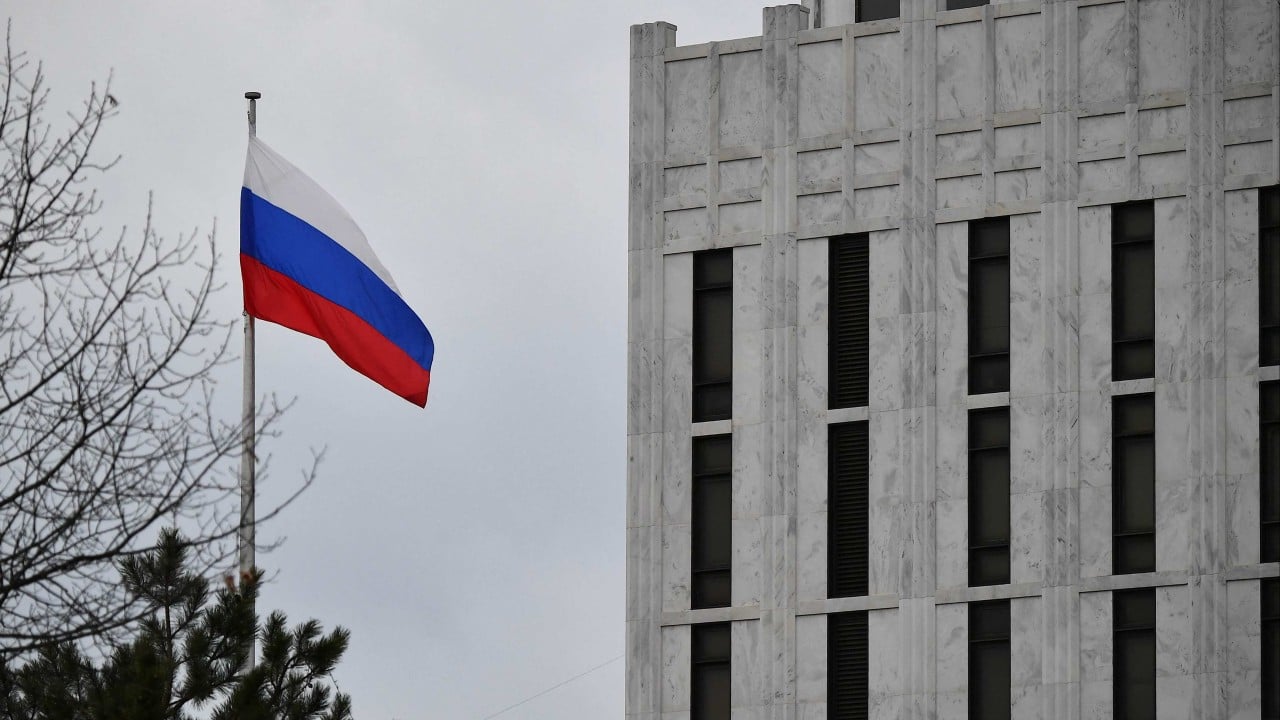
Silence.
In the grand, chandelier-lit halls of diplomatic residencies along Massachusetts Avenue, silence is rarely peaceful; it is the heavy, suffocating hum of a telephone line that nobody dares to pick up, or worse, a line that has suddenly gone dead. When Russia’s Foreign Ministry released a terse, clinical statement announcing that its ambassador to the United States had died "suddenly," the wire services treated it like a routine obituary, filing the cold facts under a predictable headline before moving on to the next news cycle. They gave us a name, a date, a tenure, and that familiar, opaque Russian adverb—suddenly—which carries a thousand unspoken questions in the lexicon of modern geopolitics.
Yet if you have ever sat inside a crisis room at three in the morning, watching two nuclear superpowers misread each other’s intentions across an ocean of suspicion, you know that an ambassador is never just a bureaucrat in a tailored suit. He is the fuse box. When that fuse blows without warning, the lights do not simply flicker in Moscow and Washington; the darkness spreads into every living room where ordinary people quietly assume that someone, somewhere, is still keeping the peace.
To understand what actually died when that diplomatic dispatch crossed the wires, we have to look past the marble facades of Embassy Row and step into the invisible machinery that prevents cold wars from turning hot.
The Weight of a Single Whisper
Consider a hypothetical scenario—a composite of countless real nights in the history of Soviet and Russian-American relations. Picture a mid-level State Department desk officer, let’s call her Elena, staring at a blinking red secure phone in a windowless room in Foggy Bottom. Outside, Washington is asleep under a humid August sky. Inside, satellite imagery has just shown an unexpected troop movement near a contested border, or a naval vessel straying too close to a maritime boundary in the Black Sea.
Who does Elena’s boss call? Not the Kremlin directly; leaders do not pick up the phone at 3:14 a.m. without weeks of choreographed protocol, translation delays, and political posturing. Instead, they call the ambassador. They summon him to a side entrance, away from the cameras, where two men who know each other’s children’s names can look each other in the eye and ask a simple, terrifying question: Is this an accident, or is this the beginning?
That human backchannel is the difference between a miscalculation and a catastrophe.
Historically, we have seen this exact dynamic play out when the world stood on the brink. During the Cuban Missile Crisis in October 1962, it was not public speeches at the United Nations that pulled humanity back from the abyss; it was Attorney General Robert Kennedy meeting quietly with Soviet Ambassador Anatoly Dobrynin in a dimly lit Justice Department office. Dobrynin, a man who understood the American psyche as intimately as his own, carried the raw, unfiltered fear of Washington back to Nikita Khrushchev. Without that human conduit—without someone capable of translating not just words, but tone, exhaustion, and genuine dread—the telegrams would have been read as bluffs, and the missiles would have flown.
When an ambassador to the United States dies abruptly, that translator vanishes overnight. You cannot replace institutional memory with a press release. You cannot upload twenty years of subtle, off-the-record trust into a newly appointed chargé d'affaires who has never shared a cup of coffee with the National Security Advisor.
Anatomy of a Sudden Exit
The word "suddenly" has a complicated history in Russian statecraft, and pretending otherwise insults the intelligence of anyone who has followed Moscow’s political theater over the last two decades. When the Russian Foreign Ministry uses that word without immediate medical elaboration, our minds naturally race toward conspiracy, intrigue, and the dark shadows of intelligence services.
Let us be candid about that instinct. We live in an era where skepticism is a survival mechanism. Over the years, a troubling number of Russian officials, oligarchs, and diplomats have met abrupt, unexplained ends—from high-rise windows in Moscow to hotel rooms in foreign capitals. In 2017, Russia’s ambassador to the United Nations, Vitaly Churkin, collapsed in his Manhattan office a day before his sixty-fifth birthday, with the New York City medical examiner later sealing the autopsy results under diplomatic immunity rules. Before him, Andrei Karlov was assassinated on camera in Ankara, and other envoys passed away in posts from Khartoum to New Delhi under circumstances that left observers squinting at the official paperwork.
Because of this pattern, every sudden death in the Russian diplomatic corps triggers an immediate, visceral reaction: What aren't they telling us?
Yet here is where honest analysis demands restraint. To jump straight to foul play without evidence is to fall into the same trap of binary thinking that poisons diplomacy itself. The reality of serving as Russia’s chief envoy in Washington during the most fractured period of bilateral relations since the 1980s is a recipe for extreme physical toll. Imagine waking up every morning to an inbox filled with sanctions lists, expulsion orders, and venomous rhetoric from both capitals. On one side, you are viewed by your host country as the face of an aggressive, authoritarian regime, pariah-status personified, barred from normal social circles and watched around the clock by counterintelligence agents. On the other side, you are scrutinized by an increasingly paranoid Kremlin, terrified that any sign of warmth toward Americans will be interpreted as treason or weakness.
You are a man trapped between two grinding stones.
Stress of that magnitude is a silent assassin. Heart attacks, strokes, and acute medical emergencies do not require a poisoner’s vial when a human being spends years carrying the weight of two hostile nations on his shoulders while isolated in a gilded cage on Wisconsin Avenue. Whether the cause was a failing heart or something far more opaque, the operational consequence for the rest of us remains identical: the chair across the table is empty, and the room just grew colder.
The Illusion of the Digital Hotline
A common misconception among those outside foreign policy circles is that ambassadors have become obsolete relics of the nineteenth century. In an age of encrypted messaging, instant video links, and direct presidential summits, why does an envoy in Washington even matter? If the White House wants to talk to the Kremlin, can’t they just pick up the famous "red phone"?
It is a tempting thought, and it is completely backward.
Think of direct leader-to-leader communication like a surgical scalpel: extraordinarily powerful, brutally sharp, and terrifyingly dangerous if used for everyday tasks. Presidents cannot speak casually. Every syllable uttered by a head of state is recorded, analyzed by intelligence agencies, leaked to the press, and locked into domestic political cement. If a president makes a concession on a phone call and it leaks, he looks weak; if he issues a threat, he cannot back down without losing face. Therefore, direct calls between Washington and Moscow happen rarely, usually only after weeks of painstaking pre-negotiation.
An ambassador, by contrast, is the shock absorber on a heavy truck driving over a boulder-strewn mountain road.
Without shock absorbers, every tiny pebble—a detained journalist, a cyber intrusion, a stray drone over international waters, a disputed visa—rattles the entire frame of the vehicle until the axles snap. The ambassador’s job is to absorb those daily, relentless impacts before they reach the steering wheel. He meets with deputy secretaries, senators, think-tank directors, and quiet intermediaries. He tests ideas using hypothetical language: "If Washington were to consider X, how might Moscow react?" Nobody is on the record. Nobody’s ego is on the line. If the idea dies in the room, it dies quietly, without triggering a public crisis.
Consider what happens when you strip the shock absorbers off that truck while speeding down a cliffside road in the dark. Every bump becomes a structural threat. Every minor diplomatic spat escalates immediately to the highest, most rigid levels of government, where compromise is politically impossible.
Living Inside the Echo Chamber
I remember speaking once with a retired diplomat who had served in Moscow during the final, chaotic years of the Cold War. He described the psychological drift that occurs when embassies are hollowed out by expulsions and sudden vacancies. "When you stop talking to the other side," he told me, "you start inventing them."
That sentence has stayed with me for years because it explains the real danger of our current moment. Over the past several years, tit-for-tat diplomatic expulsions have gutted both the U.S. Embassy in Moscow and the Russian Embassy in Washington. Consulates have been shuttered. Visa processing has ground to a halt. Cultural exchanges, academic partnerships, and routine military-to-military deconfliction lines have withered away.
Into that vacuum rushes imagination—and in geopolitics, imagination is almost always catastrophic.
When Russian diplomats in Washington are isolated, their reporting back to Moscow becomes skewed. Cut off from candid conversations with American lawmakers and everyday citizens, they begin to rely on cable news pundits, partisan social media feeds, and worst-case intelligence assessments. They feed the Kremlin a caricature of America: a nation either on the brink of civil collapse or plotting Russia’s imminent destruction. Conversely, without a seasoned Russian envoy in Washington capable of articulating Moscow’s red lines with nuance rather than robotic talking points, American policymakers begin to view Russia as a monolith devoid of internal debate or rational calculation.
Both sides end up shadowboxing with ghosts of their own creation.
When the top Russian envoy suddenly passes away in the middle of this deep freeze, the echo chamber grows even tighter. The Kremlin will not rush to send a charismatic, independent-minded bridge-builder to Washington. In today’s political climate in Moscow, loyalty and ideological rigidity are prized far above diplomatic finesse. Whoever eventually steps into that empty residence will likely arrive with a narrower mandate, less personal authority, and even fewer open doors in Washington than their predecessor had.
The Human Toll Behind the Flag
It is easy, when reading about geopolitical chessboards and diplomatic crises, to forget that embassies are filled with human beings who bleed, grieve, and break under pressure. Behind the official condolences and the lowered flags at half-staff, there is a family suddenly navigating a nightmare in a foreign land—a spouse packing boxes in a heavily guarded compound, children pulled out of local schools, colleagues whispering in corridors while wondering who will be summoned back to Moscow next and what awaits them when they land.
Diplomacy is often portrayed in movies as champagne receptions and tuxedoed intrigue. In reality, modern diplomacy between adversaries is an exhausting, lonely grind. It is spending years defending policies you may privately question, absorbing the hostility of a host nation while knowing that a single misstep could ruin your career—or worse—back home. It is watching a lifetime of professional relationships evaporate as friends cross the street to avoid being photographed shaking your hand.
We do not need to romanticize the policies of the Russian state to recognize the stark human reality of a life extinguished at the center of a diplomatic storm. In fact, recognizing that humanity is essential if we want to understand how nations actually behave. States do not make decisions; tired, frightened, ambitious, and mortal human beings make decisions inside rooms where the air conditioning is too loud and the coffee has gone cold.
The Long Shadow of an Empty Chair
So what happens now, in the quiet weeks following the Foreign Ministry’s announcement?
On the surface, very little will appear to change. A deputy will step up as interim chargé d'affaires. Statements will continue to be issued condemning American foreign policy, and the State Department will continue to issue counter-statements condemning Russian actions. The machinery of hostility runs smoothly on autopilot; it requires no special maintenance, no personal warmth, and no creative thought.
It is the machinery of peace that requires constant, delicate human tending.
Somewhere in Washington tonight, a secure phone sits on a desk, waiting for a crisis that nobody wants but everyone expects. Somewhere in Moscow, analysts are drafting memos trying to guess how the White House will react to the next flashpoint, without the eyes and ears of their senior envoy on the ground to tell them what Washington actually feels like after dark.
The wire services have already moved on from the headline. The obituary has been filed, the diplomatic protocols observed, and the heavy doors of the embassy on Wisconsin Avenue remain closed to the street. Yet the next time a radar screen flashes unexpectedly over the Baltic Sea, or a diplomatic cable arrives in Washington phrased a little too sharply, the absence of a single voice in a quiet room may turn out to be the loudest sound in the world.


