Pain.
It rarely arrives in the NBA with the theatrical violence of a snapped tendon or the sickening, broadcast-replayed pop of a knee giving way under two hundred and fifty pounds of momentum. More often, it creeps in like cold water under a door, silent and unremarkable, until a player steps onto the hardwood during morning shootaround and realizes that the simple, unthinking act of pushing off his back foot feels like driving a dull nail into the base of his calcaneus.
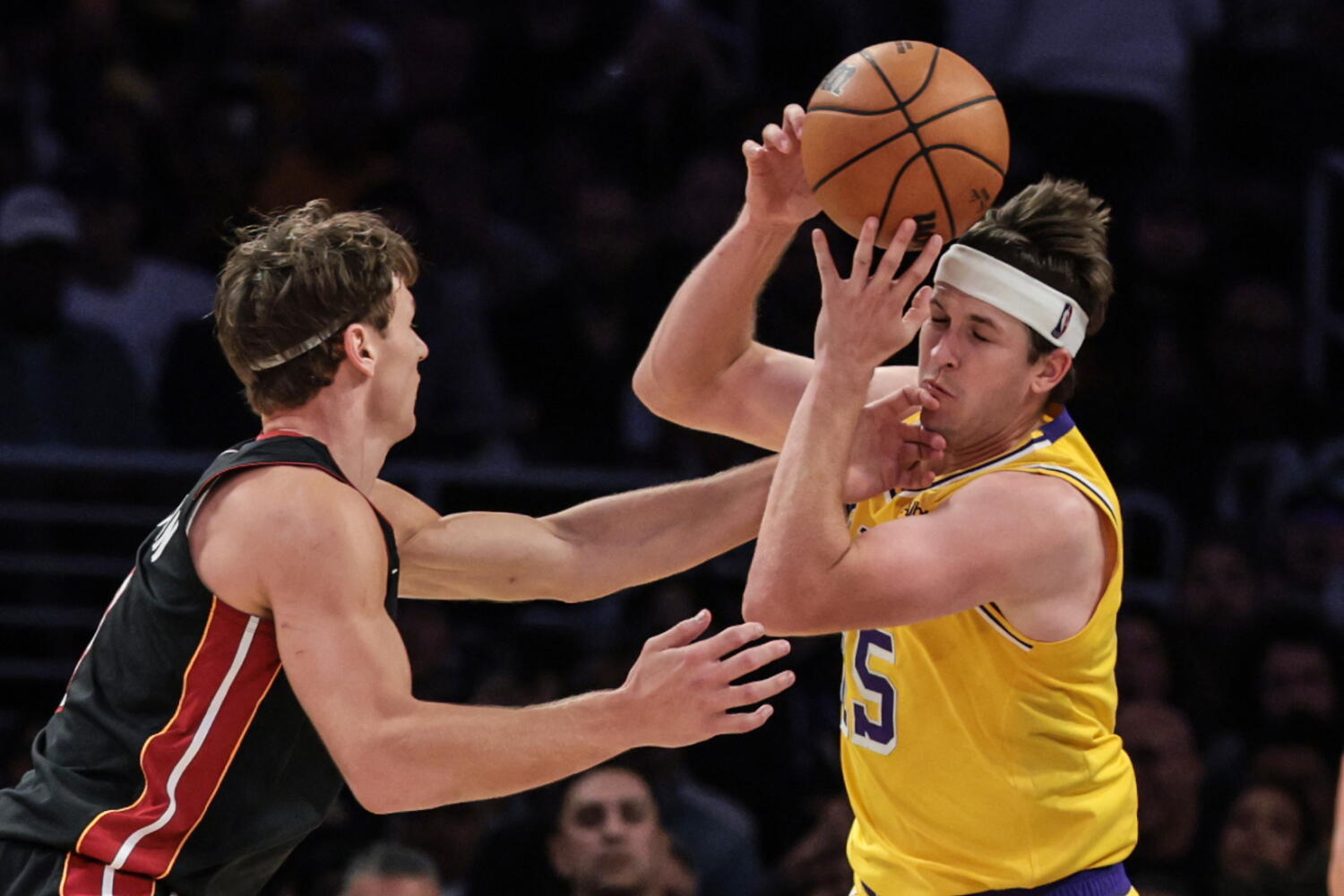
When the Los Angeles Lakers officially listed Austin Reaves as day-to-day with a heel injury, the transaction wire treated it like a footnote. Two sentences. Three if you count the obligatory mention of the team’s upcoming back-to-back. To the casual observer scrolling past injury updates between coffee sips, "day-to-day" sounds benign, almost reassuring—a linguistic sedative designed to tell fans that the machine is merely getting an oil change, that no gears have been stripped, and that normal service will resume by tip-off on Tuesday.
Anyone who has ever tried to sprint on an inflamed heel knows better.
The Architecture of a Bruised Calcaneus
To understand why a heel injury turns an NBA guard’s life into a quiet psychological war, you have to strip away the glamour of Crypto.com Arena and look at the human foot as a piece of mechanical engineering. Think of the heel bone—the calcaneus—as the foundation pier of a suspension bridge. Every time a player plants to change direction, decelerates from a full sprint, or absorbs the shock of landing after a contested layup, forces equal to three to five times his body weight slam directly into that single, dense block of bone and the thin, unforgiving pad of fat beneath it.
There is nowhere to hide a bad heel on a basketball court. You can tape an ankle until it resembles a plaster cast. You can wear a neoprene sleeve over a balky knee, pop an anti-inflammatory, and convince yourself that adrenaline will carry you through the fourth quarter. A heel does not negotiate. Every single step of the five miles an NBA guard covers during a forty-eight-minute game requires that exact piece of anatomy to strike the floor first, absorb the violence of gravity, and immediately transfer that energy forward into the toes.
Consider a hypothetical scenario to picture what happens inside the locker room before a game when a player carries that dreaded designation. Imagine a trainer pressing a thumb gently against the bottom of a player’s foot at 5:30 PM, ninety minutes before the doors open to the public. If the player winces—not a dramatic flinch, just a tiny, involuntary tightening around the eyes—the entire evening changes. Suddenly, the game is no longer about reading pick-and-roll coverages or hunting mismatches against a switching defense. It becomes an exercise in micro-hesitation. A tenth of a second lost on a first step because the brain subconsciously tries to protect the heel from striking too hard. A jump shot left slightly short because the kinetic chain from the floor to the fingertips broke down at the very first link.
I remember the first time I dealt with a deep heel bruise during a rec-league tournament years ago—a setting infinitely smaller and slower than the crucible of the Western Conference, yet governed by the exact same biology. You wake up believing it is gone. Walking to the kitchen feels fine. Walking to the car feels fine. You lace up your shoes, jog onto the court, and the moment you try to plant laterally to cut off a driving guard, a sharp, electric jolt shoots straight up your Achilles tendon into your calf. The betrayal is total. Your body tells you that you are healthy right up until the exact millisecond you ask it to be athletic.
Why Austin Reaves Cannot Afford to Slow Down
For Austin Reaves, the timing of this physical hesitation carries a weight that transcends a single box score. Reaves did not arrive in Los Angeles wrapped in the protective bubble of a lottery pick, where franchises patiently absorb slumps and injuries as part of a multi-year investment. He arrived undrafted out of Oklahoma, a skinny kid from Newark, Arkansas, who earned every minute of his rotation spot by playing with a reckless, bruising defiance that contradicted his frame.
His entire game is built on rhythm, deceleration, and manipulation. Watch Reaves operate in the half-court and you realize he rarely beats defenders with pure vertical explosion or blinding top-end speed. Instead, he beats them with change of pace—the sudden, jarring stop on a dime that sends a trailing defender flying past him while Reaves steps back into an open pocket of space. That signature deceleration relies entirely on slamming the heel into the court to brake his momentum. Take away his ability to plant his heel without flinching, and you are not just shaving five percent off his efficiency; you are removing the primary weapon from his arsenal.
The invisible stakes ripple outward through the entire Lakers roster. In an offense anchored by LeBron James and Anthony Davis, Reaves functions as the connective tissue—the secondary ball-handler who relieves the pressure on a forty-year-old superstar and punishes defenses that sell out to double-team the paint. Without him on the floor, or with a diminished version of him laboring through thirty minutes of compromised movement, the geometry of the Lakers’ offense shrinks. Defenders sag off non-shooters. Passing lanes close a heartbeat faster. LeBron has to expend precious energy initiating sets in the third quarter that he desperately needs to save for the final four minutes of the fourth.
Fans often ask how long a heel injury actually keeps a player out when the team refuses to give a firm timetable. The honest, uncomfortable answer is that medical staffs themselves often do not know. Unlike a Grade 2 hamstring strain or a fractured wrist, where MRI imaging provides a reliable calendar of tissue healing, heel pain lives in a gray zone of pain tolerance and inflammation management. A bone bruise or plantar fascia irritation can calm down after forty-eight hours of ice, shockwave therapy, and custom orthotic padding—or it can linger like a stubborn ember for three weeks, flaring up every time the player logs heavy minutes on a road trip.
The Trap of the NBA Grind
This uncertainty exposes a quiet, structural flaw in how modern professional basketball treats minor lower-extremity injuries. The eighty-two-game schedule is a relentless meat grinder that rewards availability above almost every other virtue. Players know that sitting out carries an unspoken cost, even when the training staff signs off on it. Momentum is fragile. Lineup chemistry is fragile. For a guard who built his career on outworking more gifted athletes, voluntarily stepping out of the lineup feels like surrendering territory he fought years to claim.
Yet playing through a compromised heel introduces a dangerous second-order risk that sports medicine doctors worry about far more than the bruise itself: compensation injuries.
Think of how you walk when you have a pebble in your right shoe. Within ten steps, you are subconsciously rolling your weight onto the outside edge of your foot, shortening your stride, and locking your right hip to keep pressure off the sole. Do that for two hours at NBA speed—jumping, cutting, colliding with seven-footers in midair—and the stress that belongs in the heel migrates upward. It settles into the Achilles tendon. It tugs at the calf muscle. It twists the knee at awkward angles on routine closeouts. Historically, some of the most devastating soft-tissue injuries in basketball have been preceded by a player gutting through a seemingly minor foot or heel ailment two weeks earlier.
That is the tightrope the Lakers’ medical staff and coaching bench have to walk right now. Put Reaves on the floor too early because the Western Conference standings leave zero margin for error, and you risk turning a three-day nuisance into a six-week absence. Hold him out too long, and you sacrifice winnable games in a conference where a two-game skid in November can mean the difference between home-court advantage in April and fighting for survival in the Play-In tournament.
What Happens Inside the Quiet Hours
Behind the sterile three-word update on the official injury report lies a grueling, unglamorous routine that few spectators ever witness. While the city sleeps, "day-to-day" means hours spent in the training room long after the arena lights have been dimmed. It means contrast baths—plunging the foot into freezing water until the toes go numb, then into hot water to flush blood back into the bruised tissue. It means physical therapists digging their thumbs into tight calves and plantar tendons to release the protective tension the body builds around an injured joint. It means testing three different thicknesses of silicone heel cups inside custom-molded sneakers, trying to find the exact millimeter of cushioning that absorbs shock without making the shoe feel like a mushy platform.
And perhaps hardest of all, it means sitting in the dark of a hotel room on the road, staring at the ceiling, wondering if tomorrow morning will finally be the day the sharp sting fades into a dull ache, or if the first step onto the carpet will send that familiar warning signal shooting back up the leg.
We love sports for the grand, mythic moments—the buzzer-beaters, the chase-down blocks, the champagne-soaked celebrations in June. We rarely stop to appreciate the quiet, mundane courage required simply to test a sore foot on a Tuesday afternoon in front of eighteen thousand people who expect perfection.
When Austin Reaves finally steps back onto the court—whether it is tonight, Friday, or next week—watch his very first defensive possession. Do not watch the ball. Watch his feet as he slides laterally to cut off a baseline drive, waiting to see if he plants that heel into the hardwood with trust, or if he still flinches against the floor.