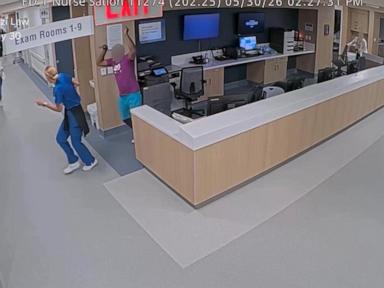
Public discourse surrounding hospital security breaches typically converges on sensationalism. Media accounts freeze events at the point of physical impact, framing violent episodes in emergency departments as isolated aberrations or unpredictable outbursts by aberrant individuals. This analytical framework is fundamentally flawed. When an emergency room patient assaults medical personnel, the incident represents the terminal failure of a multi-tiered operational system. Security breakdowns in acute care settings are predictable, measurable outcomes of converging systemic vulnerabilities, environmental stressors, and inadequate resource allocation models. Examining these events through an operational lens exposes the exact failure points that allow acute agitation to escalate into physical violence.
The Threat Vector Taxonomy in Acute Care
To understand emergency room violence, analysts must categorize the underlying drivers of aggressive behavior rather than treating all incidents as homogenous criminal acts. Aggression in the emergency department manifests across three distinct behavioral vectors: physiological decompensation, psychological distress, and instrumental disruption.
Physiological decompensation accounts for the largest share of acute incidents. Hypoxia, hypoglycemia, traumatic brain injury, acute intoxication, withdrawal syndromes, and severe sepsis directly alter neurological function, impairing impulse control and cognitive processing. In these instances, the patient is experiencing a medical emergency that manifests as behavioral disturbance. The failure occurs when clinical triage systems categorize behavioral changes as purely psychiatric or disciplinary rather than physiological red flags requiring immediate stabilization.
Psychological distress and psychiatric crises represent the second vector. Patients experiencing acute psychosis, severe unmanaged anxiety, or profound depression navigate high-stimulus environments that exacerbate symptoms. Emergency waiting rooms function as sensory processing nightmares. Overcrowded seating, relentless noise, bright fluorescent lighting, and prolonged, uncertain wait times create a high-friction environment that accelerates agitation. When baseline coping mechanisms collapse under environmental pressure, patients experience sensory overload, frequently resulting in defensive or reactive aggression.
Instrumental disruption comprises the third vector, though it occurs with lower frequency. This category involves intentional non-compliance, drug-seeking behavior, or individuals utilizing the emergency department as a shelter or escape. When administrative boundaries or security protocols frustrate these objectives, frustration transforms into verbal hostility and, ultimately, physical confrontation. Conflating instrumental disruption with physiological or psychological crises leads to misallocated security responses that escalate rather than de-escalate tension.
The Triage Vulnerability Index
The primary systemic failure occurs at the intake desk. Traditional triage protocols, such as the Emergency Severity Index, prioritize physiological stability above behavioral risk. A patient presenting with stable vital signs but severe underlying agitation receives a low acuity score, relegating them to extended waiting periods in communal spaces. This structural design flaw creates an incubation chamber for violence.
The waiting room functions as an unmonitored holding pen. Without continuous behavioral surveillance, staff lose visibility into escalating verbal disputes, pacing, posturing, and early indicators of cognitive deterioration. By the time a patient breaches the inner treatment area or attacks staff, the window for verbal de-escalation has closed.
Quantifying this vulnerability requires examining the dwell time versus security interaction ratio. As waiting times exceed industry benchmarks, the probability of behavioral incidents increases exponentially. Hospitals that fail to implement continuous behavioral health screening tools during initial triage inherit an avoidable risk profile. The absence of predictive screening metrics means staff operate in a purely reactive posture, responding to crises after physical harm has occurred rather than intercepting agitation during its formative stages.
Spatial Architecture and Environmental Stressors
Physical infrastructure dictates human behavior. The architectural design of most legacy emergency departments actively contributes to interpersonal conflict. Confined waiting areas, inadequate sightlines, single-point ingress and egress choke points, and the absence of private isolation spaces for agitated individuals generate structural friction.
When physical space is constrained, personal space boundaries dissolve. In a crowded waiting room, patients and families experience a loss of autonomy and control. This perceived powerlessness triggers a defensive stress response. Facilities that fail to design physical environments with built-in spatial buffers experience higher rates of assaultive behavior.
Furthermore, the lack of secure separation between clinical workspaces and public access areas exposes staff to immediate physical threat. Open-door triage desks, unmonitored corridor access, and unrestricted visitor flow create porous perimeters. Hardening a facility requires separating high-risk populations into dedicated, low-stimulus observation units staffed by specialized behavioral emergency teams. Architectural modifications that enhance visibility, provide multiple egress routes for staff, and incorporate calming environmental elements—such as acoustic dampening and controlled lighting—directly reduce the frequency of physical altercations.
Staffing Ratios, Cognitive Fatigue, and Situational Awareness
Human capital remains the primary defensive barrier in any emergency department, yet workforce metrics indicate severe operational strain. High nurse-to-patient ratios, mandatory overtime, and chronic understaffing degrade situational awareness. When clinical personnel are overwhelmed by administrative burdens and excessive patient loads, their capacity to monitor behavioral shifts diminishes.
Situational awareness relies on continuous environmental scanning. An emergency nurse managing four or five complex medical patients simultaneously lacks the cognitive bandwidth to detect early warning signs of patient agitation. This cognitive overload creates blind spots. Staff miss subtle cues such as clenched fists, escalating vocal tone, rapid pacing, or fixated staring.
The institutional response to staffing deficits has historically relied on post-incident security deployment rather than preventative staffing models. When security personnel are under-resourced or deployed reactively, they arrive after the assault has commenced. Effective operational strategy requires dedicated security officers embedded directly within clinical teams, trained specifically in medical de-escalation rather than purely punitive or custodial enforcement. Establishing low patient-to-staff ratios in high-risk zones ensures that behavioral escalations are identified and intercepted before physical contact occurs.
The Cost Function of Retaliatory Versus Preventative Frameworks
Hospitals operating under short-term financial optimization models frequently view security and specialized behavioral staffing as cost centers rather than risk-mitigation investments. This economic calculation is profoundly flawed. The true cost function of emergency room violence encompasses direct medical expenses for injured staff, workers compensation claims, legal liabilities, recruitment and retention costs due to staff burnout, and facility downtime.
When an assault occurs, the operational disruption ripples across the entire hospital ecosystem. Staff members experience psychological trauma, leading to absenteeism, turnover, and a degraded safety culture. Remaining personnel adopt risk-averse behaviors, altering how they interact with patients, which can inadvertently compromise clinical care quality.
Conversely, investing in preventative infrastructure alters the economic equation. Implementing rigorous behavioral triage protocols, specialized de-escalation training, optimized spatial architecture, and appropriate staffing ratios creates a self-reinforcing cycle of safety and efficiency. Organizations that treat workplace violence as a manageable operational variable rather than an inevitable hazard achieve higher staff retention, reduced liability exposure, and superior clinical outcomes.
Strategic Operational Execution
Eliminating violence in emergency departments requires a systematic overhaul of intake, architecture, staffing, and culture. Healthcare leadership must transition from reactive crisis management to proactive risk mitigation.
First, overhaul intake protocols by integrating validated behavioral acuity scoring tools alongside traditional physiological triage metrics. Any patient presenting with indicators of cognitive impairment, severe agitation, or substance intoxication must be routed immediately to a secure, low-stimulus observation zone rather than a general waiting room.
Second, redesign physical infrastructure to eliminate chokepoints and secure clinical workspaces. Install physical barriers at triage desks while maintaining open sightlines, create dedicated secure holding areas for high-risk patients, and ensure every treatment room has multiple unobstructed exit routes for staff.
Third, recalibrate staffing models to align with behavioral risk reality. Deploy dedicated, medically trained security teams directly into high-acuity zones, and enforce safe nurse-to-patient ratios that preserve the cognitive bandwidth necessary for situational awareness and early intervention.
Fourth, mandate comprehensive de-escalation and situational awareness training for all frontline emergency personnel. Training must move beyond theoretical classroom instruction to include realistic, high-fidelity simulation scenarios that build operational muscle memory.
By treating emergency room violence through a rigorous operational framework, healthcare systems can dismantle the structural vulnerabilities that permit these incidents to occur, safeguarding personnel and restoring integrity to acute care delivery.