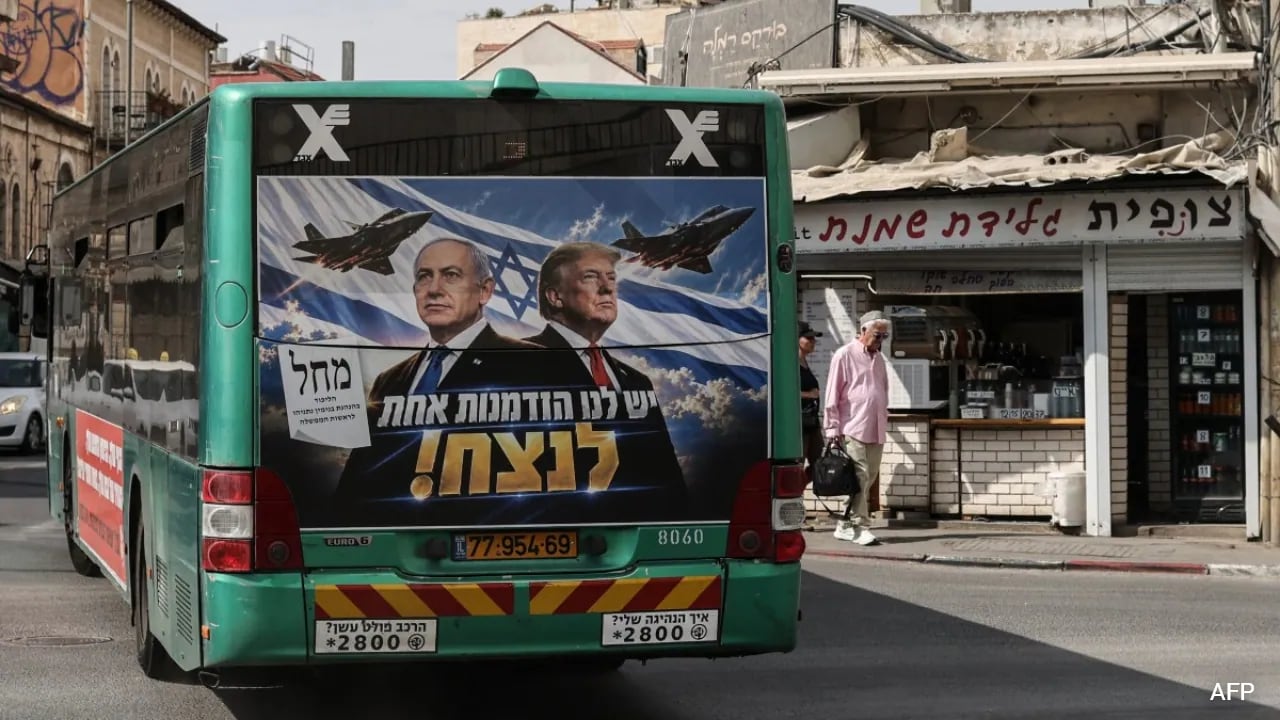
Conventional political commentary frames Israel’s electoral trajectory after the October 7, 2023 attacks as a straightforward binary referendum. According to mainstream media narratives and standard diplomatic analyses, the upcoming ballot box represents a simple choice between retaining the current right-wing coalition or replacing it with a centrist opposition focused on security institutionalism and hostage negotiations.
Observers who reduce Israeli politics to a two-sided battle miss the structural mechanics driving the electorate. Political scientists, polling institutes like the Israel Democracy Institute (IDI), and veteran Israeli journalists point out that the post-October 7 political realignment is not a neat pendulum swing from right to center. Instead, it is a deep fragmentation of traditional ideological camps, driven by profound institutional distrust, demographic shifts, and competing definitions of long-term national security.
The Myth of the Binary Referendum
The prevailing assumption in international coverage is that massive security failures automatically trigger an ideological shift toward the political opposition. Analysts looking through a Western parliamentary lens often assume that voter dissatisfaction with Prime Minister Benjamin Netanyahu’s government translates directly into support for a two-state diplomatic framework or a return to pre-war centrist policies.
Data from the Israel Democracy Institute’s Israeli Voice Index tells a more complicated story. While public trust in political leadership plummeted following October 7, polling consistently shows that Israeli Jewish public opinion simultaneously hardened against unilateral territorial concessions. Voters who abandoned the ruling Likud party did not migrate en masse to the traditional left. Instead, many shifted toward other right-wing or center-right figures—such as Benny Gantz, Avigdor Lieberman, or Naftali Bennett—who critique the current government's execution and governance while maintaining hawkish stances on military deterrence.
Foreign commentators frequently conflate dissatisfaction with specific leaders with a rejection of their broader security worldview. In Israel’s proportional representation system, a voter can despise the incumbent prime minister while remaining deeply skeptical of diplomatic compromises that they believe could create future security vacuums on the country's borders.
The Real Fault Lines in the Electorate
To understand what is actually happening at the ballot box, analysts must look past the personalities at the top of the ticket and examine the structural fractures reshaping Israeli society. According to researchers at the Institute for National Security Studies (INSS) and demographic data from the Central Bureau of Statistics, three specific issues outweigh traditional left-right labels.
1. The Ultra-Orthodox Conscription Crisis
For decades, exemptions from mandatory military service for Haredi (ultra-Orthodox) men served as the political glue holding right-wing coalitions together. The prolonged multi-front war changed the math. With reserve soldiers serving hundreds of days and bearing heavy economic and personal burdens, the High Court of Justice’s June 2024 ruling ending blanket exemptions turned a long-simmering social debate into an acute coalition crisis.
This issue cuts directly across the traditional right-wing bloc. Secular and National Religious voters—many of whom form the backbone of the Israel Defense Forces (IDF) combat units—increasingly view equal burden-sharing as a non-negotiable baseline, putting them on a direct collision course with ultra-Orthodox parties like Shas and United Torah Judaism.
2. Institutional Accountability vs. Political Survival
A central debate in Israeli politics revolves around the establishment of a State Commission of Inquiry—the highest-level judicial investigation mechanism under Israeli law—to examine the intelligence and policy failures leading up to October 7.
Legal scholars and opposition leaders argue that only an independent commission led by a Supreme Court justice holds the credibility to investigate both the political echelon and the security establishment. Conversely, members of the ruling coalition have resisted establishing such a commission while active military operations continue, arguing that wartime investigations distract commanders and risk politicizing the judiciary. This dispute is fundamentally a continuation of the 2023 judicial overhaul crisis, testing whether Israelis prioritize institutional checks and balances or executive continuity during prolonged conflict.
3. The Question of "The Day After"
Rather than debating abstract peace plans, Israeli voters and strategists are divided over practical governance models for Gaza and the northern border:
- The Military Administration Model: Favored by hardline factions within the coalition, this approach argues that Israel must retain indefinite security and civil control over Gaza to prevent the resurgence of militant groups, accepting the long-term economic and diplomatic costs.
- The Regional Coalition Model: Advocated by centrist leaders and backed by Washington, this framework seeks to integrate moderate Arab states and a reformed Palestinian administrative body into Gaza’s reconstruction, tied to broader regional normalization agreements.
- The Buffer Zone and Deterrence Model: Supported by several pragmatic right-wing figures, this position opposes full civilian occupation of Gaza while insisting on permanent IDF perimeter control, freedom of operational action, and strict demilitarization enforcement.
Why Polling Predictions Often Misread the Outcome
Relying on mid-term seat projections to predict the final coalition misses how Israel’s electoral system functions under pressure. In a 120-seat Knesset with a 3.25% electoral threshold, minor shifts in turnout or party mergers can alter the parliamentary math overnight.
Political analysts at Tel Aviv University and the Hebrew University of Jerusalem highlight several factors that routinely disrupt early forecasts:
- The Electoral Threshold Trap: Smaller parties on both the left and the far right frequently hover near the 3.25% cutoff. In 2022, the failure of Meretz and Balad to cross this threshold wasted hundreds of thousands of opposition votes, handing the right-wing bloc a decisive parliamentary majority despite a near-even split in the popular vote.
- Arab-Israeli Voter Turnout: Representing roughly 20% of Israel’s population, Arab citizens hold the demographic weight to swing double-digit Knesset seats. However, turnout fluctuates dramatically depending on whether parties like Ra'am and Hadash-Ta'al run separately or unite, and whether voters feel alienated by wartime rhetoric or motivated to influence domestic economic policies.
- New Political Vehicles: Israeli politics is notoriously fluid. Historic precedent—from Kadima in 2006 to Yesh Atid in 2013 and Blue and White in 2019—shows that newly formed centrist or center-right parties led by former military chiefs or returning politicians routinely absorb protest votes in the final months before an election.
Answering the Questions Voters Actually Ask
When observers ask, "Will the next election bring peace to the region?" they are asking the wrong question. Elections in parliamentary democracies reflect domestic consensus; they do not manufacture regional diplomatic breakthroughs on their own. Even a center-left government in Jerusalem would face an electorate traumatized by October 7, skeptical of international security guarantees, and unwilling to accept arrangements that leave armed groups intact along its borders.
When analysts ask, "How can Netanyahu still retain competitive polling numbers after a historic security failure?" the answer lies in coalition arithmetic and voter psychology. Under Israel's parliamentary system, a prime minister does not need to win an outright majority of the popular vote—only a reliable 61-seat bloc of coalition partners. Furthermore, political psychologists note that during existential crises, a significant segment of any electorate prioritizes familiar leadership and fears that sudden political transitions could project weakness to regional adversaries like Iran and Hezbollah.
The Structural Reality Moving Forward
The battle for Israel’s future is not simply a contest between two rival camps at the ballot box. It is an internal struggle over the social contract between the state and its citizens—covering who serves in the military, who funds the economy, how state institutions are held accountable, and what constitutes credible deterrence in an unstable Middle East.
Any analysis that treats the upcoming election as a simple reset button ignores the deeper societal shifts already underway. Regardless of which coalition ultimately secures 61 seats in the Knesset, the next Israeli government will inherit a fractured public consensus, severe economic pressures from prolonged mobilization, and strategic dilemmas that cannot be resolved by a single election cycle.


