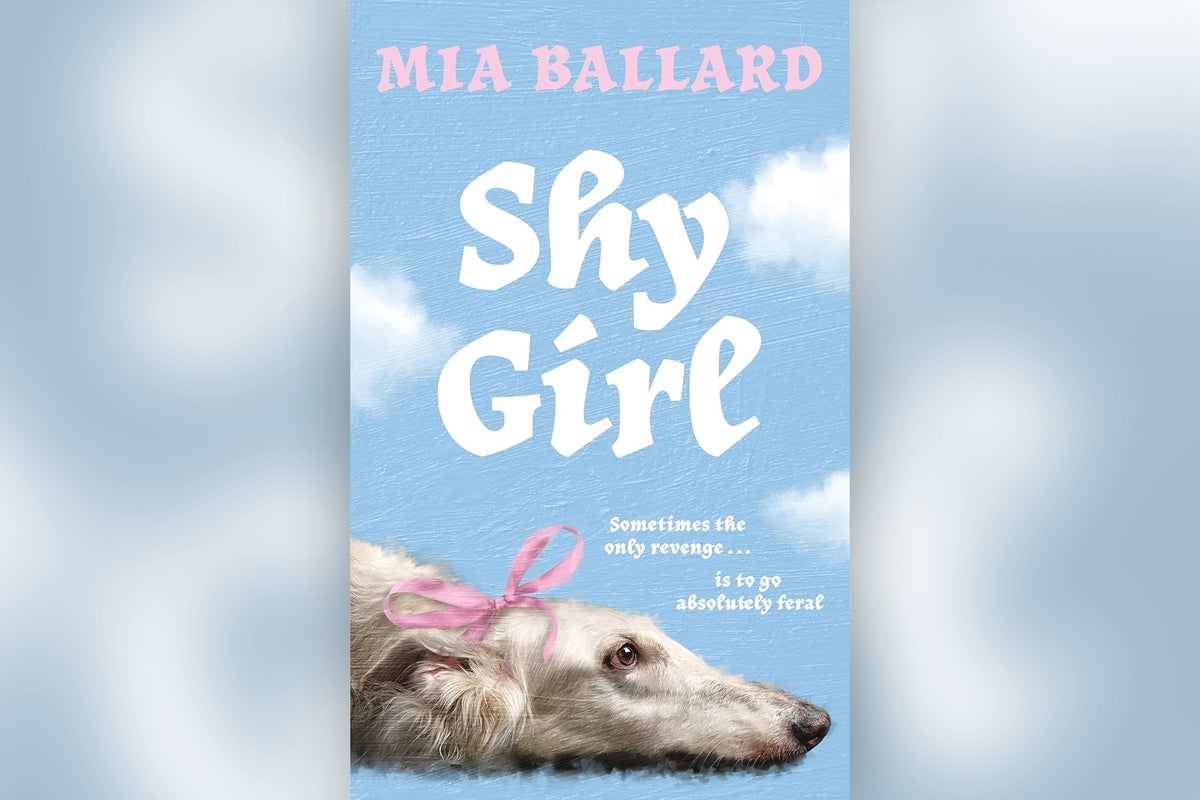
The publishing world is currently patting itself on the back for "protecting" literature. A horror novel gets yanked from the shelves because a handful of Twitter sleuths suspected a few paragraphs were spit out by a Large Language Model (LLM). The industry celebrates. The moralists cheer. The gatekeepers sharpen their red pens.
They are all missing the point.
The cancellation of authors for "suspected AI use" isn't a victory for human creativity. It is a desperate, flailing attempt by a dying establishment to maintain a monopoly on "soul" that they haven't actually possessed for decades. If you think the "purity" of a horror novel is the only thing at stake here, you aren't paying attention to the machinery of the business.
The Myth of the Virgin Manuscript
Publishing has always been a factory. The idea that every book on the shelf of a Barnes & Noble is the unadulterated, raw output of a singular human genius is a marketing lie we’ve all agreed to believe.
For years, high-output thriller and romance authors have used ghostwriters, "book packagers," and rigorous templates that dictate exactly where a plot twist must occur. James Patterson didn't "write" every word of the hundreds of books with his name on the spine. He manages a brand. He provides outlines. Other humans—often underpaid and uncredited—fill in the gaps.
Why is a human ghostwriter considered "industry standard" while an LLM is a "betrayal of the craft"?
The answer isn't ethics; it's economics. A human ghostwriter costs money and keeps the ecosystem closed. AI democratizes the ability to produce volume. The industry isn't afraid of bad writing—it's afraid of a flooded market where they are no longer the exclusive arbiters of who gets to be a "writer."
Detecting the Undetectable
The current trend of "AI hunting" is built on a foundation of pseudoscience. Let’s be incredibly clear: There is no such thing as a reliable AI detector.
Platforms like GPTZero or Originality.ai function on "perplexity" and "burstiness." They measure how predictable a sentence is. If you write in a clean, direct, and rhythmic style—the kind of style taught in every Creative Writing 101 class—an algorithm will flag you as a machine.
- Scenario: An author spends twenty years honing a minimalist, Hemingway-esque prose style.
- The Result: A detection tool flags their work as 80% AI-generated because it lacks the "chaos" of a disorganized mind.
By pulling books based on "suspected" AI use, publishers are essentially engaging in a modern-day Salem witch trial. They are relying on the vibes of a disgruntled internet mob rather than any verifiable forensic evidence. We are entering an era where being a "good" writer (consistent, clear, structured) is now a liability. To prove you are human, you are now expected to be intentionally messy.
The Horror of the Prompt
The specific targeting of horror fiction in these recent scandals is particularly ironic. Horror is a genre of tropes. It relies on the uncanny, the repetitive, and the archetypal. It is a genre that functions on a $N$-gram level of expectation.
When a reader complains that a description of a "dark, looming hallway" feels like AI, they are ignoring the fact that human horror writers have been using that exact sequence of words since the 18th century. We have mistaken "cliché" for "computation."
The industry claims that AI "steals" from other writers. This is a fundamental misunderstanding of how $P(w_{n} | w_{1}, \dots, w_{n-1})$—the probability of a word given the preceding words—actually works. An LLM doesn't "copy and paste" from a secret database of stolen novels. It learns the statistical weights of language.
Humans do the same thing. Every writer is a product of their library. You write like the five authors you read most recently. You are a biological neural network that has been "fine-tuned" on your own life experiences and your reading list. The only difference is that the AI has a better memory and doesn't get a hangover.
The Gatekeeper’s Last Stand
The real reason for the "pulling" of these novels is fear of the mid-list.
Traditional publishing is terrified of a world where a solo creator can use AI to handle the mundane tasks of world-building, grammar checking, and structural outlining to produce four high-quality books a year instead of one every eighteen months.
If authors become too efficient, the "prestige" of the publishing house evaporates. They need the process to be slow, agonizing, and "magical" to justify their 85% cut of the royalties.
Let's look at the "People Also Ask" logic that usually surrounds this:
- "Does AI make art worse?" No, it makes the floor higher. It eliminates the "D-grade" writing, forcing human authors to actually innovate instead of leaning on the same tired tropes they've used for fifty years.
- "Is it ethical to use AI?" It is as ethical as using a spellchecker, a thesaurus, or a research assistant. The tool doesn't hold the morality; the disclosure does.
- "Will AI replace authors?" It will replace the "content creators" who were already writing like bots. It will never replace the visionaries.
The Upside of the Machine
The irony of this "cancellation" culture is that it will eventually backfire. By forcing AI underground, publishers are ensuring they have zero control over its evolution.
Instead of banning it, they should be defining the "Cyborg Manuscript." I have consulted for creators who use LLMs to:
- Generate 50 variations of a character's death to find the one that feels the most visceral.
- Check for internal logic contradictions in a 150,000-word fantasy epic.
- Translate their work into twenty languages instantly to reach a global audience without a predatory foreign-rights deal.
This is the "nuance" the headlines ignore. We are treating a chainsaw like a murder weapon instead of a power tool.
The New Reality
The authors who survive the next decade won't be the ones who signed "No-AI" pledges. They will be the ones who learned to use these models as a "second brain."
If you are an author, stop trying to prove you're human by being inefficient. If you are a publisher, stop acting like a moral arbiter when your accounting department is already looking for ways to automate your marketing copy.
The book wasn't pulled because it was "written by AI." It was pulled because the publisher was too cowardly to stand behind a changing medium. They chose the safety of the mob over the inevitable evolution of the craft.
History won't remember the "brave" editors who cancelled these books. It will remember them as the people who tried to ban the word processor because it made the ink-makers nervous.
Burn the gate. Keep the tools.
Go write something that no machine—and no timid editor—could ever dream of.