Budapest in the deep winter does not yield its secrets easily. The Danube flows thick and gray, slicing through a city that has spent more than a decade learning to speak two languages at once. One language is spoken in the brightly lit halls of Brussels, full of compliance, metrics, and judicial milestones. The other is whispered in the small, fading towns along the Tisza River, where the grand promises of European integration often feel like a broadcast from a distant planet.
For years, a financial iron curtain separated these two worlds. The European Union had frozen billions of euros destined for Hungary, locking the funds away in a vault of bureaucratic disapproval. The reason? Deep anxieties over the rule of law, corruption, and the independence of Hungarian judges.
Then, the ice broke.
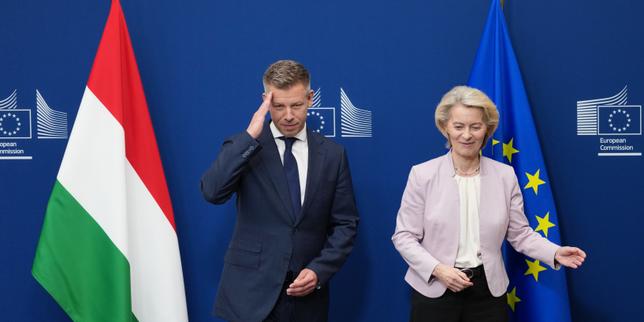
With a stroke of a pen, Brussels agreed to unfreeze 16.4 billion euros. To the economists and politicians, it was a major policy recalibration. But to the people living on the ground, it felt like the sudden release of a long-held breath.
To understand what this money actually means, you have to look past the spreadsheets and the political rhetoric. Consider a schoolteacher we will call Ilona. She lives in a drafty apartment in Miskolc, an industrial town far from the architectural splendor of the capital. For the past three years, Ilona’s reality has been defined by a quiet, grinding desperation. Her salary, eaten away by double-digit inflation, barely covered the cost of heating and groceries. When the school’s heating system broke down last winter, the children wore their winter coats during math class.
Ilona did not care about the fine print of judicial reforms. She cared that her classroom was freezing.
When news broke that 16.4 billion euros were flowing back into the national bloodstream, the official reaction from the Hungarian government was triumphant. They called it a "strong wind of change," a validation of their stance. But in the staffroom where Ilona drinks her bitter coffee, the reaction was more measured. Suspicious, even.
Money at that scale is abstract. It is a number with too many zeros to comprehend. It becomes real only when it transforms into asphalt, textbooks, and paycheck adjustments.
The mechanism behind this release is a complex dance of leverage. The European Union did not simply hand over the keys to the treasury out of geopolitical charity. The thaw was conditional, tied to a series of legislative overhauls designed to restore the independence of Hungary's courts. It was a high-stakes game of chicken. Brussels wanted institutional guarantees; Budapest wanted cash.
For the average citizen, this legislative chess match can feel incredibly alienating. It is easy to look at the back-and-forth between European officials and national leaders and see nothing but theater. There is a profound vulnerability in admitting that your daily quality of life depends on negotiations conducted behind closed doors in a foreign capital. It breeds a specific kind of cynicism, a feeling that ordinary lives are just bargaining chips in a larger game.
But the stakes are not symmetrical. If Brussels loses a political skirmish, a policy paper gets rewritten. If Hungary remains cut off from these funds, real infrastructure crumbles.
The influx of capital is slated to touch almost every corner of public life. A significant portion is earmarked for the modernization of the country's aging energy grid, a system currently buckling under the weight of shifting global demands. Another slice is destined for the education sector, promising the very salary hikes that teachers like Ilona have been striking for.
Yet, the influx of billions brings its own dark anxieties.
History leaves scars, and in this part of Europe, people know that a sudden flood of money can act as a powerful intoxicant. The fear among critics is that without ironclad oversight, the unfrozen billions will simply grease the wheels of the existing political machinery, flowing preferentially toward well-connected entities rather than the communities that need it most.
How do you ensure that a euro released in Brussels actually buys a brick for a hospital in Debrecen?
That is the question that keeps independent journalists and local activists awake at night. The new judicial reforms are supposed to provide the answer, creating a more robust legal framework to investigate corruption and protect public funds. It is a grand experiment in institutional engineering. The EU is betting that structural tweaks can change behavioral realities.
It is a confusing time to be a Hungarian. On one hand, there is undeniable relief. The threat of economic stagnation has been averted, or at least postponed. On the other hand, there is a nagging sense of uncertainty. The geopolitical landscape is shifting rapidly, and this financial compromise smells of political pragmatism. The war in neighboring Ukraine continues to cast a long shadow, forcing both Brussels and Budapest to find common ground, however unstable.
This was not a clean victory for either side. It was a messy, exhausting compromise born of mutual necessity.
The real test of this 16.4 billion euro experiment will not be measured by the pronouncements of politicians or the celebratory headlines in state-aligned media. It will be measured in the quiet corners of the country.
It will be measured when Ilona opens her pay stub next autumn to see if the promised raises are real, or if they have been swallowed by inflation and bureaucracy. It will be measured when the commuter trains between the suburbs and Budapest run on time because the tracks were finally upgraded. It will be measured by whether the average citizen feels a little more secure, or a little more forgotten.
The money has begun to flow, moving through the digital channels of central banks and government ministries. The frost is melting, but the ground remains hard and unpredictable.
On the banks of the Danube, the lights of the Parliament building reflect off the dark water, grand and unmoving. A few miles away, in a residential neighborhood, an old tram rattles along its tracks, sparks flying from the overhead wires into the cold night air, carrying people home to apartments that are just beginning to warm up.