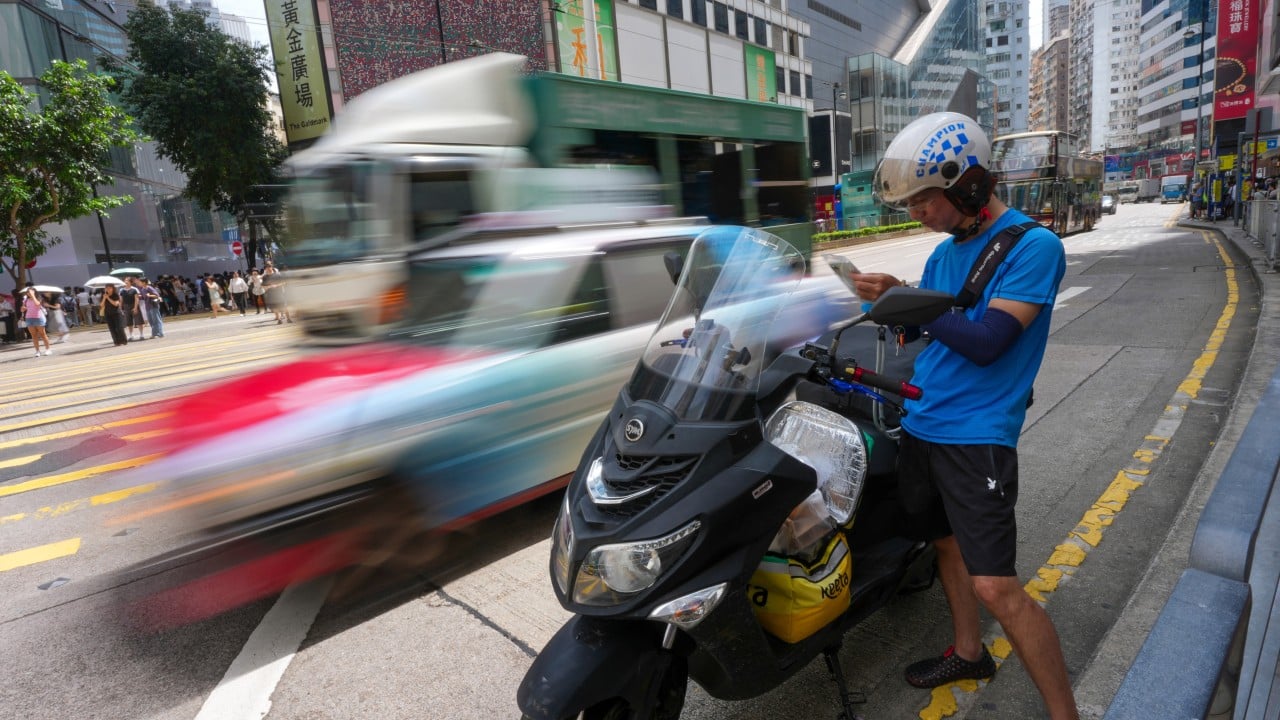
The asphalt of Nathan Road retains the afternoon heat long after the sun dips below the Kowloon skyline. It smells of exhaust fumes, wet pavement, and char siu drifting from open-air kitchen vents. For twenty-four-year-old Chan, this asphalt is not just a surface to cross. It is an office.
It is a shifting grid of neon signs, double-decker buses, and pedestrians who stare relentlessly into the glowing rectangles of their smartphones. Chan weaves through them on a heavily modified electric scooter, a thermal delivery bag strapped to his back like a heavy shell. He carries steaming bowls of wonton noodles and boxes of dim sum, racing against a digital clock that measures his livelihood in minutes.
He does not think about insurance policies while he rides. He cannot afford the luxury of that anxiety. His mind calculates braking distances, traffic light timings, and the exact angle needed to clear a wet tram track without washing out.
Until the rain starts.
A sudden tropical downpour turns the concrete into glass. A delivery app notification pings loudly in his ear, offering a bonus for a high-priority order just two kilometers away. He accelerates. A taxi brakes abruptly ahead. Chan squeezes the levers, but the tires find no purchase.
Metal meets metal. The clatter of breaking plastic echoes sharply off the concrete walls.
When Chan wakes up in Queen Elizabeth Hospital, his right leg is encased in plaster, and his thoughts do not turn immediately to healing. They turn to mathematics. How many weeks can he survive on statutory minimum injury compensation? How will he pay rent in his cramped subdivided flat in Mong Kok? Who pays for the scooter that now sits impounded in a police tow yard, crushed beyond recognition?
This is the hidden crisis humming beneath the surface of the gig economy in Hong Kong.
Delivery platforms promise freedom. They sell a romanticized vision of flexible hours, where anyone with a smartphone and a set of wheels can become their own boss. But when the physical reality of the job collides with reality, that illusion shatters.
Consider what happens next for workers like Chan.
The government and the major delivery platforms have proposed a series of compensation updates and insurance adjustments for injured gig workers. On paper, these reforms look like progress. They offer standardized payouts and structured medical leave calculations. They attempt to bridge the gap between traditional employment laws and the flexible nature of app-based labor.
Yet, the drivers are furious.
Why? Because the numbers do not match the beat of their daily lives.
To understand their anger, you have to look past the bureaucratic language of policy briefs and look closely at the math of survival in one of the most expensive cities on earth. Under many proposed compensation models, payouts are calculated based on average earnings reported over a specific preceding period. But gig work is notoriously volatile. Rain-drenched days bring high orders and high earnings; slow weeks, or weeks lost to minor illnesses, drag those averages down drastically.
Furthermore, the threshold to qualify for comprehensive injury protection often relies on proving a consistent, exclusive relationship with a single platform. Yet modern couriers rarely pledge allegiance to just one app. They juggle two, three, or four different apps simultaneously, hopping between them to chase peak surge pricing. By fragmenting their labor across multiple digital storefronts, they inadvertently disqualify themselves from the safety nets designed for traditional employees.
It is a system built for algorithms, not for human beings.
An algorithm views a courier as an asset ID. A floating coordinate on a map designed to minimize delivery times for cold-pressed juice and hot-pot ingredients. When a coordinate stops moving, the system simply reassigns the order to the next available point on the grid. The disruption is smoothed out in milliseconds.
For Chan, the disruption is permanent.
His family back in the New Territories relies on the money he remits every month. His landlord does not care about algorithmic optimization or delayed insurance claims. Rent is due on the first of the month, regardless of bone fractures or concussion protocols.
When proposed injury payouts fail to cover the actual cost of living during recovery, they stop looking like safety nets and start looking like insults. They institutionalize precarity. They tell the worker that their speed is valuable, but their physical body is disposable.
The debate in the Legislative Council and the corporate boardrooms often gets bogged down in legal definitions. Are these drivers independent contractors or employees? Should platforms be forced to pay mandatory contributions into mandatory provident funds or injury insurance pools?
These questions miss the human core of the issue.
The friction is not merely legal. It is moral.
We have built a civilization that demands instant gratification at the touch of a button. We want our meals delivered hot, our groceries at our door within thirty minutes, and our retail purchases waiting in our lobbies before we even unpack our work bags. We have outsourced the friction of daily life to a invisible army of riders braving the elements.
When we design compensation packages that treat their injuries as minor accounting discrepancies, we are pricing convenience at the direct expense of human dignity.
Chan sits in his hospital bed, watching the rain streak down the windowpane. Outside, thousands of other riders are still zipping through the downpour, leaning into the wind, chasing the next ping. Their phones light up in the dark, casting a pale, ghostly glow across their visors.
They are racing against time, against poverty, and against a system that watches them move, but refuses to see them fall.