There is a particular kind of quiet that settles over a room when the arithmetic stops working.
It is not the quiet of peace. It is the heavy, suffocating silence of an engine sputtering out at midnight on a deserted highway. Outside, the frost creeps up the windshield. Inside, the dashboard lights flicker and die, one by one. You check the fuel gauge. You check it again. You tap the glass, hoping the needle is just stuck on a stubborn hinge of disbelief.
It never moves.
For months, the official story whispered from the high offices of power was one of impervious strength. We were told that ledgers could be rewritten by decree, that gravity itself could be suspended if the political will was strong enough, and that the sheer inertia of a massive state could roll right over any obstacle placed in its path. Numbers, after all, are malleable things when you hold the pen. You can adjust a decimal point. You can redefine a deficit. You can dress a shrinking treasury in the loud, brassy colors of economic triumph.
Then came the morning the pen stopped writing.
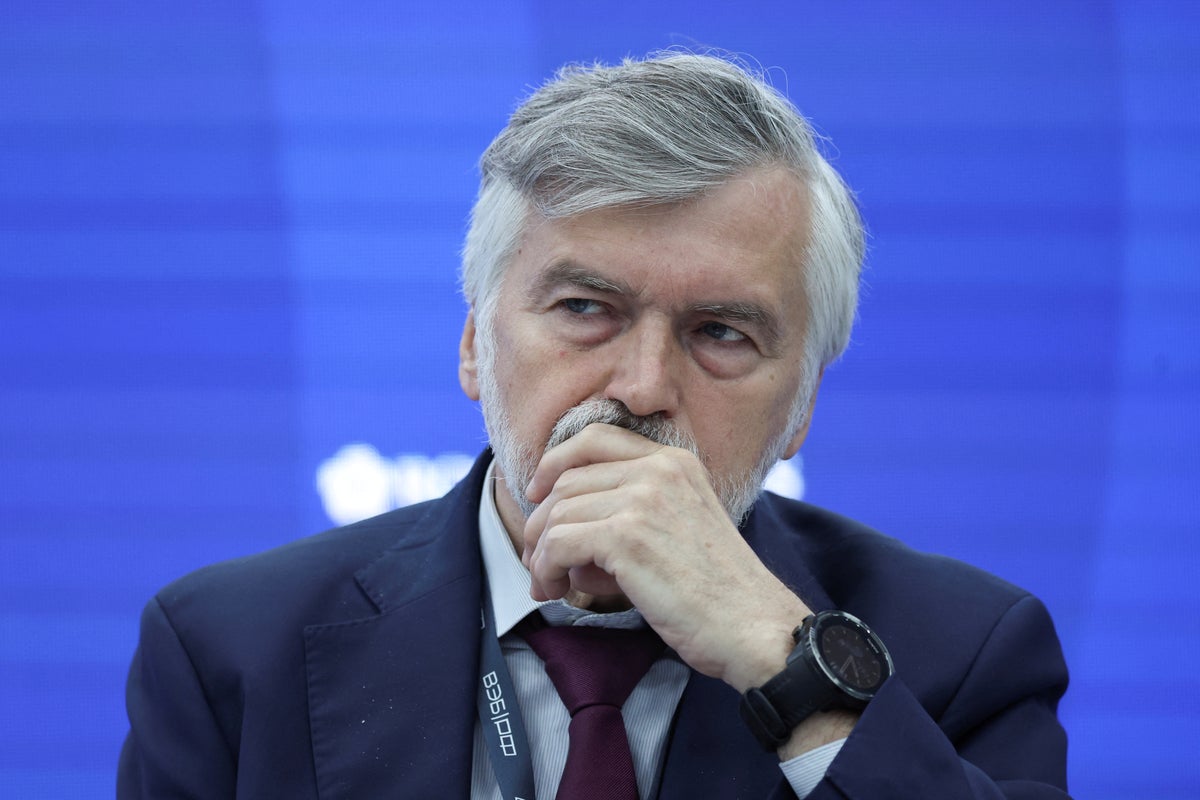
Vladimir Putin recently dismissed one of his top economic architects, a rare voice who dared to look past the painted backdrop and state the bleeding, unvarnished truth: Russia is falling behind.
To understand why this dismissal matters—why it should terrify anyone who watches the slow, grinding machinery of global power—we have to step away from the shouting heads on television and walk into a municipal office in a mid-sized provincial city thousands of miles from the capital.
Imagine a man named Andrei. (This is a hypothetical scenario designed to ground a sprawling geopolitical reality into human bone and sinew). Andrei is not a dissident. He is not a revolutionary waving a placard in a freezing square. He is a mid-level procurement officer for a regional municipal water utility. He has spent twenty-five years making sure pipes don't burst and pumps keep turning.
Andrei knows nothing about macroeconomics in the abstract, but he knows the price of a imported bronze valve. Last year, that valve cost three thousand rubles. Today, through a dizzying chain of sanctions, gray-market shipping, and currency acrobatics, it costs twelve thousand.
Andrei looks at his budget. It has not quadrupled.
This is the hidden friction of total war. It does not announce itself with a sudden explosion; it arrives in the form of a slow rust. It lives in the quiet corridors where municipal budgets are slashed to pay for steel and propellant. It lives in the classroom where the roof leaks because the cement factory down the road had to divert its output to build fortifications. It lives in the hollow eyes of a veteran standing in line at a pharmacy, holding a prescription he can no longer afford because the national currency is being propped up by emergency life support.
For years, economists warned that the true cost of the conflict in Ukraine would not be measured in the immediate headlines of tactical advances or retreats, but in the structural erosion of the future.
Consider what happens when a nation hollows out its productive capacity to feed the furnace of the front lines. Factories that once built tractors now stamp out shell casings. Engineers who once designed medical imaging equipment are now redeployed to figure out how to bypass microchip restrictions. On paper, the gross domestic product might even show a strange, feverish spike. Money is moving. Factories are humming. The state is spending.
It looks like growth. It feels like motion.
It is actually a consumption of seed corn.
When you eat your seed corn, you survive the winter. But when spring arrives, the fields remain bare.
This was the quiet heresy whispered by the economist who was just shown the door. To say "we are falling behind" in a system built on the absolute myth of perpetual ascent is the ultimate professional sin. It breaks the spell. It forces the emperor to look down and realize he has been walking naked through a blizzard for miles.
Power hates a mirror. It prefers a funhouse glass, one that stretches the reflection into something terrifying and immense, hiding the cracks in the plaster.
History is littered with empires that won the battle in the ledger room only to lose the war in the long, gray decades that followed. The Soviet Union did not collapse because of a single dramatic battle. It dissolved because its shoes were poorly made, its grocery shelves were empty, and its people grew bone-weary of pretending that a system of chronic scarcity was a worker's paradise. The machinery simply rusted out from the inside.
Today, the rust is working overtime.
When the state demands that every resource be funneled into the maw of conflict, it starves the very ecosystem that sustains it. Innovation requires freedom of thought, capital flexibility, and access to global markets. It requires the ability to fail, to pivot, to argue, and to try again. When those elements are replaced by central command and ideological compliance, the economy becomes a dinosaur in a world of quicksilver.
The dismissal of the economist is a symptom of a deeper malaise. It signals that the leadership has chosen comfort over correction. It is an admission that truth has become too expensive a luxury to maintain.
Think of a pilot flying into a blinding storm. The instruments begin to spin. The artificial horizon tilts violently. A sensible pilot trusts the instruments, even when every instinct in their gut screams that they are flying upside down. A desperate pilot smashes the instruments with a hammer because they don't like what the dials are saying.
Smashed dials do not clear the sky. They simply ensure that when the impact comes, it arrives without warning.
Outside the grand halls of Moscow, away from the vaulted ceilings and the long mahogany tables where men in expensive suits draw lines across maps, the real Russia is holding its breath. Mothers calculate the price of winter coats against the rising cost of bread. Young professionals pack their laptops and book one-way tickets to anywhere that will take them, draining the country of its intellectual capital in a quiet, invisible hemorrhage. Small business owners lock their doors for the final time, exhausted by a labyrinth of regulations designed to feed a war machine that demands everything and gives nothing back.
They know the truth, even if they are not allowed to speak it.
They know that you cannot mortgage your tomorrow forever without eventually discovering that tomorrow has been foreclosed.
The engine is sputtering. The fuel is running low. And the person who tried to warn the driver has been thrown out into the snow.
The night is very cold, and the road ahead is completely dark.