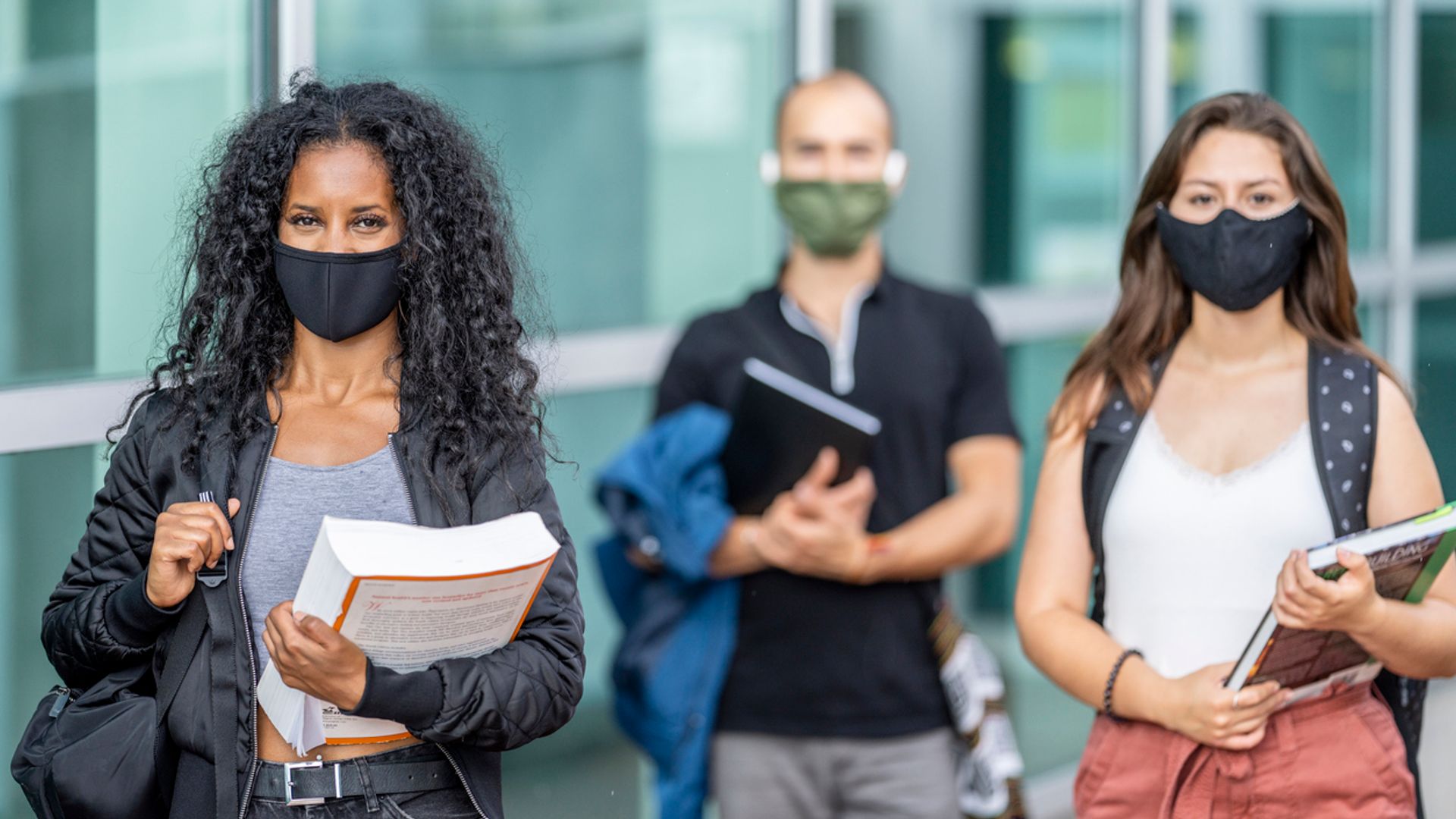
The heavy oak doors of the lecture hall didn't swing open. There was no scent of floor wax or the frantic scratching of pens on paper. Instead, there was a blue-light glow from a laptop screen in a cramped studio apartment, a flickering Wi-Fi connection, and a mounting sense of betrayal.
For thousands of students who began their degrees between 2018 and 2022, the "university experience" became a ghost. It was a sequence of pixelated faces and pre-recorded videos that cost exactly the same as the world-class facilities and face-to-face mentorship they were promised. Now, the bill is coming due. Not for the students, but for the institutions that took their money.
Consider Maya. She isn't a statistic, though she is one of the 150,000 names currently attached to a massive group litigation. In 2020, she moved 200 miles to a city she didn't know, paying £9,000 in tuition and another £7,000 for a room she was eventually told not to leave. She expected the hum of a laboratory. She got a PDF. She expected a community. She got a chatbot.
Maya’s story is the heartbeat of a legal movement that is currently rattling the foundations of higher education. This isn't just about a few missed classes. It is about a fundamental breach of contract. When a consumer buys a high-end product and receives a budget substitute, they get a refund. In the eyes of a growing cohort of lawyers and disappointed graduates, universities should be held to the same standard as any other service provider.
The Great Disconnect
The tension began with the pandemic, but it didn't end there. While the world shuttered, universities moved online. It was a necessary pivot, certainly. But while the delivery method changed, the price tag remained frozen in stone.
The argument from the ivory towers was simple: the "learning outcomes" were still being met. They argued that a degree is a credential, and as long as the piece of paper at the end says "Bachelor of Arts," the contract is fulfilled.
The students disagree.
A university education is not a commodity you buy off a shelf. It is an environment. It is access to specialized equipment, libraries that breathe history, and the spontaneous debates that happen in the hallway after a seminar. When those things are stripped away, the value of the service plummets. Legal experts are now calculating that drop in value, and the numbers are staggering.
Some estimates suggest that students could be owed between £1,000 and £5,000 for each year of disrupted study. Multiply that by the tens of thousands of claimants across major institutions like University College London (UCL), and you aren't just looking at a legal headache. You are looking at a potential financial catastrophe for the sector.
Beyond the Virus
It would be easy to blame everything on a global health crisis. That would be convenient for the universities. However, the litigation covers more than just the lockdown years.
The shadow of industrial action looms just as large. Between 2018 and 2022, staff strikes led to hundreds of thousands of cancelled lectures. Students would show up to locked doors, their emails going unanswered as faculty fought over pensions and pay.
Imagine paying for a season ticket to see your favorite team, only for half the games to be cancelled because of a dispute between the owners and the players. You would expect your money back. You wouldn't accept the owners telling you that "the spirit of the game" was still provided.
This is the "Invisible Stake" in the room. If the courts rule in favor of the students, it sets a precedent that treats education as a commercial transaction. For decades, universities have enjoyed a protected status, operating under the assumption that they are mission-driven charities rather than businesses. But you cannot market yourself as a "premium global brand" with "state-of-the-art facilities" to justify high fees, and then retreat into the guise of a struggling non-profit when those facilities are shuttered.
The Mechanics of the Fight
The legal battle is currently centered on Group Litigation Orders. This is the UK’s version of a class-action suit. It allows thousands of individuals with the same grievance to pool their resources and take on a giant.
The universities are fighting back with a wall of bureaucracy. They point to their internal complaints procedures. They suggest that students should go through the Office of the Independent Adjudicator (OIA) first. But the OIA is a slow-moving beast. It handles cases one by one. It was never designed to process a systemic failure involving an entire generation of learners.
Law firms like Student Group Claim are bypassing the red tape. They are taking the fight directly to the High Court. They argue that the internal systems are "not fit for purpose" when the scale of the loss is this vast. The courts now have to decide a difficult question: What is a lecture worth?
If a student pays £40 for a one-hour seminar and that seminar is cancelled, is the loss £40? Or is it more? What about the lost opportunity? What about the mental health toll of being confined to a dorm room while debt accumulates like digital dust?
The Ripple Effect
The implications of this case stretch far beyond a few thousand pounds hitting a graduate’s bank account. If universities are forced to pay out, their financial models will break.
Many institutions are already operating on razor-thin margins, heavily dependent on international student fees to subsidize research and local teaching. A massive compensation payout could lead to course closures, staff layoffs, and a further decline in the very quality students are fighting for.
It is a tragic irony. To get justice for the past, the students might inadvertently hollow out the future of their own alma maters.
Yet, the alternative is a world where the consumer has no recourse. If a university can take £9,250 a year and provide nothing but a series of Zoom links and a "good luck" email, the value of a degree will continue to erode until it is nothing more than an expensive receipt.
The heart of the matter isn't found in the ledgers of the finance department. It is found in the quiet resentment of a graduate working a job they could have gotten without the degree, staring at a student loan balance that grows every month. They aren't just asking for money. They are asking for an acknowledgment that their time and their aspirations were worth more than a "muted" button on a screen.
The Turning Point
The High Court's recent decisions have allowed these claims to move forward, rejecting the universities' attempts to throw them out on technicalities. This is a massive shift in the power dynamic. For the first time, the "student-as-consumer" isn't just a marketing slogan; it's a legal reality.
As the cases progress, we will see a forensic examination of what a university actually is. Is it a physical place? Is it a collection of minds? Or is it a service contract that can be measured, quantified, and refunded when the service fails?
The oak doors are still there. They are tall, imposing, and carved with the names of the greats who walked through them a century ago. But today’s students aren't looking at the doors. They are looking at the fine print. And for the first time in history, the fine print is starting to talk back.
The gavel will fall. When it does, the sound will echo through every lecture hall in the country, reminding those in power that a promise made in exchange for a lifetime of debt is a promise that must be kept.
Would you like me to look into the specific deadlines for joining a group claim against a particular university?


