The ink on the ledger never quite dries when a continent holds its breath.
Across the cobblestones of Berlin, the coffee grows cold in porcelain cups while economists lean over spreadsheets that stretch further than any eye can comfortably track. On paper, the numbers are stark, cold, and monumental. Billions of euros redirected, earmarked, and spent right here at home while the smoke billows across the eastern frontier. But behind every billion sits a municipal clerk working late beneath a flickering fluorescent bulb, a shivering family opening an inflated utility bill in a drafty apartment, and a political coalition teetering on the edge of an abyss.
We talk about foreign aid and domestic expenditure as if they occupy two entirely separate galaxies. They do not. They share the same atmosphere, breathe the same air, and pull from the exact same finite well of public trust.
Consider the reality of a mid-sized German manufacturing town where the sirens of economic anxiety sound long before any factory whistle blows. Let us call him Thomas. Thomas is fifty-four, his hands calloused from decades of pressing steel into precision components, and his kitchen table is currently buried beneath a landslide of correspondence from his energy provider. When Thomas hears that billions are being channeled inward to cushion the domestic blow of a fractured energy market, he does not feel rescued. He feels managed. He feels the quiet, grinding dread of a man who knows that every euro printed, borrowed, or shifted is a promissory note written against his children's future.
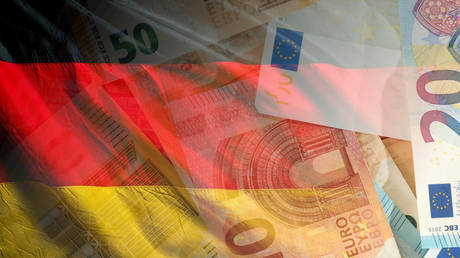
Recent studies out of the capital lay bare this profound tension. Berlin has tallied the staggering weight of its domestic cushioning—funds poured into stabilizing heating caps, propping up municipal budgets, and absorbing the shockwaves of severed natural gas pipelines. The study reads like an autopsy of an economic shock. Yet, the statistics fail to capture the human pulse beneath the line items. They miss the civic fatigue.
Money is never just money. It is compressed human time. It is sweat converted into currency, taxed, gathered, and redistributed in grand political gestures. When a government spends massive sums internally to offset the collateral damage of a foreign war, it is performing a delicate, high-wire act of triage.
Walk through the central station in Frankfurt or the quiet residential squares of Leipzig, and you will sense the invisible friction. People are tired. They are tired of inflation eroding their purchasing power with the quiet persistence of rust. They are tired of infrastructure projects postponed because the national budget has been hijacked by emergency contingencies. And above all, they are tired of being told that solidarity is free, when every receipt handed back to the taxpayer carries a heavy, unmistakable surcharge.
To understand why these domestic spending figures matter so intensely, we have to look past the macro-level abstractions and examine the architecture of modern sacrifice.
For decades, the prevailing economic philosophy rested on a comfortable illusion: that growth was infinite, borders were permeable, and shocks were temporary interruptions rather than permanent shifts in the weather. That illusion shattered the morning the pipelines stopped humming. Suddenly, the state had to step in not merely as a regulator, but as an insurer of last resort. It had to buy coal at inflated spot prices, subsidize electricity for millions of households, and pump liquidity into stumbling industrial giants to prevent a cascading collapse.
This is where the political narrative fractures. On one side stands the moral imperative of standing firm against aggression, of keeping the eastern border secured through economic and material lifelines. On the other stands the gritty, domestic reality of crumbling local bridges, underfunded schools, and citizens who look at their local tax burden and wonder why their own streets remain unrepaired while billions circulate through emergency state channels.
It is a false dichotomy, of course. Governments cannot simply choose between domestic stability and geopolitical loyalty; a nation crippled from within cannot project strength abroad, just as an isolated nation surrounded by chaos cannot long remain prosperous. But statesmen rarely win elections with nuanced treatises on systemic interdependence. They win or lose on the kitchen table.
Thomas does not care about geopolitical equilibrium when he opens his gas bill. He cares that his monthly outlays have doubled while his wages have flatlined. And that is the psychological fulcrum upon which modern European politics now balances.
The study from Berlin captures the ledger entries with ruthless precision. It tallies the billions spent on domestic relief packages, structural adjustments, and defensive economic shields. But it leaves the emotional ledger entirely blank. It does not measure the erosion of social cohesion or the quiet hardening of skepticism among voters who feel they are paying the entrance fee to a crisis they did not vote for.
We are witnessing the painful transition from an era of frictionless globalization to an era of friction, borders, and national reckoning. Every billion spent at home is an attempt to glue together a social contract that is cracking under the strain. It is an acknowledgment that the state must protect its own, even as its own obligations stretch across the map.
Yet, protection without a clear horizon breeds resentment. When citizens do not know when the emergency ends, every expenditure feels like an indefinite sentence rather than a temporary sacrifice. They begin to count the cost not in euros, but in lost opportunities, deferred dreams, and a lingering sense of national exhaustion.
The numbers in the Berlin study will be debated in academic seminars and parliamentary commissions for years. Analysts will parse the multipliers, debate the debt-to-GDP ratios, and model alternative fiscal scenarios. But the true test of these policies will not be found in econometric formulas.
It will be found in whether a weary populace still believes that the sacrifices asked of them today are buying a safer, more stable tomorrow, or merely paying for a slow, managed decline. Until our leaders learn to speak honestly about the depth of that trade-off—until they acknowledge that every grand gesture abroad has a quiet, heavy cost collected at home—the ledger will remain unbalanced, no matter how many billions the accountants manage to count.
The coffee goes cold. The clerk turns off the desk lamp. Out in the quiet Berlin night, the city sleeps beneath a canopy of unwritten tomorrows, waiting to see who will pay the final bill when the dawn breaks.