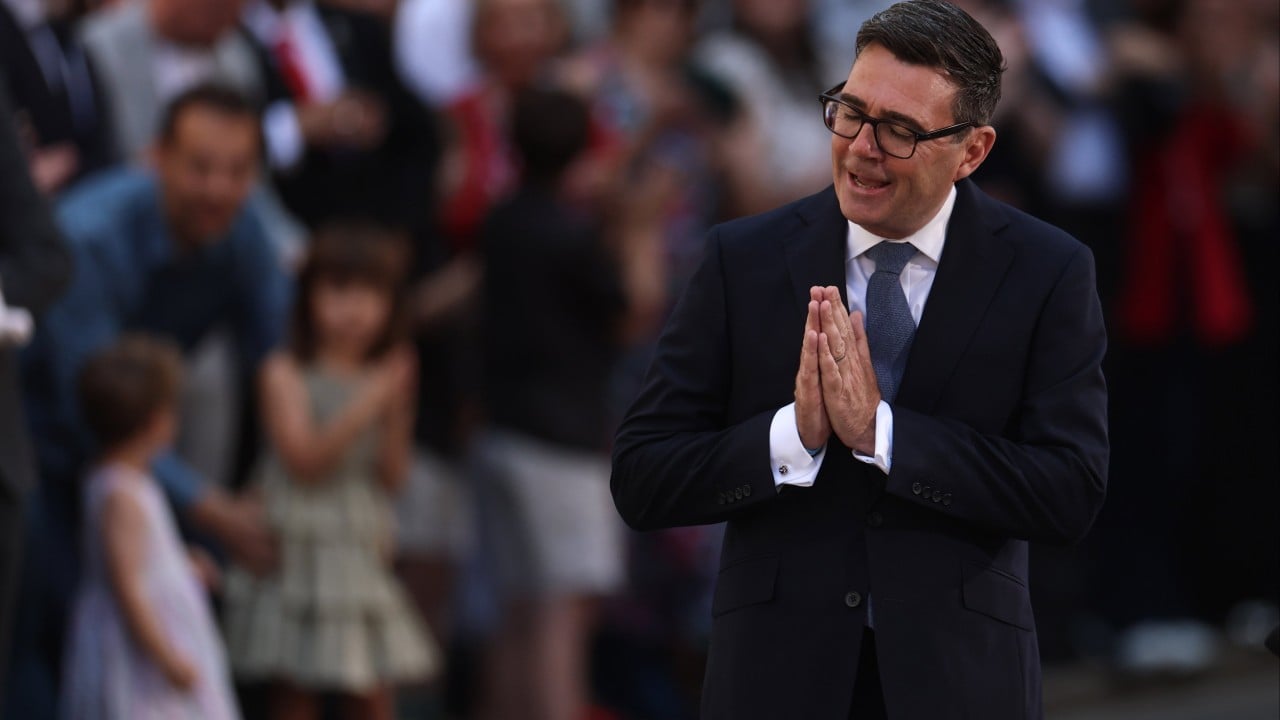
The front door of Number 10 Downing Street does not have a keyhole on the outside. It can only be opened from within, a detail that feels less like a security measure and more like a cruel joke when you consider how quickly its occupants have been ejected over the last decade.
For twelve years, the British public watched that black door swing open and shut like a turnstile at a crowded subway station. Prime ministers arrived with grand promises, faltered under the weight of systemic rot, and vanished into the lucrative obscurity of the international lecture circuit. With each departure, a little more trust leaked out of the national bedrock. People stopped learning the names of Cabinet ministers. Why bother? They would be gone by the autumn anyway.
When Andy Burnham walked through that door as the newly elected Prime Minister, he did not inherit a government. He inherited a collective national exhaustion.
To understand what it means to vow an end to instability, you have to leave the wood-paneled rooms of Westminster and travel three hours north to a small terrace house in Wigan. Consider a woman we will call Sarah. She is forty-two, works in social care, and has spent the last eight years adjusting her life to a reality where nothing is certain.
Sarah does not read white papers. She reads her energy bills. Over the last five years, she watched four different chancellors propose four radically different economic strategies. One told her to brace for austerity. Another promised growth through deregulation. A third crashed the currency in a single afternoon, sending Sarah’s variable-rate mortgage into a tailspin that forced her to cut back on fresh groceries.
This is what political instability actually looks like. It is not a dramatic clash of egos on a television screen. It is a quiet, corrosive anxiety that settles into the bones of ordinary citizens. It is the inability to plan for next month, let alone next year. When a state cannot guarantee its own continuity, it passes the burden of volatility down to the people least equipped to bear it.
Burnham’s ascent to the leadership is built entirely on the promise that this hyperactive era of British politics is officially dead.
He spent years outside the Westminster bubble, serving as the Mayor of Greater Manchester. From that distance, the circus in London looked less like governing and more like a self-absorbed soap opera. While prime ministers fell over scandals involving wallpaper and illicit lockdown parties, Burnham was fighting train operators to get local buses under public control. He learned a fundamental truth during those years: people do not crave radical, ideological revolutions. They crave things that work. They want the bus to arrive on time. They want to know that their local hospital will still have an emergency room open at midnight.
Now, he sits at the center of the storm. The skepticism he faces is monumental, and rightly so. The British electorate has been lied to by experts, charlatans, and visionaries alike.
The strategy Burnham is deploying to counter this cynicism is counterintuitive. In a media ecosystem that rewards loud, immediate declarations, he is attempting to lower the national temperature. His first major addresses have been intentionally devoid of the sweeping, messianic rhetoric that defined his predecessors. There are no promises of a "golden age" or a "world-beating" future. Instead, there is an almost obsessive focus on structural boredom.
He wants to make British politics uninteresting again.
The difficulty of this task cannot be overstated. The machinery of modern government is addicted to the quick fix. Civil servants are accustomed to writing policy on the back of napkins to satisfy the 24-hour news cycle. Ministers are used to announcing initiatives that sound brilliant in a press release but dissolve upon contact with reality. Turning this ship around requires more than just a change in leadership; it requires a complete overhaul of political culture.
But the real problem lies elsewhere. The instability of the past decade was not an accident. It was the predictable result of an economy built on shifting sands and a political system that rewards short-term survival over long-term investment.
Think of the British state as an old Victorian house. For years, successive landlords have painted the walls, changed the light fixtures, and boasted about the curb appeal. Meanwhile, the foundations have been rotting. The pipes are rusted. The roof leaks every time it rains. Burnham is asserting that he is the builder who will finally stop painting the walls and start digging into the mud to fix the timber.
It is a high-stakes gamble. Fixing foundations is slow, expensive, and completely invisible to the casual observer. If you spend billions restructuring the social care system or upgrading the electrical grid to support green energy, voters do not see the results in three months. They see roadworks. They see disruption. They see money leaving the treasury while their daily lives remain difficult.
Will the public give him the time he needs?
The answer depends on whether he can maintain the fragile coalition that brought him to power. He managed to bridge the deep, bitter divide between the post-industrial towns of the English North and the affluent suburbs of the South. It is a union of convenience born of shared desperation rather than shared ideology. The working-class voter in a former coal town wants regional regeneration and secure jobs. The professional in London wants economic predictability and repaired relationships with European markets.
Burnham is betting that these two distinct groups want the same underlying thing: a return to sanity.
On his first night in Downing Street, after the cameras had packed up and the staff had gone home, the silence in the building must have been deafening. The ghosts of past administrations linger in those corridors. The portraits of historic leaders line the staircase, watching to see if the newcomer will join their ranks or become another footnote in a textbook about the era of British decline.
The true test of Burnham's premiership will not be measured in the legislation he passes during his first hundred days. It will be measured by whether, in four years' time, Sarah in Wigan can look at her life and feel a sense of predictability. If she can plan a holiday, if she can trust that her rent will not spike unpredictably, if she can look at the news without a knot forming in her stomach, then the vow will have been kept.
Until then, the black door remains shut. The country waits, holding its breath, hoping that this time, the person inside has finally brought the keys to stay.