Money talks. Sometimes, it shouts from a boardroom in Manhattan while a stadium rises fifty feet high in a suburb thousands of miles away, swallowing neighborhoods whole.
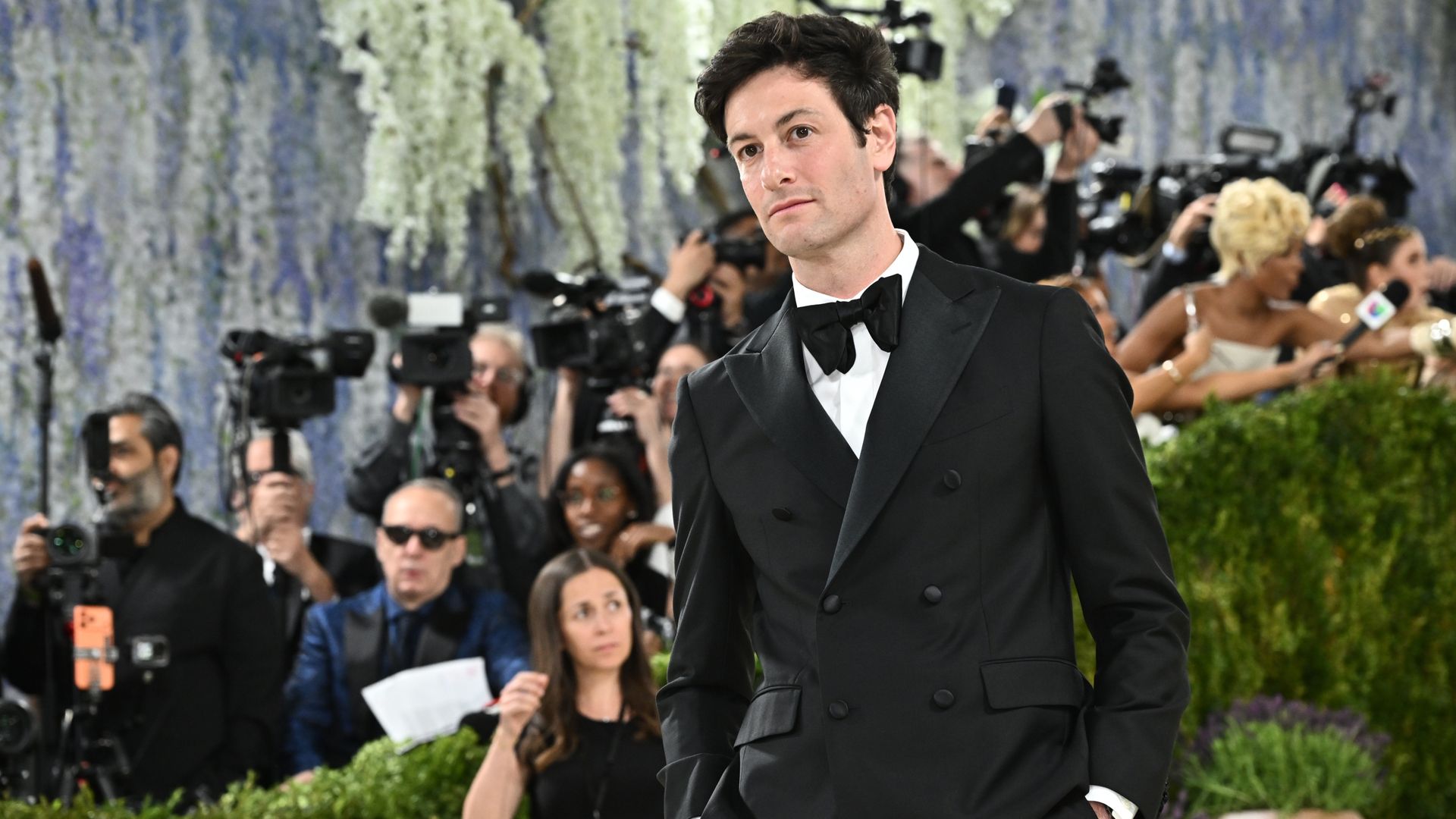
Joshua Kushner’s brother, Josh—or rather, the broader family machinery and its intersecting orbits of high-stakes real estate and billion-dollar investments—knows how this story goes. You look at a map of a host city. You see green patches, working-class avenues, old brick storefronts that have survived three decades of economic vertigo. Then you see the overlay. A glowing blue stadium icon. A digital render of luxury boxes. And suddenly, the dirt beneath someone’s porch becomes a line item on a spreadsheet.
Silence is a strategy. For months, the rumors swirled around the grand global tournament coming to American soil, the impending sell-off plans, the sudden reshuffling of assets tied to the Kushner family network and associated real estate holdings. When you sit atop empires built on steel, glass, and political adjacency, speech is expensive. Every word moves markets. Every syllable invites litigation.
Yet silence eventually cracks.
Someone has to look at the numbers. More importantly, someone has to look at the people whose lives are being bulldozed to make room for VIP parking.
The Architecture of Displacement
Consider what happens when a mega-event touches down in a major metropolitan area.
To the casual observer watching from a leather couch thousands of miles away, the World Cup is a collection of magic moments. A curving volley into the top corner. The roar of eighty thousand souls. The confetti raining down in slow motion on a golden trophy. It is sport distilled into pure, unadulterated ecstasy.
Down on the pavement, however, the geometry looks entirely different.
I remember walking through a neighborhood slated for urban "revitalization" ahead of a previous international athletic showcase. The air smelled of damp asphalt and wood smoke from a nearby demolition. An elderly woman named Clara sat on a folding chair outside a bakery that had been in her family since the late seventies. A bright orange notice was stapled to her door like a scarlet letter. Eminent domain. Redevelopment zone. Make way for the fan experience.
"They talk about the global stage," she told me, her voice paper-dry, her fingers tracing the worn grain of a wooden cane. "But I don't think they know what a stage actually costs to build. They’re tearing down the floorboards we’re standing on."
That is the hidden ledger of global sports capitalism. When elite portfolios shift, when private equity firms and family offices begin orchestrating massive sell-offs of properties adjacent to these upcoming tournament hubs, they aren't just moving capital. They are evicting communities.
Josh Kushner’s family legacy is no stranger to this high-wire act. Real estate development at this scale is an exercise in ruthless mathematics. You buy low, you rezone high, you leverage political connections, and you cash out before the infrastructure buckling underneath the weight of progress becomes your problem. When plans leak regarding the divestment or restructuring of properties primed to benefit from millions of incoming tourists, the market reacts with a predatory hunger.
The Anatomy of a Sell-Off
Why now? Why break the silence right on the precipice of the world's most watched sporting event?
Follow the liquidity.
Mega-events act as temporary economic steroids. For a brief window of four weeks, hotel occupancy rates hit triple digits. Restaurants charge fifty dollars for a burger and people pay it because they are drunk on national pride and overpriced lager. Commercial real estate developers know this. They also know what happens on day thirty-one.
Day thirty-one is a ghost town. The fans go home. The television crews pack their heavy Pelican cases. The temporary jobs vanish like morning mist over a stadium pitch. What remains are inflated property taxes, empty retail spaces priced for international billionaires, and neighborhoods that have lost their soul.
When insiders start offloading assets into this manufactured frenzy, it’s a signal flare. It means the peak is near. It means the smart money is cashing out while the retail investors and municipal governments are still holding the bag for stadium renovations, security costs, and public transit overhauls.
Joshua Kushner’s brother—operating within the rarefied air of real estate magnates and venture capitalists—understands this rhythm better than most. The silence isn't an accident. It's protection. If you shout from the rooftops that a bubble is forming around World Cup real estate speculation, you pop your own balloon. If you quietly divest while the public is distracted by qualifying matches and group-stage draws, you protect the bottom line.
The Human Cost of the Balance Sheet
We have sanitized our cities to make them safe for corporate sponsors.
Walk through any modern downtown district preparing for a global influx of capital and tourists, and you will notice a terrifying uniformity. The quirky independent bookstores are gone, replaced by sleek espresso bars that sell oat milk lattes for nine dollars. The public benches have been redesigned with steel dividers to prevent anyone from lying down. The alleys are power-washed every morning at four to remove any trace of human desperation.
This is what economists call "upgrading." This is what the balance sheet calls "value creation."
To the families whose generational homes are swallowed by these developments, it feels like an eviction notice served by a ghost. You cannot argue with a spreadsheet. You cannot appeal to a venture capital fund's sense of nostalgia. The numbers are cold, clean, and completely indifferent to the fact that your grandfather planted the oak tree in the front yard seventy years ago.
When high-profile figures associated with real estate dynasties address—or deliberately avoid addressing—these massive portfolio shifts, they are playing a game of high-stakes chess. They move a rook, a stadium gets approved, a neighborhood gets rezoned, and twenty million dollars materializes in an offshore account.
Meanwhile, Clara is packing her life into cardboard boxes, wondering where the nearest affordable apartment is located. Spoiler alert: it's forty miles further away from the city center, adding two hours to a working-class commute that was already breaking her back.
The Final Whistle
We romanticize the game because we need an escape. We watch twenty-two players chase a leather sphere across pristine emerald grass because it feels like a meritocracy. For ninety minutes, the rules are clear. The referee is impartial. The best team wins.
Life outside the stadium is nothing like that.
The match was rigged before the first ticket was printed. The real winners aren't the nations hoisting the trophy under a shower of golden sparks. The winners are the quiet men in tailored suits sitting in skyboxes high above the screaming masses, reviewing exit strategies, calculating capitalization rates, and deciding which neighborhood to flatten next in the name of the global fan experience.
The silence has finally broken. But the bulldozers are still running. And down on the pavement, the engine noise is drowning out everything else.