The screen glows in the quiet of a Singapore night. A thumb hovers over a keyboard. A message is sent. It seems entirely ordinary, a routine digital exchange in a world where everyone is accessible at all hours. But when that message belongs to a high-ranking government official and the recipient is a member of the public, the digital trail changes form. It ceases to be mere data. It becomes a permanent record of judgment.
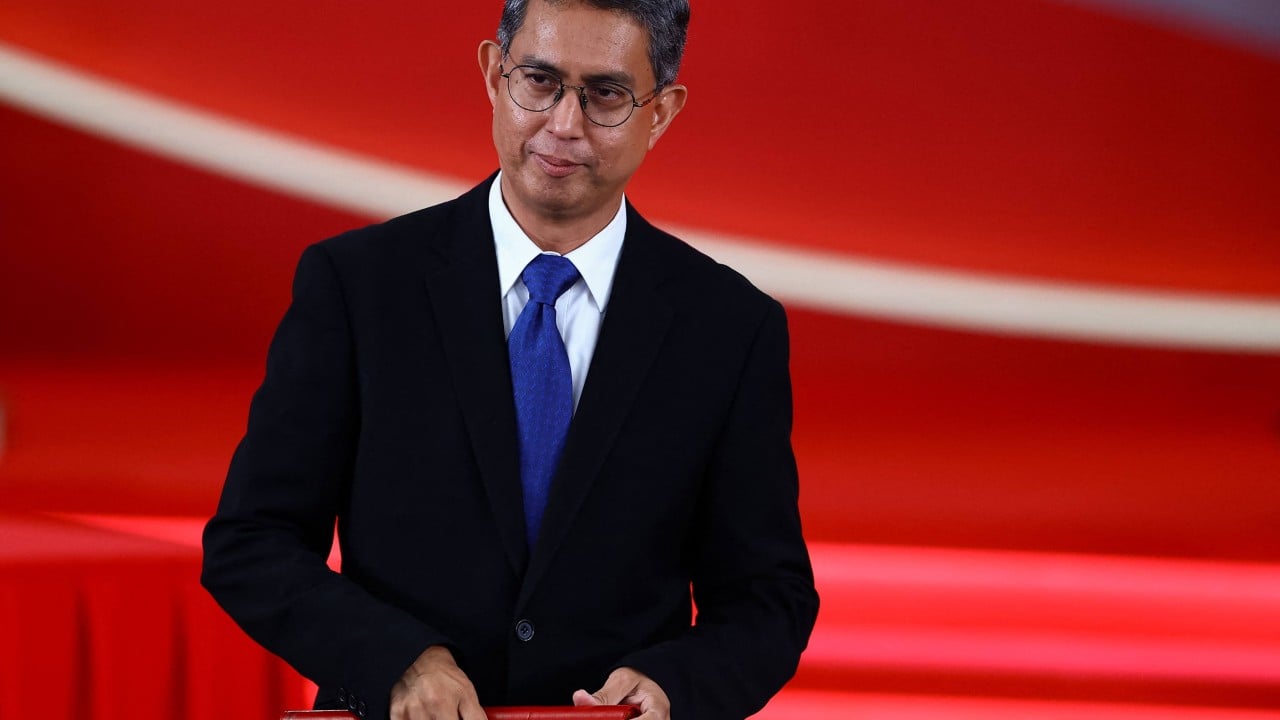
On July 20, 2026, those digital interactions culminated in the abrupt end of a twenty-year political career. Associate Professor Muhammad Faishal Ibrahim, the Acting Minister-in-charge of Muslim Affairs and Senior Minister of State for Home Affairs, resigned from every public office he held. He stepped down as a Member of Parliament and walked away from the ruling People's Action Party.
There was no money changing hands. No state secrets were compromised. No physical relationship ever occurred. Yet, Prime Minister Lawrence Wong moved with a swift, clinical precision that left no room for debate. To understand why a two-decade legacy of public service can vanish over the course of a single month, one has to look past the official press releases and examine the unyielding, often terrifying anatomy of political accountability in Singapore.
Consider how easily the modern world erases the lines between the professional and the personal. A generation ago, a minister communicated through formal letters, vetted by civil servants, stamped and delivered. Today, power exists in the pocket. It sits in messaging apps. A public official attending a weekend community event might chat with a resident on the sidelines. They exchange contacts. The conversation continues online. It feels casual. It feels accessible.
But accessibility is a trap.
The trouble began roughly a month before the resignation landing on the Prime Minister’s desk as a quiet, explosive email. A female member of the public wrote to the Prime Minister’s Office, laying out her interactions with Faishal. What followed was not a slow, bureaucratic cover-up, but an immediate fracturing of positions. When questioned, both parties dug in. Each lobbed accusations of harassment against the other.
When two citizens accuse each other of harassment, it is a matter for the police. The state machinery ground into motion. The Prime Minister’s Office referred the dispute to the authorities, who parsed through the digital archives alongside the Attorney-General's Chambers. The legal conclusion arrived with absolute clarity: no criminal offense had been committed by either side. No laws were broken.
In most parts of the world, a clean legal bill is where the story ends. A politician raises their hands in triumph, blames a political hit job, and returns to their office.
Not here.
In Singapore’s political culture, the law is merely the baseline. The real test is a far more demanding, invisible standard. Prime Minister Lawrence Wong separated the legal innocence from the ethical obligation. The question was never just whether a minister broke the law, but whether his conduct matched the heavy expectations of his office.
Faishal himself recognized the distinction. In his written resignation, he admitted to a lapse of judgment, a failure to establish clearer boundaries at an earlier stage. He had allowed the interactions to drift into an ambiguous territory that compromised the dignity expected of a leader.
The swiftness of his departure is a deliberate signal from a prime minister who knows exactly what is at stake. Lawrence Wong took the helm of the country with a promise of continuity, but also with the burden of maintaining an uncompromising reputation for absolute propriety. The ruling party has long defended its position by arguing that its leaders must remain beyond reproach. When a shadow of a doubt falls across that reputation, the reaction must be immediate. Delay looks like weakness. Hesitation looks like complicity.
By accepting the resignation immediately and appointing Zaqy Mohamad to take over the Muslim Affairs portfolio, Wong minimized the political fallout. He demonstrated that the system matters more than any single individual, regardless of their twenty years of service. The message sent to every remaining official was unmistakable: the boundary between a public servant and a private citizen must never be blurred, even in the casual warmth of an online chat.
Power is intoxicating because it makes people feel insulated from the rules that govern ordinary life. But true accountability means the higher you climb, the narrower the ledge becomes. A single misstep, an unvetted message, a failure to draw a line in the sand—and the fall is absolute.
Faishal Ibrahim returned to the quiet of his private life, leaving behind the voters of Marine Parade GRC and a stark reminder for those who remain in power. The modern world offers endless ways to connect, but for those who carry the trust of a nation, every single connection carries a weight that can break a career in an instant.