The envelope arrived on a Tuesday, smelling faintly of the municipal adhesive that holds bureaucracy together. Inside, printed on crisp bond paper with a stark government seal, was a number that stopped time: fifteen thousand dollars.
Not a tax. Not a tuition payment. Not an investment in a future storefront. A deposit. A financial anchor meant to ensure that a mother from Lagos could visit her graduating daughter in Ohio and then, without fail, return home.
To understand what is happening to global mobility, you have to look past the spreadsheets and sit in a kitchen where passports are spread across the table like Tarot cards. You have to understand the math of absence.
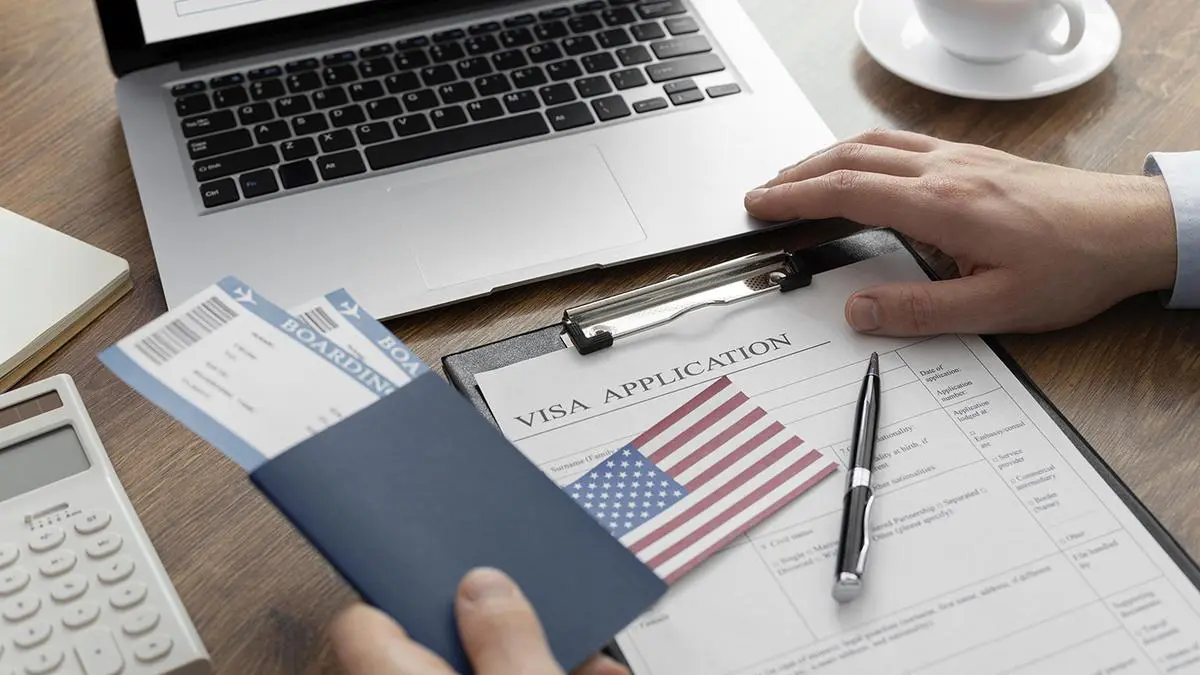
For decades, crossing an international border has been treated as a technical exercise. Fill out the forms. Pay the processing fee. Wait for the stamp. But beneath the surface of routine immigration administration, a quiet restructuring has taken root. The United States government moved to finalize a permanent program requiring travelers from roughly fifty nations—disproportionately located across the African continent—to post temporary bonds ranging from five thousand to fifteen thousand dollars just to secure a standard visitor visa.
Consider the mechanics of the policy. The Department of State frames it as a compliance tool. The logic goes like this: if a traveler posts a substantial cash sum, they possess an inescapable financial incentive to respect the terms of their temporary stay and return before their authorized period expires. On paper, it looks like a simple risk-mitigation strategy.
Reality is rarely so clean.
To feel the weight of fifteen thousand dollars, you cannot look at it through the lens of a corporate treasury or a federal budget. You must look at it through the economy of ordinary families. In many of the targeted nations, that sum represents years, sometimes decades, of cumulative household savings. It is the money earmarked for a child's university education, the emergency fund for an aging parent's medical care, the equity of a lifetime of labor.
When a government demands that capital be locked away in a federal account merely for the privilege of a temporary family reunion, the message changes from a matter of security to a question of class. It creates a system where geography dictates worth, and wealth dictates connection.
History teaches us that walls are rarely built of stone alone. Sometimes they are built of currency requirements, administrative backlogs, and financial thresholds that turn temporary travel into an exclusive luxury. We have watched this pattern evolve over generations. When formal exclusionary laws became socially unpalatable, administrative friction took their place. Financial prerequisites quietly achieve what explicit bans no longer can.
Let us step inside a hypothetical living room in Nairobi.
Amina is a software engineer with a stable career, a home, and a brother living in Chicago whom she has not seen in eight years. Her brother has just had a son. Amina wants to hold her new nephew. She has the airfare saved. She has the vacation time approved. She submits her visa application with the quiet optimism of someone who follows every rule.
Then comes the administrative hurdle. Because her passport was issued by a nation flagged under the visa bond pilot program, her approval is contingent on securing a cashier's check for ten thousand dollars to be held by the United States Treasury.
Ten thousand dollars.
She checks her bank account. She calculates what she could sell. She looks at her mother, whose pension would not cover a fraction of the gap. Slowly, the realization settles in. The journey isn't technically illegal. It isn't outright denied. It is simply priced out of existence.
This is the invisible architecture of modern borders. It does not slam a door in your face; it simply locks it from the inside and hands you an invoice you cannot afford to pay.
The official justification leans heavily on overstay rates. Consular officials point to data showing that travelers from certain countries historically exceed their authorized six-month visitor window at higher percentages than travelers from Western Europe or East Asia. Statistically, the discrepancy exists. But statistics, divorced from context, become instruments of exclusion.
An overstay is rarely a calculated act of defiance. Often, it is the result of sudden medical emergencies, political instability breaking out back home while a traveler is mid-trip, or simple bureaucratic delays within domestic immigration offices that trap legal visitors in processing limbo. By treating every prospective traveler from an entire continent as an automatic flight risk, the policy replaces individual human assessment with blanket financial profiling.
Think about what this does to the cultural and economic exchange between the United States and the developing world. Innovation thrives on friction, yes, but human empathy thrives on proximity. When researchers, entrepreneurs, artists, and families from fifty nations find themselves walled off by five-figure security deposits, the loss is mutual. We seal ourselves inside our respective hemispheres, mistaking insulation for security.
The policy also introduces a dangerous precedent into consular equity. Justice should not fluctuate based on the GDP of your birthplace. When a legal process demands a ransom-like deposit for citizens of specific nations while leaving others untouched, it institutionalizes a two-tiered global community. In this hierarchy, your passport is not just a travel document; it is a credit score.
What happens next is a gradual erosion of trust. When people are told, year after year, that their presence is inherently suspect unless backed by a heavy cash guarantee, they stop trying to bridge the gap. They look elsewhere. They build academic, commercial, and personal networks in places that do not demand their life savings just to say hello. The United States, long viewed as a beacon of global mobility, slowly becomes a fortress accessible only to the financial elite.
There is a profound irony here. Nations are built on narratives of shared humanity, freedom of movement, and the breaking down of ancient barriers. Yet the modern machinery of statecraft frequently moves in the exact opposite direction, inventing sophisticated new ways to keep people apart.
We are left with a ledger. On one side, a marginal drop in statistical overstays. On the other, an unmeasurable deficit of human connection, broken family lineages, and a world slightly more isolated than it was yesterday.
The envelope sits on the table. The seal is unbroken. The money remains unspent, locked away in accounts that measure security in dollars rather than understanding. And somewhere across an ocean, a light stays on in a window, waiting for a visitor who is running out of time.