The guns were supposed to stay silent. When the Ethiopian government and the Tigray People's Liberation Front signed the Pretoria Cessation of Hostilities Agreement, international observers clapped themselves on the back. It looked like the end of one of the 21st century's bloodiest conflicts.
It wasn't. The peace was just a pause.
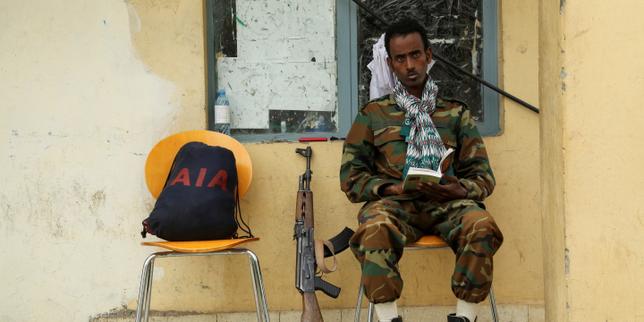
Northern Ethiopia is sliding right back toward full-scale war. If you want proof of how bad things have gotten, look at what just dropped in Mekelle. Tigrayan authorities are pushing through a brutal new draft law that sets up mandatory military conscription for all able-bodied men and women. It isn't a defensive backup plan; it's a total mobilization strategy. They're establishing a legal foundation for a wartime police state, complete with massive fines for evading the draft and up to 15 years in prison for anyone who "criticizes the armed struggle" or insults the honor of fighters on social media.
People who think this is a minor border dispute are completely misreading the situation. The regional capital is preparing for a siege, flights into Tigray are getting canceled, and drone strikes are hitting northwestern towns like Sheraro. The underlying framework holding the country together has snapped.
The Coup that Broken the Peace
You can't understand why Tigray is on a war footing without looking at the civil war inside Tigray itself. The Pretoria agreement relied on a moderate, federally cooperative group led by Getachew Reda to run the Tigray Interim Regional Administration. That experiment failed miserably.
Hardline elements within the old guard, spearheaded by Debretsion Gebremichael, completely rejected the interim setup. They felt Getachew was selling out to Addis Ababa while Tigrayan lands remained occupied by Amhara militias and Eritrean troops.
The political infighting escalated into an outright coup. Debretsion's hardline faction took over government offices in Mekelle, forced the interim leaders out, and unilaterally reinstated their pre-war 2020 State Council. They effectively declared themselves the sole rulers of the region, completely bypassing federal authority.
When you look at who is running Tigray today, you're looking at a group that believes conflict is their only path to survival. The National Election Board of Ethiopia stripped the party of its legal status, blocking them from participating in national elections. Combined with federal fuel restrictions and a frozen economy, the hardliners feel backed into a corner. When authoritarian political survival is threatened, mobilizing an army is usually the default response.
Missing Pieces and Broken Promises
Why did the Pretoria deal unravel so quickly? Because neither side actually did what they promised to do.
The agreement laid out a simple exchange: Tigrayan forces would disarm, and in return, the federal government would restore basic services, return displaced people, and push foreign forces out of Tigrayan borders.
Instead, the execution was a mess.
- The Disarmament Illusion: The Tigray Defense Force handed over some heavy weapons to federal troops, but they never fully demobilized. They kept an entire army structure intact, hiding weapons and maintaining a shadow command network.
- The Territorial Trap: Western Tigray remains under the control of Amhara regional forces and militias. For millions of Tigrayans, this is an open wound. Hundreds of thousands of internally displaced people are stuck in squalid camps, facing starvation because they can't go home.
- The Eritrean Factor: Isaias Afwerki’s Eritrean troops never fully left the northern border. They entrenched themselves in contested territories, acting as a constant threat to Mekelle and complicating any attempt at normalization.
Addis Ababa sees the remobilization as an illegal rebellion by an outlawed group. Mekelle sees its mobilization as an existential defense against a federal government that let their people starve and allowed neighbors to slice up their territory. Both sides have completely lost trust in the written word.
A Regional Powder Keg
This isn't just an internal Ethiopian problem. The entire Horn of Africa is shifting its weight, and the alliances are getting weird.
The old partnership between Ethiopian Prime Minister Abiy Ahmed and Eritrean President Isaias Afwerki—the alliance that originally crushed Tigray—has completely shattered. Abiy’s aggressive push to secure a naval port on the Red Sea, highlighted by a controversial maritime deal with Somaliland, deeply alarmed Eritrea.
This has led to a strange, volatile geopolitical reality. Eritrea, looking to counter Addis Ababa, has been meddling inside Tigray, with some intelligence reports suggesting they even assisted the hardline TPLF faction's power grab to destabilize Abiy’s northern flank. At the same time, the federal government has allegedly funded and armed its own proxy forces, like the Tigray Peace Forces, to strike Tigray from the Afar border.
When you have drone strikes hitting towns, regional actors supplying weapons, and local leaders threatening life imprisonment or the death penalty for anyone creating "public unrest," you aren't looking at a peace process. You're looking at a war machine warming up its engines.
What Needs to Happen Now
International envoys, including the African Union's Olusegun Obasanjo, are rushing back to Mekelle for emergency talks. But sitting in a conference room won't stop the mobilization unless the core issues are directly targeted.
First, the federal government must lift the economic chokehold on Tigray and establish a clear, verifiable timeline for the safe return of internally displaced people to Western Tigray. You cannot ask a population to stop arming themselves when their families are starving in camps a few miles from their occupied homes.
Second, the hardline regional administration in Mekelle has to kill the draconian conscription bill and stop silencing internal critics. Turning the region into an isolated garrison state might protect a few political elites, but it will guarantee a slaughter for the civilian population.
Finally, the international community needs to stop treating the Pretoria agreement like a sacred text that is working. It’s broken. We need a second round of direct, transparent negotiations that include the actual actors on the ground—including regional militias and border representatives—before the mandatory draft turns another generation of young people into battlefield casualties.