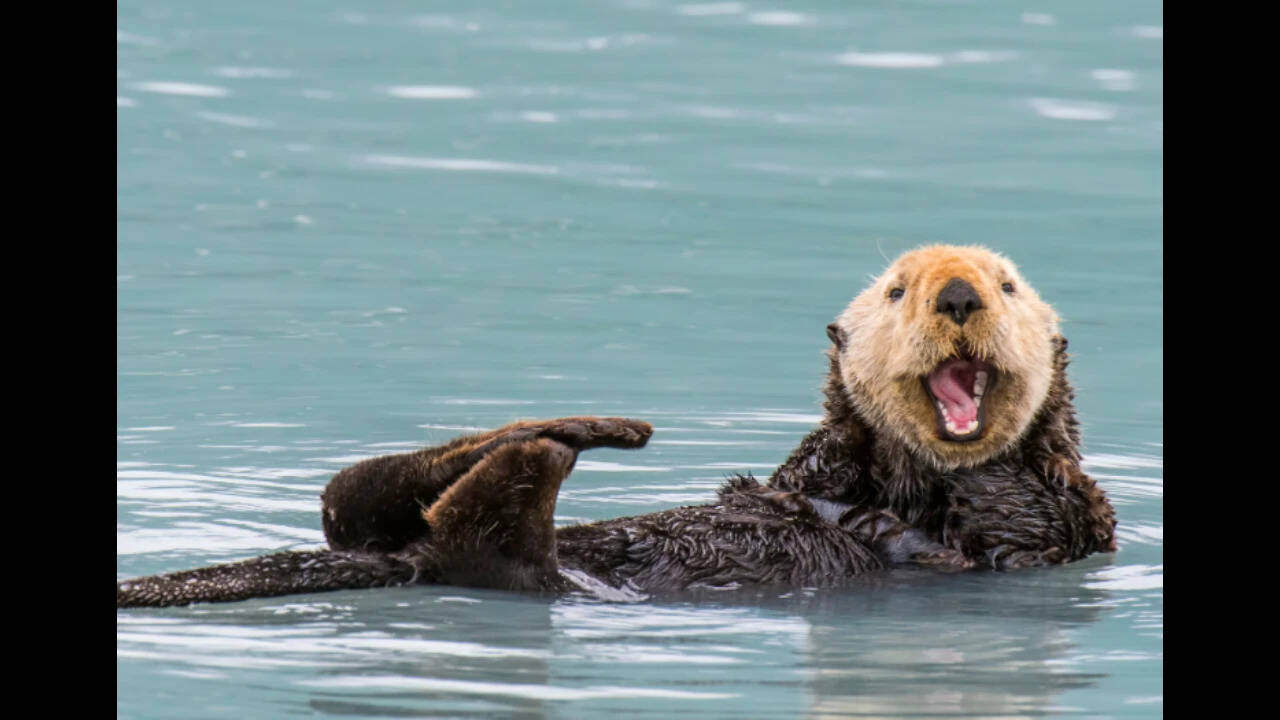
For decades, conservation orthodoxy maintained a rigid hierarchy. Coastal wetlands crumbled because of rising seas, chemical runoff, and relentless human development. Fixing a broken estuary meant pouring concrete, building artificial breakwaters, or spending millions on mechanical sediment replenishment. Then the otters returned to Elkhorn Slough. They did not arrive with a grant or an engineering crew. They came hungry.
When sea otters recolonized the California central coast estuary, they triggered an ecological chain reaction that stunned marine biologists. Eelgrass meadows expanded by six hundred percent. Decades later, empirical field studies proved that marsh-edge erosion along creek banks slowed by an average of sixty-nine percent. Traditional coastal management models failed to predict this outcome because they ignored a fundamental driver. Predators shape geography just as much as tides do. You might also find this related coverage insightful: When Silver Wings Slip and the Slide Drops.
The Mechanics of a Trophic Cascade
To understand why an estuary heals when a furry marine mammal moves in, you have to look down the food chain. Elkhorn Slough was an environmental casualty long before marine biologists noticed the shift. Agricultural runoff pumped staggering loads of nitrogen and phosphorus into the shallow waters. This nutrient overload spawned massive mats of algal epiphytes that smothered native eelgrass, blocking out sunlight and suffocating the underwater meadows.
At the same time, native crabs flourished in the degraded environment. Striped shore crabs and other crustacean populations exploded because their natural predators had long since been hunted out of the region. These crabs went to work on the ecosystem with destructive efficiency. They grazed on the small invertebrate grazers—such as sea slugs—that normally kept algae under control. Worse still, the crabs burrowed relentlessly into the muddy banks of the salt marsh, feeding on vital plant roots and destabilizing the structural integrity of the entire waterway. As highlighted in detailed coverage by The Guardian, the implications are significant.
The return of the sea otter inverted this dynamic. Otters consume up to a quarter of their body weight daily, and in Elkhorn Slough, their menu featured an abundance of local crabs.
- Predation pressure: Sea otters winnowed down the population and average size of hungry shore crabs.
- Invertebrate release: With fewer crabs hunting them, populations of grazing sea slugs and marine snails rebounded.
- Algae suppression: The surging population of tiny grazers scraped the smothering algae clean off the surviving eelgrass blades.
- Root protection: Fewer crabs burrowing into the banks meant salt marsh roots could finally knit together into dense, resilient mats.
The math of the system changed overnight. An apex predator solved a chronic botanical and geological crisis simply by eating.
Challenging the Bottom-Up Dogma
For generations, coastal geomorphology operated on a strict assumption. Scientists believed that physical forces—waves, currents, sediment supply, and nutrient loading—dictated the physical shape of shorelines, while biology merely responded to those conditions. The Elkhorn Slough findings shattered that framework.
When researchers constructed predator-exclusion experiments across multiple tidal creeks, the reality became undeniable. Inside the mesh cages where otters were blocked from hunting, crabs remained numerous, burrowing activity spiked, and creek banks eroded rapidly. Just inches away in open water where otters foraged freely, the banks held firm.
This revelation forces a harsh reckoning for modern conservation policy. Millions of dollars evaporate annually into heavy civil engineering projects designed to armor coastlines against sea-level rise. Steel bulkheads, riprap, and artificial geotextile tubes treat the symptoms of habitat collapse while ignoring the missing biological architecture. Animals are not merely ornaments living inside an ecosystem; they are active stabilizers of the physical world.
The Unresolved Complications
Ecological restoration rarely follows a frictionless path. While the news from Monterey Bay offers a blueprint, scaling this model to other vulnerable coastlines exposes steep political and economic friction.
Fisheries management organizations often view recovering sea otter populations with deep suspicion. Commercial and recreational crab fishermen see the mammals as direct competitors for valuable catch. When an apex predator moves into an estuary and systematically reduces crab biomass, local human economies feel the squeeze. Balancing the ecological imperative of coastal stabilization against the economic survival of coastal fishing communities remains an ongoing conflict with no easy legislative compromise.
Furthermore, estuaries like Elkhorn Slough possess unique geography that aided the otters. The calm, protected waters shielded the animals from offshore apex predators like great white sharks and killer whales, which heavily patrol the open outer coast. Reintroducing or protecting otters in more exposed, high-energy bays does not guarantee the same quiet residency or rapid population growth.
The Broader Coastal Horizon
The implications extend far beyond a single California tidal flat. Along the Pacific coastline, from Washington State down to San Francisco Bay, massive wetland restoration projects are underway. Many of these regions suffer from the exact symptoms that choked Elkhorn Slough decades ago: nutrient pollution, disappearing seagrass, and crumbling marsh edges.
If resource managers factor wildlife back into the equation, the strategy shifts from pouring concrete to restoring food webs. Nature possesses ancient mechanisms for coastal defense that cost nothing to maintain once the primary components are restored. The modern coastline does not just need more seawalls. It needs its apex predators back.