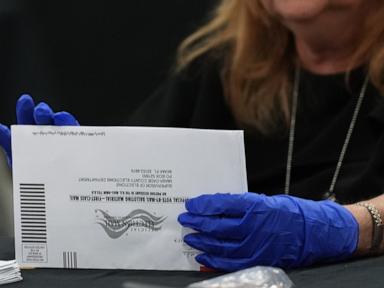
Federal courts and the executive branch are locked in a high-stakes constitutional collision over the mechanics of American voting. A federal judge has issued a fresh temporary restraining order halting the U.S. Postal Service from enforcing key provisions of its final mail-in ballot restrictions. The ruling targets the administration's aggressive attempt to reshape federal elections through postal mandates. It lays bare the structural friction between executive overreach and the decentralized reality of state-run balloting.
U.S. District Judge Indira Talwani stepped into the fast-moving legal battle to block measures that would force sweeping changes onto local election administrators. The blocked mandates include strict ballot-envelope standards, return requirements, and portal registrations that critics argue exceed federal statutory authority. At its core, the dispute questions whether the executive branch can commandeer an independent agency like the Postal Service to police voter rolls and restrict mail delivery.
The administration defended the policy as a necessary security safeguard. Yet, court records and election officials point to a glaring absence of evidence supporting claims of widespread mail ballot irregularities. The rush to impose uniform federal rules onto a system already deep into its operational cycle has created an administrative bottleneck. Local clerks do not have the budget, the software, or the time to redesign envelopes and overhaul tracking procedures before ballots drop for the midterm contests.
The Mechanics of Administrative Chaos
To understand why these restrictions face such steep judicial hurdles, one must look at the logistical timeline of an election. State election boards spend months preparing paper stock, testing ballot-sorting machines, and verifying registration databases. Injecting a federal mandate requiring new envelope barcodes and federal agency citizen lists late in the calendar introduces immediate systemic failure.
Think of a hypothetical election office in a mid-sized county preparing to mail hundreds of thousands of absentee packets to registered voters. If a federal directive suddenly mandates that every return envelope must feature a specialized barcode tied to a centralized federal citizenship database, the local printer cannot simply update a software file overnight. Procurement laws, vendor contracts, and physical supply chains move slowly. Disrupting these baseline operations weeks before ballots are legally required to go out guarantees that thousands of eligible citizens will face administrative disenfranchisement.
Judge Talwani emphasized this exact danger in her written opinion. The court found that the immediate threat of widespread voter confusion and loss of franchise vastly outweighs any speculative administrative interest claimed by the federal government.
The Legal Ping-Pong Match
This courtroom showdown did not happen in a vacuum. Earlier in the week, the Supreme Court lifted a separate injunction on procedural grounds, ruling that challenges brought by a coalition of states were premature because the Postal Service had not yet published its final rule.
The administration seized that narrow procedural win as a green light. Within hours, the Postal Service finalized its rules, prompting voting rights organizations and state attorneys general to immediately file fresh, ripe challenges. Judge Talwani’s latest restraining order directly addresses those finalized rules, proving that the legal battle is far from resolved.
The back-and-forth creates a dizzying landscape for voters and local election workers alike. Clear rules are essential for maintaining public trust. Instead, competing court orders and shifting federal directives generate an atmosphere of uncertainty that threatens to depress voter participation.
The Constitutional Boundary Test
Beyond the immediate administrative nightmare lies a profound constitutional question. Article I, Section 4 of the Constitution grants states the primary power to set the times, places, and manner of holding elections, subject to congressional oversight. Nowhere does the text grant the president the unilateral authority to dictate how mail carriers handle ballots or which voters receive them.
By attempting to use the Postal Service as a choke point for absentee voting, the executive branch is testing the outer boundaries of administrative law. Postal unions have also pushed back, arguing that mail carriers should not be thrust into the role of election police. The union's stance highlights the practical absurdity of turning postal workers into arbiters of voter eligibility.
As appeals wind their way back toward higher courts, the clock continues to tick down toward the midterm elections. Even if the administration ultimately secures a favorable final ruling from the Supreme Court, the sheer operational lag makes wholesale implementation before November an uphill battle. The strategy relies heavily on disruption rather than orderly governance, leaving the judiciary to pick up the pieces of an avoidable institutional crisis


