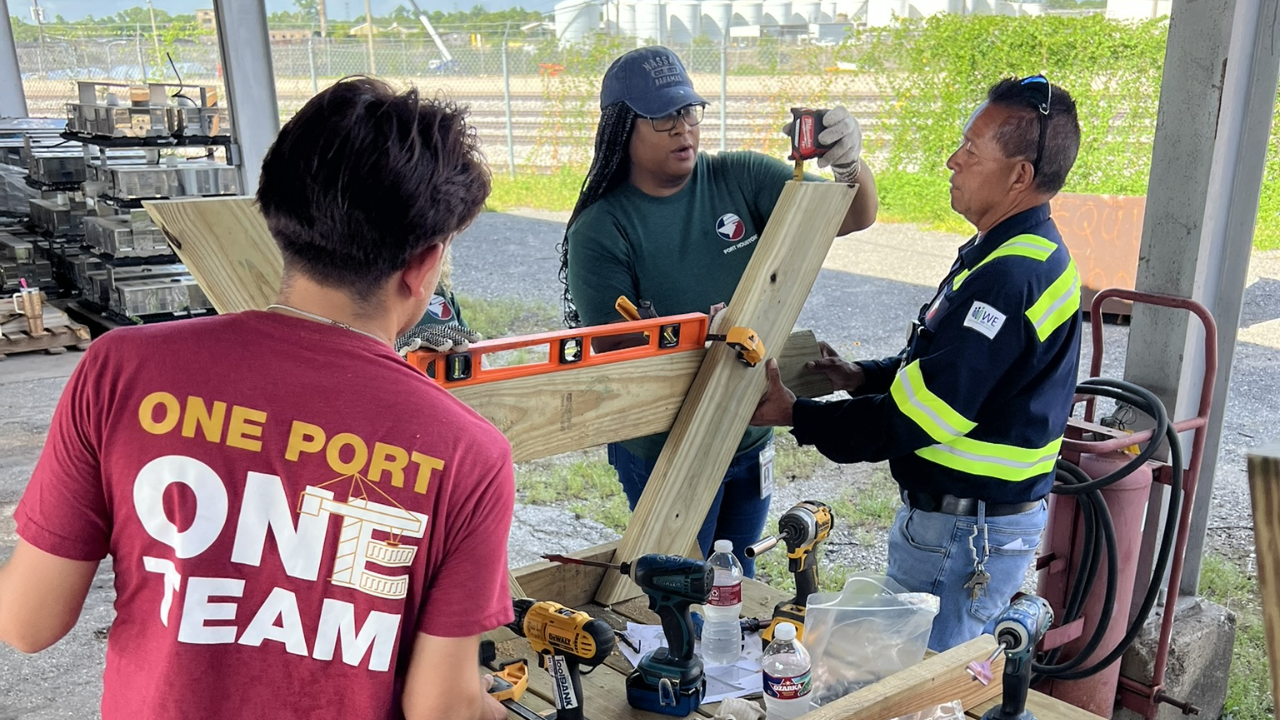
Port Houston just dropped $500,000 across 32 different local nonprofits, and if you look closely at where the money went, you will see a clear strategy for regional survival. Big maritime hubs rarely spend cash without expecting a return on investment. This time, the return is a stable workforce and healthier neighborhoods right along the Houston Ship Channel.
Let us look at the raw numbers. The grant cycle brought in 194 applications. Those groups asked for more than $6.6 million combined. That means half a million dollars barely scratches the surface of what local community groups actually need. Port Houston has now poured over $2.15 million into these grassroots efforts since launching the program back in 2020.
Where the Money Actually Goes
You cannot run a massive industrial port without a massive local workforce. Nearly half of the 2026 funding went straight toward workforce development and career training.
Port operators know they face a hiring crunch. Instead of complaining about labor shortages, they are funding the solution. Groups like SERJobs grabbed $20,000 for their Building the Port Workforce Initiative. The Women Offshore Foundation secured $25,000 for career development programs. Even the Prison Entrepreneurship Program picked up $15,000 to help former inmates build stable futures.
Education got a massive piece of the pie too. Lee College Foundation received $20,000 to expand logistics software training. That links classroom education directly to terminal jobs. Compudopt took home $25,000 for its Pathways Program to build technical fluency early.
Beyond the Job Market
Industry cannot thrive if workers cannot feed their families or keep their kids safe. Port Houston split the rest of the funds across environmental, health, and food security projects.
Kids' Meals pocketed $15,000 for healthy meal deliveries. Second Servings of Houston received $20,000 to push surplus food into hungry households. Target Hunger secured $12,750. On the environmental front, the Armand Bayou Nature Center took $15,000 to bring title-one school kids out for field trips. Baytown Habitat for Humanity grabbed $15,000 for home repair and resilience initiatives.
You see a tight geographic focus. Every single dollar targets the 14 communities directly adjacent to the shipping lanes.
The Shift Toward Resident-Led Priorities
Port Houston is changing how it hands out checks. The 2026 distribution marks the final run under the old model. Starting in 2027, all grant money will flow through the Anchored in Action Community Investment Plan.
That plan matters. Port officials built it using direct input from more than 10,000 local residents. Instead of corporate executives guessing what neighborhoods need, the neighborhoods are writing the rulebook.
If you run a local nonprofit near the ship channel, your strategy has to adapt. Corporate philanthropy is moving away from generic goodwill and moving hard toward data-backed community partnerships. Keep your proposals hyper-local, tie them directly to regional economic needs, and prove your metrics early.