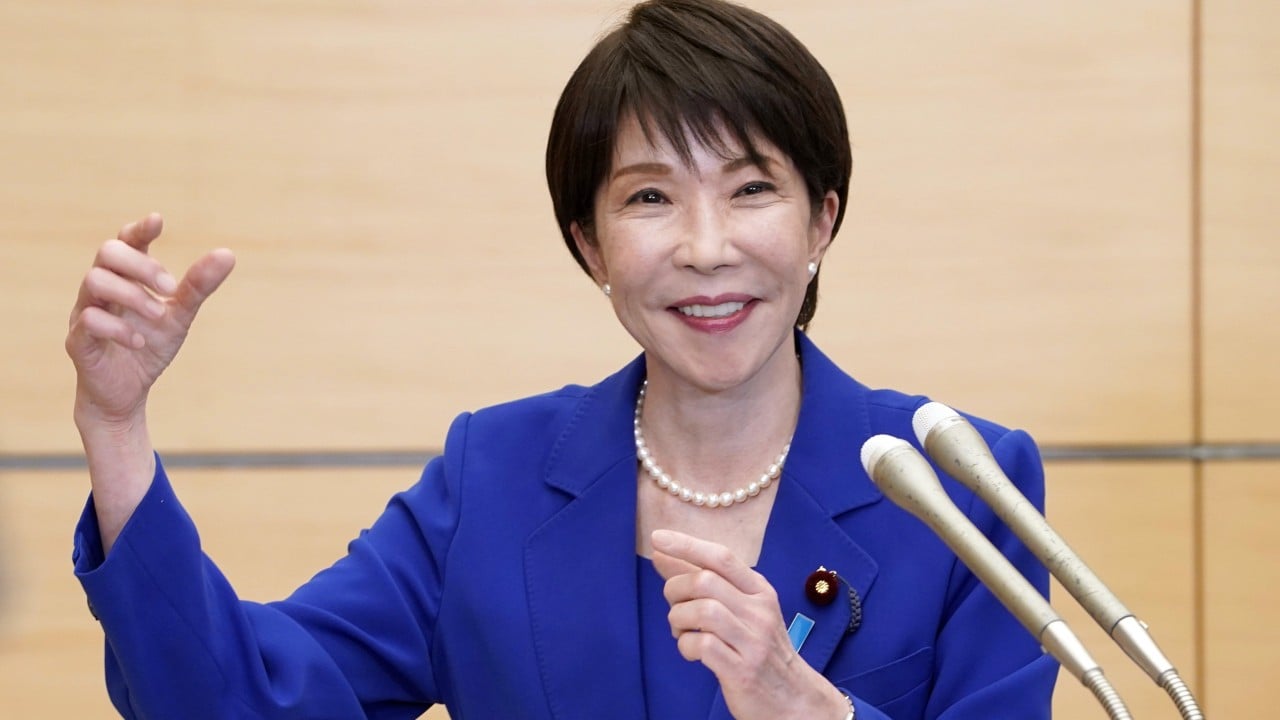
Political commentary has fallen into a lazy trap. Pundits look at Sanae Takaichi’s high personal approval ratings and mistake a fleeting aura of novelty for structural political dominance.
The conventional narrative goes like this: Takaichi is a trailblazing nationalist whose personal charm commands the public, granting her an impregnable shield against the warring factions of Nagatacho. Mainstream analysts claim her job is simply to "maintain her grip" on Nagatacho while she uses her approval buffer to steer a conservative agenda.
That take is dead wrong. It conflates surface-level brand popularity with institutional leverage.
Takaichi is not riding a wave of permanent ideological realignment. She is trapped in a classic political optical illusion: high personal likability masking a structurally brittle mandate, zero traditional party architecture, and an impending economic reckoning that her polling numbers cannot defer.
I have watched political operations blow through massive polling reserves inside six months because they mistook high approval for hard political capital. Takaichi’s team is walking straight into that same wall.
The Myth of the "Popularity Shield"
Political capital in Nagatacho does not come from NHK weekend surveys. It comes from structural leverage inside the Liberal Democratic Party (LDP).
The political commentariat treats public approval as a weapon a Prime Minister can brandish against internal party opponents. In reality, public approval in Japan is an ephemeral, lagging indicator. It tells you what voters felt about last week's televised appearance, not what an LDP veteran will do when you threaten their committee assignments or district funding allocations.
Historically, LDP Prime Ministers survive through one of two mechanisms:
- Factional Hegemony: Commanding a disciplined, well-funded faction that controls voting blocs inside Nagatacho (the classic Shinzo Abe or Kakuei Tanaka model).
- Electoral Hostage-Taking: Wielding such overwhelming personal sway over key swing districts that backbench MPs support the leadership purely out of self-preservation (the Junichiro Koizumi model).
Takaichi possesses neither.
She is a leader without a true factional base. The loose conservative coalitions and legislative research groups assembled around her do not function as disciplined voting blocs. They are ideological affinity groups, not party machines. When push comes to shove on contentious tax tweaks or defense appropriations, those groups fracture instantly along lines of local self-interest.
Her high poll numbers are largely driven by young voters and independents who are notoriously volatile. In recent media surveys, support among independent voters swung downward the moment price pressures bit into real household budgets. Relying on independent voters inside Nagatacho is like building a skyscraper on a sandbar. The moment inflation erodes purchasing power, those voters evaporate, leaving the leader completely exposed to internal party assassins.
The Inflation trap and the Consumption Tax Mirage
Mainstream coverage treats Takaichi’s fiscal proposals—specifically her push for temporary cuts to the consumption tax on food—as a brilliant populist card.
It isn't. It's a strategic dead end.
Promising targeted consumption tax cuts creates a lose-lose scenario:
- If she fails to pass the tax cut: Her populist supporter base revolts, viewing her as just another puppet of the Ministry of Finance (MOF).
- If she forces the tax cut through: She triggers an open war with the MOF and fiscal hawks within her own party, all while damaging sovereign debt credibility at a time when Japanese Government Bond (JGB) yields face upward global pressure.
Meanwhile, inflation remains the true governing metric. Over 60 percent of surveyed voters consistently register dissatisfaction with the government's handling of consumer price spikes. Passing niche symbolic legislation—like national flag protection bills or administrative restructuring—does absolutely nothing to offset the daily reality of expensive imported energy and rising grocery bills.
The public does not grant infinite grace periods for symbolic victories when real wages lag behind living costs.
The Coalition Dilemma: Governing with brittle Partners
The competitor narrative suggests Takaichi's legislative strength is proven by high bill passage rates and new coalition alignment. This ignores the real drag of coalition mechanics.
Partnering with regional forces like the Japan Innovation Party (JIP) complicates the governing math. JIP's core demands—aggressive supply-side deregulation, ending subsidies for inefficient zombie firms, and decentralizing administrative capital functions—clash directly with traditional LDP strongholds in rural and small-business constituencies.
Every time Takaichi concedes to a coalition partner to keep her legislative tally high, she alienates the backbench LDP lawmakers whose rural districts bear the brunt of those reforms. She is effectively trading party loyalty for short-term parliamentary statistics.
Imagine a corporate CEO boasting about a 100% board approval rate on new initiatives, while completely ignoring the fact that the concessions made to secure those votes destroyed the profit margins of their core operating divisions. That is precisely how this administration is managing the Diet.
The Real Power Dynamic Inside Nagatacho
The question isn't whether Takaichi can "maintain her grip" on the LDP. The question is whether she ever had a grip in the first place.
The LDP has historically operated as a syndicate of competing interests rather than a unified ideological party. When the party elevates an ideological outlier without a strong factional foundation, it is rarely a sign of permanent surrender to that outlier’s vision. More often, the party apparatus uses popular figures as an electoral front to win Lower House seats, only to hem them in when actual structural choices must be made.
The political bar intent on keeping her in check does not need to launch an immediate, dramatic coup. They simply let her burn through her political capital on difficult legislative fights, wait for economic reality to drag her public approval back down to earth, and then quietly reclaim control over key policy appointments.
Takaichi's personal appeal and strong media presence have given her a powerful opening chapter. But mistaking a strong opening chapter for an unshakeable regime is a fatal misreading of Japanese political mechanics. Without structural factional control or an economic strategy that solves real-wage stagnation, high poll numbers aren't a shield. They are a countdown clock.
The moment the public realizes symbolic optics won't pay the electricity bill, the internal party machinery will do what it has always done to leaders without a machine of their own: dismantle her administration from the inside out.