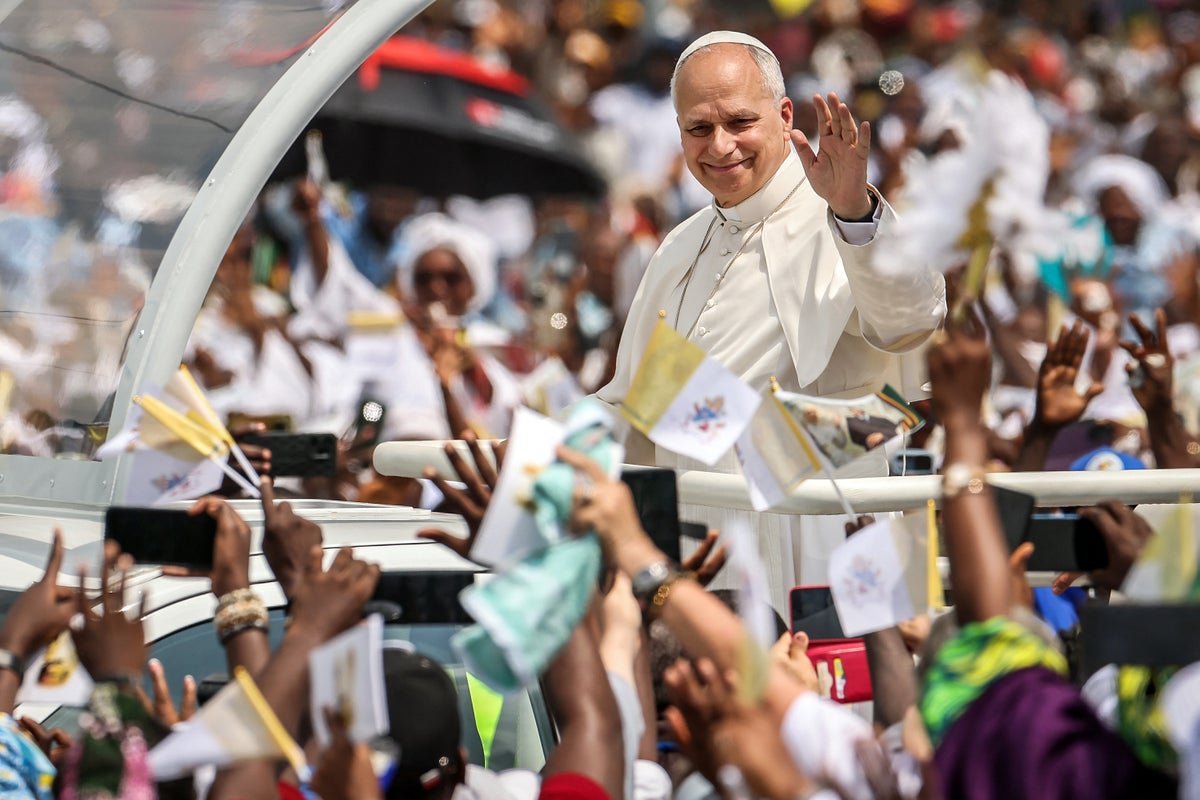
Donald Trump doesn’t like being told "no," and he certainly doesn't like being told "no" by a fellow American. For ten months, Pope Leo XIV—the first U.S.-born pontiff in history—played the quiet game. He washed feet, he prayed for the marginalized, and he let the White House believe they had a "hometown hero" in the Vatican. That illusion shattered this week.
The sudden, public friction between the Chicago-born Pope and the 47th President isn't just a tiff over policy. It’s a collision of two completely different worldviews on what "power" actually means. While Trump spent months claiming credit for Leo’s election, the Pope was waiting for the right moment to draw a line in the sand. That moment arrived with the threat of total war in Iran.
The Myth of the MAGA Pope
When Cardinal Leo was elected in May 2025, the Trump administration took a victory lap. Trump went on Truth Social to claim that the Church only picked an American because they "thought that would be the best way to deal with" him. It was a classic Trump move: frame a global religious event as a personal tribute to his own influence.
For nearly a year, Leo XIV let those comments slide. He met with Vice President JD Vance shortly after his inauguration, keeping things civil. He focused on his "spiritual father," St. Augustine, and stayed away from the daily news cycle in Washington. But anyone paying attention to Leo’s history on X (formerly Twitter) before his papacy knew he wasn't a fan of the administration's immigration stance. He was a ticking time bomb of "social gospel" values.
The quiet ended when the bombs started falling. The U.S. intervention in Venezuela in January and the escalating strikes in Iran forced Leo out of his shell. He didn't just disagree; he called the administration’s tactics a "diplomacy of force" that belongs in a darker century.
Why Iran Changed Everything
If you want to know why the Pope finally took the gloves off, look at the date: April 7, 2026. That was the night Trump threatened that the "whole Iranian civilization will die tonight" if the Strait of Hormuz wasn't reopened.
For a Pope, that isn't just bad foreign policy—it’s a moral emergency. Leo responded by calling the threat "truly unacceptable." He didn't hide behind Latin or vague metaphors. He spoke directly to the cameras on a papal flight to Africa, stating he has "no fear" of the Trump administration.
Trump’s reaction was as predictable as it was fierce. He labeled the Pope "weak on crime" and "terrible for foreign policy," even suggesting the Pope was siding with Iran. It’s an bizarre sight: a President of the United States telling the leader of 1.3 billion Catholics to "get his act together" and stay out of politics.
The Clash of Religious Language
One of the weirdest parts of this feud is how both men are fighting over the same territory: God.
- Trump's Angle: The administration has leaned heavily into Christian nationalism. After a pilot was "rescued" on Easter Sunday, Trump used religious imagery to frame the war as a divinely supported mission. He even shared (and later deleted) an AI-generated image of himself as a Jesus-like figure.
- Leo's Angle: He’s calling it out as blasphemy. In Cameroon this week, he spoke about "tyrants" who "manipulate the very name of God for their own military and economic gain."
Leo is essentially telling the American religious right that they can't have it both ways. You can't claim to follow the "Prince of Peace" while cheering for the destruction of a "whole civilization."
The American Problem
Being an American Pope is a double-edged sword. Leo understands the American psyche better than any of his predecessors. He knows that in the U.S., everything is a partisan fight. By speaking out, he risks alienating the very American Catholics who supported Trump in 2024.
But that’s exactly why he’s doing it.
Leo isn't acting like a diplomat; he’s acting like a pastor who’s watched his home country go off the rails. When he criticizes "Operation Metro Surge" (the recent immigration raids) or the "delusion of omnipotence" in the White House, he’s speaking to an American audience in a language they understand. He knows he has a +34 net favorability rating in the U.S. compared to Trump’s -12. He’s using that social capital as a shield.
What Happens Now
Don't expect a reconciliation dinner at the Vatican anytime soon. The "Board of Peace" in Gaza that Trump proposed? The Vatican already declined the invitation. The new Vatican ambassador to Washington, Gabriele Caccia, has been handed what is basically an impossible job.
If you’re a Catholic in the U.S., you're now caught in the middle of a power struggle that has no "off-ramp." Trump sees Leo as just another "radical left" political rival to be defeated. Leo sees Trump as a man who needs to remember that even the most powerful leaders are "multitudes of supportive brothers" and not gods.
Watch the Pope's tour through Africa closely. Every time he mentions "tyrants" or "billions spent on war," he’s not just talking about the local leaders in Cameroon or Algeria. He’s talking to the guy in the Oval Office.
The next move is yours. If you’re following this rift, stop looking at the political polls and start looking at the rhetoric. When a Pope says he has "no fear" of a sitting U.S. President, the traditional rules of diplomacy are officially dead. Keep an eye on the Vatican’s official statements regarding the Strait of Hormuz—that's where the next flashpoint will be.