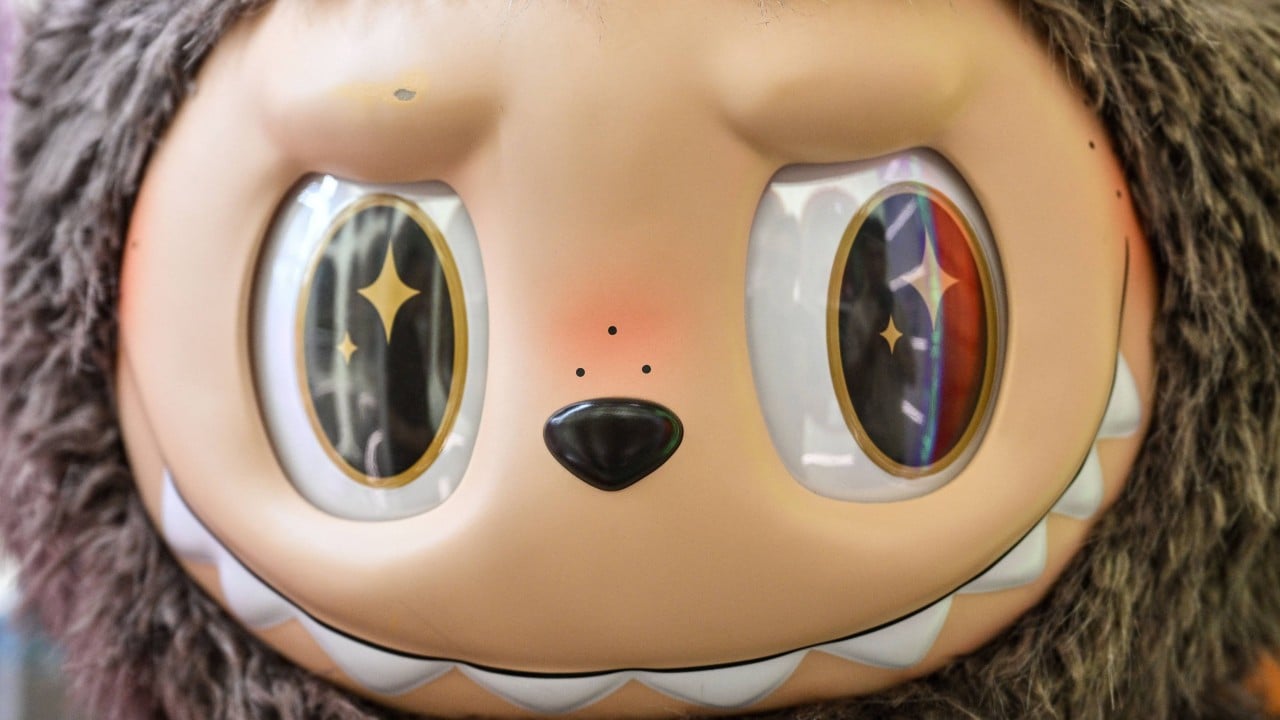
Wall Street analysts are currently having a collective panic attack over Pop Mart.
The headlines are screaming about a catastrophic 45 to 50% revenue decline. Pundits are writing obituaries for Labubu, declaring the blind-box craze dead, and comparing the Beijing-based designer toy giant to Beanie Babies in 1999.
They are completely wrong.
The lazy consensus assumes that any consumer brand experiencing a massive top-line contraction is dying. That is amateur-hour financial analysis. When you look under the hood of modern hype-driven retail, a violent revenue drop after a parabolic viral spike isn't a death rattle. It is a necessary detox.
If Pop Mart had chased that artificial peak, they would have destroyed their brand equity permanently. By allowing the bubble to deflate—and actively starving the grey market—they are executing the exact playbook that separates multi-decade luxury houses from dead mall-kiosk fads.
The Trap of Parabolic Growth
I have watched dozens of consumer brands blow hundreds of millions of dollars trying to defend an unnatural revenue peak.
When a product goes hyper-viral—like Labubu did when K-pop icons and global celebrities started hanging the snaggle-toothed plush monsters off their Hermès Birkin bags—demand detaches from reality. Suddenly, your core collectors are pushed out by sneakerhead flippers, scalpers, and tourists buying purely for social media clout.
Most CEOs see those numbers and lose their minds. They ramp up factory orders. They flood distribution channels. They license the intellectual property to every cheap manufacturer with a checkbook. For two quarters, they look like geniuses. By quarter four, their product is sitting in bargain bins at discount retailers, and their core fanbase has moved on in disgust.
Pop Mart is refusing to play that suicidal game.
A 45 to 50% revenue drop looks terrifying on a spreadsheet if you evaluate Pop Mart like a traditional toy company such as Mattel or Hasbro. Traditional toy companies sell commodities to children; they rely on mass ubiquity and perpetual volume growth.
Pop Mart is not a toy company. It is an accessible luxury and art-collectible house operating on a scarcity model.
In luxury economics, ubiquity is poison. Bernard Arnault, the chairman of LVMH, built an empire on a simple, brutal truth: you must always keep supply below demand, even if it means sacrificing short-term sales. When Louis Vuitton or Hermès sees a product becoming too common on the street, they pull it back. They burn inventory or throttle production. They willingly take the revenue hit to protect the aura of exclusivity.
Understanding the "Hype Hangover" vs. Brand Death
To understand why the financial press is misreading Pop Mart's numbers, you have to understand the mechanics of the secondary market.
During the height of the Labubu mania, Pop Mart’s reported revenue was heavily inflated by speculative buying. Scalpers were using bots to clear out online drops in milliseconds, while physical stores faced riots. That wasn't sustainable consumer demand; that was arbitrage. People were buying $20 blind boxes to flip them for $150 on StockX and regional resale apps.
When secondary market prices inevitably cool down, the scalpers vanish overnight.
If a brand's revenue was 40% propped up by speculative flippers, and those flippers leave, revenue drops by 40%. The math is simple. Yet, financial journalists treat the exit of toxic scalpers as if real fans have abandoned the brand.
In reality, the exit of the resellers is the best thing that could happen to Pop Mart. When a genuine collector can finally walk into a flagship store, buy a blind box at retail price, and enjoy the thrill of the pull without paying a 500% markup to a guy in a basement, brand health improves. Customer lifetime value stabilizes. The community heals.
Why "Is the Blind Box Trend Dead?" is the Wrong Question
If you search for Pop Mart right now, the internet is flooded with the same tired query: Is the blind box trend finally dead?
Asking if the blind box trend is dead is like asking if slot machines are dead.
The blind box mechanic isn't a trend; it is applied behavioral psychology. It leverages intermittent variable rewards—the exact same neurological trigger discovered by B.F. Skinner in the 1930s that keeps people pulling levers in Las Vegas and refreshing social media feeds. Humans are hardwired to chase unpredictable rewards. The dopamine hit doesn't come from owning the vinyl figure; it comes from the uncertainty right before tearing open the foil bag.
That psychological wiring isn't going anywhere.
The real question investors and brand builders should be asking is: How does an IP-driven company transition from a single-character viral explosion to a diversified portfolio?
Right now, Pop Mart is suffering from the classic "heavyweight champion" problem. Labubu (part of Kasing Lung’s The Monsters series) became so overwhelmingly massive that it eclipsed everything else in the ecosystem—Molly, Skullpanda, Dimoo, Hirono. When a single character accounts for a disproportionate share of your growth, any normalization in that character’s hype cycle drags the entire balance sheet down with it.
The Contrarian Playbook for Surviving a Viral Crash
If you are running a brand, managing a product line, or investing in consumer goods, Pop Mart’s current predicament offers a masterclass in what to do when the hype cycle turns against you.
Here is what actually works when your flagship product cools off:
1. Starve the Market, Don't Feed It
When sales drop by nearly half, every instinct in your body will scream at you to run promotions, bundle slow-moving stock, or release dozens of new colorways to juice revenue. Do the exact opposite. Cut production runs. Put the flagship character in a vault for six months. Make the market miss you. Scarcity is the only thing that rebuilds pricing power.
2. Pivot to High-Margin Art Over Mass-Market Plush
Labubu’s recent boom was heavily driven by plush keychains—items designed to be worn publicly as status symbols. Status symbols burn bright and die fast because once everyone has one, nobody wants one. To survive, Pop Mart has to pull the IP back into high-end, limited-edition vinyl sculptures and artist collaborations. You trade massive volume for sky-high margins and hardcore collector loyalty.
3. Weaponize Your B-Side Intellectual Property
While the world was obsessed with Labubu, Pop Mart’s other properties continued to quietly generate steady, predictable cash flow. A smart operator uses the cash harvested from a viral peak to aggressively subsidize and market their secondary franchises. You don't try to manufacture another Labubu—lightning rarely strikes twice on command. Instead, you build a defensive wall of ten mid-sized, deeply loyal sub-communities.
4. Ignore the Quarterly Earnings Circus
Public markets are structurally incapable of pricing culture. Wall Street demands linear, predictable 15% year-over-year growth. Culture never moves in a straight line; it moves in violent waves. Any creative company that contorts its product strategy to appease quarterly analysts will inevitably destroy the very soul that made it culturally relevant in the first place.
The Downside of the Contrarian Bet
I won't pretend this strategy is painless or guaranteed to succeed. Playing the long game in public markets carries brutal risks.
First, there is the morale problem. When a company’s stock gets hammered and headlines declare your flagship product a failure, top talent gets nervous. Designers start second-guessing their instincts. Retail partners get cold feet and reduce shelf space.
Second, there is the very real possibility that Pop Mart’s management didn't engineer this pullback intentionally—that they actually got caught flat-footed by shifting consumer tastes in key markets like North America and Southeast Asia. If the 50% decline is the result of genuine consumer apathy rather than an intentional reset of speculative froth, cutting supply won't create scarcity; it will just accelerate irrelevance.
There is a razor-thin line between "playing hard to get" and "being forgotten."
The Anatomy of a Second Act
Look at the history of enduring character empires. Sanrio didn't die when Hello Kitty went through multiple multi-year slumps in the 1980s and 2000s. Lego nearly went bankrupt in 2003 before stripping back its bloated product lines, returning to its core brick mechanics, and launching one of the greatest corporate turnarounds in modern history.
Even Nintendo has endured massive 50%+ revenue drops between console generations—moving from the stratospheric heights of the Wii to the catastrophic failure of the Wii U, before roaring back with the Switch.
In every single one of those cases, the rebound required the company to absorb the pain of a massive contraction. They had to shed the fair-weather tourists, clear out the speculators, and rebuild around their die-hard core.
Pop Mart is sitting on billions in historical cash flow, an unmatched global supply chain for designer vinyl, a massive network of automated robo-shops and flagship stores, and a stable of genuinely talented artists.
The tourists who bought a Labubu because they saw it on TikTok are gone. The flippers who bought ten at a time to pay their rent have moved on to the next shiny object.
What is left is the real business. Let the analysts panic and dump the stock. The smartest money in retail knows that you don't buy an IP empire when everyone is fighting in line at the mall—you buy it when the crowd goes home and the quiet work of building a legacy begins.