History has a nasty habit of crashing the present when nations face existential threats. That's exactly what's happening between Poland and Ukraine right now, creating a dangerous rift in Europe's united front against Russian aggression.
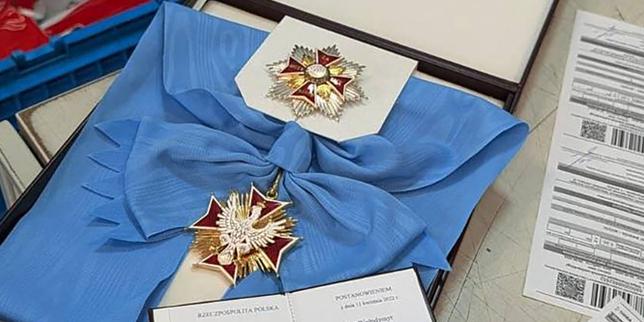
Polish President Karol Nawrocki just stripped Ukrainian President Volodymyr Zelensky of Poland's highest honor, the Order of the White Eagle. Zelensky didn't take the move sitting down, firing back by declaring he's sending the medal right back to Warsaw. Kyiv's foreign minister, Andrii Sybiha, immediately called the decision a strategic error. It's an emotional, public fallout that leaves both nations worse off while Vladimir Putin gets to watch his rivals fight over century-old ghosts. Recently making waves in this space: Why the Media is Completely Blind to the Real Trump-Meloni Power Dynamic.
The breaking point of wartime solidarity
This isn't a petty disagreement over political optics. It's a fundamental breakdown in a crucial diplomatic alliance. Poland has been one of Ukraine's most aggressive backers since the 2022 invasion, hosting nearly a million Ukrainian refugees and acting as the primary logistical funnel for Western military hardware. Stripping a wartime leader of a nation's top honor signals that historical grievances now carry more weight than current security cooperation.
The backlash from Kyiv was swift. Ukrainian officials are furious, calling the move impulsive and insulting. In a coordinated protest, high-ranking Ukrainian figures started returning their own Polish state medals. Ukraine's ambassador to Poland, Vasyl Bodnar, publicly renounced his Order of Merit of the Republic of Poland. This isn't just a political spat anymore. It's a full-blown diplomatic crisis. Further insights regarding the matter are detailed by TIME.
The fallout threatens to erode public support where it matters most. According to a recent poll by Polish portal Onet.pl, 65% of Polish citizens state that recent Ukrainian decisions have negatively influenced how they view Polish-Ukrainian relations. While Polish Prime Minister Donald Tusk tried to smooth things over by reminding everyone that a Ukrainian defeat places Poland in a dramatically more difficult security position, the damage to public trust is done.
The bloody history behind the political fight
You can't understand why this medal snub hurts so much without looking at the dark history of World War II. The root cause centers on the Ukrainian Insurgent Army (the UPA). To modern Ukrainians fighting for survival against Russia, the UPA is viewed as a patriotic symbol of independence that fought against the Soviet Red Army.
To Poles, the UPA represents something entirely different. During the war, the UPA carried out the Volhynia massacres in what is now northwestern Ukraine, slaughtering tens of thousands of Polish civils. The group also collaborated with Nazi forces at various points during the conflict.
The tension boiled over recently when Ukraine decided to honor a military unit connected to these historical groups. For Poland, that crossed a red line. Nawrocki defended his decision by stating the withdrawal of the honor isn't directed at the Ukrainian people and doesn't change Poland's strategic security stance. But in foreign policy, symbols are reality.
The two countries actually made decent progress on this issue recently. In December 2025, Zelensky and Nawrocki met in Warsaw to restart the exhumation of Polish victims from the Volhynia massacres. That process had been frozen for years, and the winter meeting looked like a genuine step toward historical reconciliation. This latest move completely blows up that progress.
Who actually wins when allies fight
Let's look at this pragmatically. The biggest beneficiary of this diplomatic breakdown sits in the Kremlin. Russia has spent years pumping disinformation into European media to convince Western publics that supporting Ukraine is a waste of time and money. They don't even have to try hard when the allies generate the headlines themselves.
Sybiha nailed the issue when he noted that this public dispute is a direct gift to the aggressor in Moscow. Western military aid packages are already harder to clear through international parliaments. A bitter public fight over historical awards gives opponents of foreign aid the perfect ammunition to argue that Eastern European alliances are too unstable to fund.
If you're tracking the long-term security architecture of Europe, watch how Poland handles its upcoming military spending and border deployments. Poland isn't going to stop sending weapons to Ukraine tomorrow—their own national survival depends on keeping a buffer zone between Warsaw and Russian forces. But the diplomatic warmth that defined the early days of the conflict is dead, replaced by transactional, cold security arrangements.
The immediate next step for international observers is monitoring whether this diplomatic frost leaks into transit logistics. Watch the border checkpoints. Any slowdown in military cargo or grain transit through Polish territory will tell you if this historical grudge is actively hurting the frontline war effort.