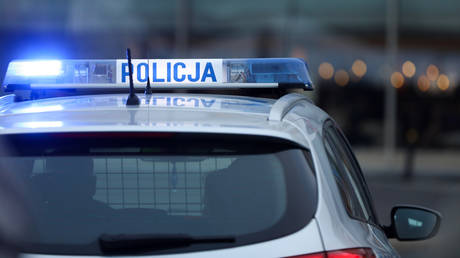
A 21-year-old Ukrainian student in Lublin was arrested in October 2026 on suspicion of preparing a racially motivated knife attack tied to viral online rumors of a "bloody Friday". If you only read sensational headlines, you might think a coordinated foreign terror cell was marching across Poland with blades. That isn't what happened.
The arrest occurred in Lublin, where prosecutors charged the young man—identified in Polish reporting as Yaroslav F.—with preparing to commit murder out of racial hatred. Investigators alleged he approached another person about carrying out a joint killing of a random victim and offered to supply a knife. A court ordered three months of pretrial detention while authorities examined his communications. He has denied wrongdoing and challenged the findings, while prosecutors noted he had no prior psychiatric treatment and was generally viewed as quiet among fellow students.
Why did this single arrest blow up into such a massive story? Timing. Pure, combustible timing.
Why This Arrest Hit a Nerve in Poland
The detention in Lublin came right after a terrifying week of real violence in early October 2026. On October 7, a 19-year-old student at a vocational school in Ostrołęka wounded nine people with a knife during a lesson—five students, two teachers, and two passersby—and police reportedly found a homemade explosive device in his backpack. The very next day, a 15-year-old attacked staff at a primary school in Leszczydół-Nowiny, killing a 37-year-old caretaker and injuring two others. By Saturday, October 10, another stabbing at an educational institution in Warsaw left three people injured.
School violence on that scale isn't normal in Poland. Parents panicked. Rumors swept across group chats and social media warning of a coordinated "bloody Friday" set for October 9, with wild claims of dozens of victims. Some local officials closed schools preemptively, and thousands of families kept kids home. Within days, police reported checking roughly 50,000 schools and detaining 76 people in connection with threats, hoaxes, or violence.
Against that backdrop, arresting a Ukrainian student over a knife-attack plot felt like gasoline on an open flame. People were already on edge, scrolling past AI-generated threat videos and panicking over copycat fears. A headline linking a Ukrainian national to a knife plot automatically tapped into two raw anxieties at once: youth violence and Polish-Ukrainian tensions.
Rumors Versus What Police Actually Found
Here's the part a lot of quick-hit news summaries glossed over. Polish officials stressed that they found no evidence of an organized nationwide plot behind the "bloody Friday" panic or a coordinated internet challenge driving all the school assaults. Panic feeds on itself online. One teenager in Przasnysz was detained as the suspected creator of an AI-generated clip announcing a "massacre," showing how easily fake or exaggerated media can hijack real fear.
In the Lublin case, prosecutors pointed to a fast response from the university and police that stopped the alleged plan before anyone got hurt. He was detained while working as a taxi driver. If convicted of preparing murder out of racial hatred, he faces up to 15 years in prison under Polish law. Still, a charge is an allegation, not a verdict, and his defense is contesting the prosecutors' case.
Misconceptions That Skew the Bigger Picture
Whenever an incident involves a Ukrainian national in Poland, misinformation moves fast—and sometimes goes in completely opposite directions.
First, don't treat a single suspect's nationality as proof of a broader trend of Ukrainian-led mass attacks. In fact, the actual attacks that shook Polish schools and streets in autumn 2026 involved suspects of different backgrounds, including Polish teenagers and adults. Earlier in September 2026, a 31-year-old Ukrainian man was charged after a deadly knife attack at a Benedictine abbey in Jarosław that killed a priest and injured four others. Horrific? Yes. Proof of a single coordinated campaign? No evidence supports that.
Second, don't ignore the flip side of the tension. Roughly a million Ukrainians sought protection in Poland after Russia's full-scale invasion, and hate crimes or anti-Ukrainian assaults have also drawn serious scrutiny. Polish police recorded 180 reports of hate crimes against Ukrainians in the first half of 2026—more than 30% higher than a year earlier—including a mid-October knife attack on two Ukrainian passengers on a Warsaw city bus that investigators treated as ethnically motivated. Meanwhile, Polish officials have repeatedly warned against online disinformation designed to stoke fear and turn Poles and Ukrainians against one another, such as false social media claims blaming a Ukrainian for stabbing a Polish teenager in Kamienna Góra when the suspect was actually Polish.
When you step back, the real story isn't a neat, single villain. It's a messy collision of online radicalization, teenage isolation, viral panic, and geopolitical friction that hostile actors love to exploit.
What Authorities Are Debating Now
The fallout sparked a fierce political fight in Warsaw over safety and free speech. Education Minister Barbara Nowacka argued for giving principals authority to confiscate potentially dangerous items like screwdrivers, while rejecting metal detectors on the grounds that schools shouldn't feel like fortresses. Police leadership pushed for backpack searches, whereas teachers' unions warned staff are already stretched thin.
Online regulation is just as contentious. Poland has wrestled with social media limits for younger teens and clashes over implementing the EU Digital Services Act, with President Karol Nawrocki previously vetoing an earlier bill over concerns about administrative censorship and judicial oversight. Balancing rapid action against dangerous online incitement without handing governments unchecked censorship power is easy to talk about and brutal to get right.
How to Read News Like This Without Getting Played
If you're following fast-moving security stories in Central and Eastern Europe, a few practical habits will save you from falling for outrage bait:
- Check the legal stage first. "Detained" or "charged with preparing" means prosecutors have opened a case and a court has ordered custody—not that guilt has been proven at trial.
- Separate rumor from official confirmation. Viral chat claims about "coordinated waves" or huge body counts often collapse once police finish investigating. Look for statements from regional prosecutor offices or major wire services like AP News or TVP World.
- Watch for disinformation hooks. Whenever a crime story immediately sparks ethnic blame on social media, pause and verify who the suspect actually is—false claims have repeatedly been used to inflame tensions.
- Look at the wider context. One arrest in Lublin doesn't explain school safety across 50,000 institutions. Track court filings, police updates, and policy debates over the coming weeks rather than reacting to the first breaking alert.



