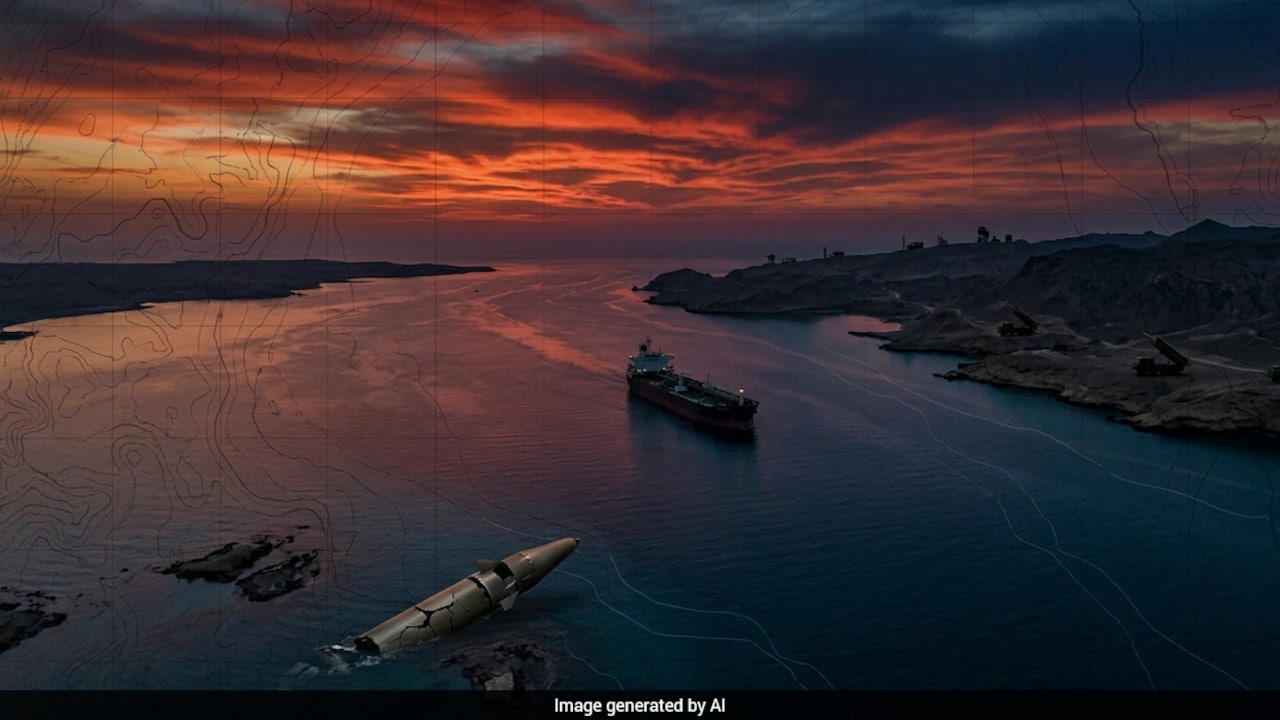
The energy world is currently high on the supply-chain diversification narrative. For years, the consensus has been clear, comfortable, and entirely wrong: if the Strait of Hormuz is a geopolitical choke point, the obvious solution is to build expensive workarounds.
On paper, the math looks comforting. Governments in the Persian Gulf are pouring billions into massive infrastructure projects. We see new pipelines slicing across the Arabian Peninsula to the Red Sea, and deep-water ports like Duqm in Oman expanding rapidly to handle giant crude carriers. The thesis of these megaprojects is simple: bypass the world's most dangerous naval bottleneck, secure the flow of global oil, and render threats from regional adversaries irrelevant.
It is a beautiful, expensive fantasy.
The reality is that these pipelines are not a strategic masterstroke. They are monumentally expensive, inefficient insurance policies that fail to address the actual mechanics of global energy logistics. In a crisis, they cannot scale. In a conflict, they are stationary, indefensible targets.
The belief that you can spend your way out of geography is a multi-billion-dollar delusion.
The Fatal Math of Pipeline Capacity
Let us start with the hard numbers that the boosters of these bypass projects conveniently ignore.
The Strait of Hormuz handles roughly 20 to 21 million barrels of oil and liquid natural gas per day. That is about one-fifth of global petroleum consumption.
Now, look at the capacity of the alternative routes. Saudi Arabia’s East-West Pipeline (the Petroline) has a nominal capacity of around 5 million barrels per day, though its operational throughput is often far lower. The Abu Dhabi Crude Oil Pipeline (ADCOP), which snakes across the desert to the port of Fujairah on the Gulf of Oman, can handle about 1.5 million barrels per day. Iraq’s northern export routes through Turkey are perpetually plagued by legal disputes and security issues, rarely running at full capacity.
Do the math. Even if every single bypass pipeline in the region operated at 100% capacity tomorrow, they could collectively transport less than 40% of the volume that flows through the strait.
Hormuz Daily Flow:  ████████████████████ (20.5M bpd)
Bypass Capacity:    ███████ (7.5M bpd max)
If Hormuz closes, the global economy does not just experience a hiccup; it suffers a cardiac arrest. A 60% supply deficit in Gulf exports cannot be absorbed by strategic reserves or increased production elsewhere. To suggest that these pipelines "bypass" the risk is like claiming a single fire extinguisher bypasses the need for a sprinkler system in a fireworks factory.
The Illusion of Port Security
The second pillar of the bypass narrative is the rise of alternative ports. The expansion of Fujairah in the United Arab Emirates and Duqm in Oman are heralded as new, safe hubs for the global energy trade. The logic is that by moving loading terminals outside the Persian Gulf, tankers can avoid entering the narrow, contested waters of the strait entirely.
This ignores how modern asymmetric warfare actually works.
Moving a loading terminal 200 miles to the south does not magically place it under an iron dome. In an era of cheap, long-range precision-guided drones, loitering munitions, and land-attack cruise missiles, a stationary port terminal on the Gulf of Oman is just as vulnerable as one inside the Persian Gulf.
I have spent decades analyzing regional infrastructure investments. I have watched boards greenlight massive capital expenditure projects based on flat, two-dimensional maps. What they fail to realize is that a pipeline is thousands of kilometers of unguardable steel running through empty desert. A pump station is a highly concentrated, fragile node. If an adversary has the capability and political will to shut down shipping in the Strait of Hormuz, they have the capability to disable a pipeline terminal with a handful of cheap drones.
In fact, pipelines are far easier to target than moving supertankers. A tanker is a steel leviathan protected by international maritime coalitions, moving through open water. A pipeline is a sitting duck.
The Economics of Inefficiency
Even in peacetime, the economics of these bypass routes are terrible.
Shipping oil via pipeline is fundamentally more expensive than moving it by sea. Maritime shipping benefits from massive economies of scale. A Very Large Crude Carrier (VLCC) can carry 2 million barrels of oil across the ocean with incredible fuel efficiency.
When you pump oil through a pipeline across a hot desert, you incur massive capital amortization costs, electricity costs to run pump stations, and maintenance expenses to combat corrosion and sand encroachment.
- Maritime Freight: Cheap, flexible, scalable.
- Pipeline Freight: Expensive, rigid, high maintenance.
Because of these economics, oil companies only use these bypass pipelines when they absolutely have to, or when subsidized by state coffers. Under normal market conditions, the pipelines run half-empty because shippers prefer the cheaper, direct route through the strait. This means the billions invested in these projects yield a terrible return on capital. They are idle assets waiting for a catastrophe that, if it actually occurs, they are too small to mitigate anyway.
The False Promise of East-West Diversification
The narrative gets even weaker when you analyze where the oil is actually going.
The push to build pipelines to the Red Sea (like Saudi Arabia's East-West expansion) assumes that the primary market for Gulf oil is in the West. But the reality of global oil demand has shifted dramatically over the last two decades. The growth is in Asia—specifically China, India, and Southeast Asia.
If you pump oil west to the Red Sea to bypass Hormuz, you then have to load it onto tankers that must either:
- Travel north through the Suez Canal (another choke point) toward Europe, a stagnant market.
- Travel south, around the Horn of Africa, to get to Asia—adding thousands of miles and massive shipping costs to the journey.
By trying to bypass one bottleneck, planners are forcing oil into longer, more expensive routes that often lead directly into other bottlenecks. It is a shell game that solves nothing.
The Real Solution Nobody Wants to Fund
If pipelines and new ports are an expensive band-aid, what is the actual solution to securing global energy flows?
It isn't elegant engineering. It is unglamorous, expensive naval presence and diplomatic deterrence.
The only thing that truly keeps the Strait of Hormuz open is the credible threat of overwhelming military force. The freedom of navigation in the gulf is maintained by international coalitions, naval patrols, and the shared economic interest of both producers and consumers—including China, which relies on the gulf for its economic survival.
Instead of spending $10 billion on a pipeline that can carry a fraction of their output, regional powers would get a far better return on investment by funding enhanced maritime security, mine-countermeasure capabilities, and localized air defense networks to protect the tankers themselves.
But naval fleets do not make for great ribbon-cutting ceremonies. They do not look like state-building achievements on a government brochure. Pipelines do.
Stop Funding the Bypass Delusion
The next time a consulting firm or an infrastructure fund pitches a new, multi-billion-dollar project designed to "circumvent geopolitical risk" in the Middle East, look at the throughput numbers. Look at the destination of the crude. Look at the range of modern missile systems.
The bypass narrative is a security blanket for anxious investors and politicians who want to pretend they can solve geopolitical instability with concrete and steel. You cannot bypass geography. You cannot build a pipeline big enough to replace the ocean.
The Strait of Hormuz remains the jugular vein of the global energy economy. No amount of desert steel will ever change that. If you want to secure the oil, you have to defend the water. Everything else is just expensive plumbing.