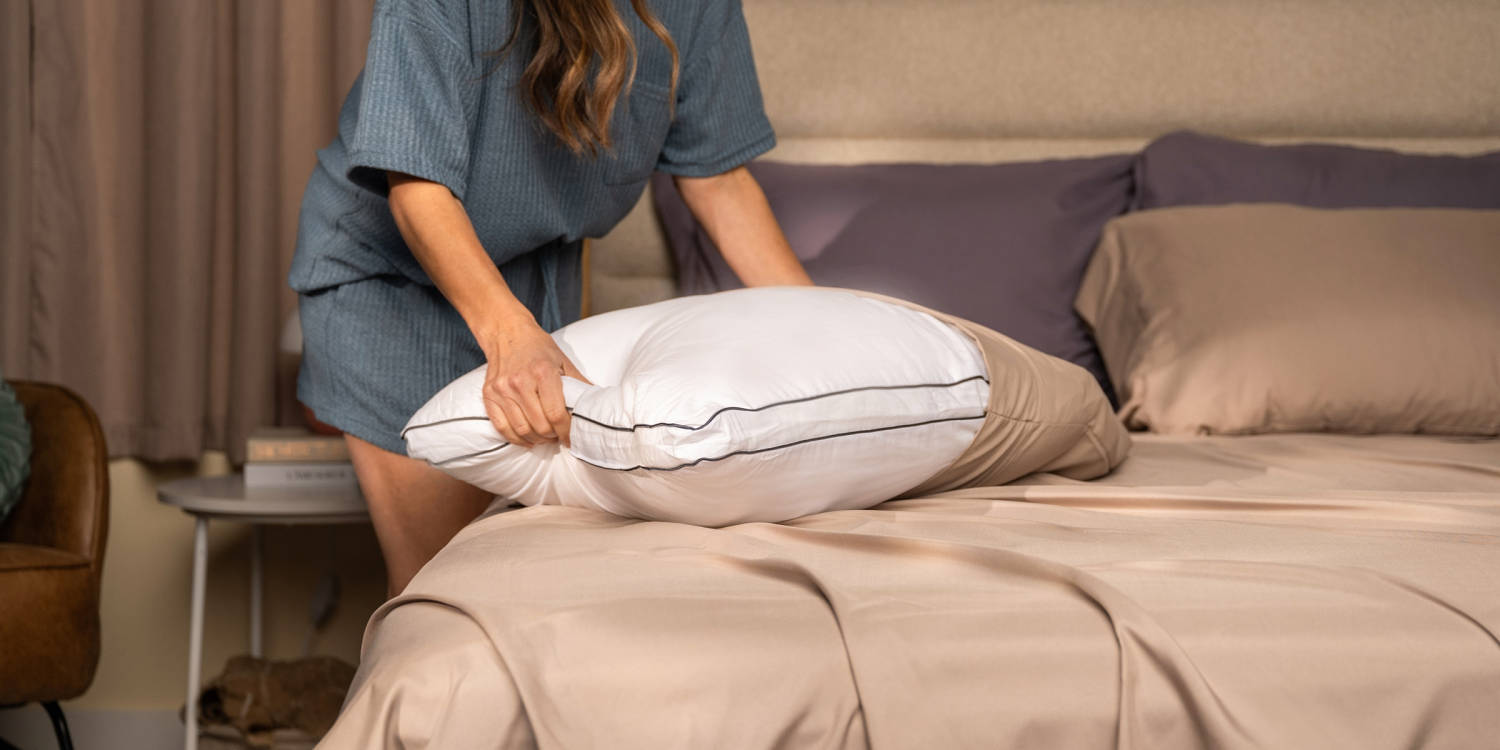
The bedding industry wants you to throw away perfectly good foam and feathers every twenty-four months. They cite dead skin cells, dust mite populations, and structural collapse. It is a brilliant financial loop built on manufactured anxiety.
I have spent fifteen years tearing down consumer product lifecycles, auditing textile manufacturing plants, and analyzing sleep ergonomics laboratories. The standard advice about tossing your pillow every two years is not based on physiological necessity. It is based on profit margins.
Let us dismantle the laziness of the consensus.
The Myth of the Two Year Expiration Date
Open any home decor blog or mattress manufacturer website and you will find the same uniform decree. Pillows expire. They accumulate half their weight in dead skin over two years. They turn into breeding grounds for microscopic organisms.
This claim relies on a logical leap so wide you could drive a moving truck through it. Yes, human beings shed skin cells. Yes, those cells collect in porous materials. But a piece of polyester fiberfill or high-density memory foam does not magically transform into a toxic hazard on day 731.
The two-year rule originates from bedding brands looking to accelerate replacement cycles. If you buy a synthetic pillow for twenty dollars, they need you back in the store buying another one before your mattress even starts to sag. They weaponized hygiene fears to create a consumable out of a durable good.
What Actually Happens Inside Your Pillow
To understand why the standard advice fails, we need to look at materials science instead of marketing copy.
Down and feather pillows compress over time because natural plumes break down under mechanical pressure and moisture. Synthetic polyester clusters clump together, losing their loft and returning zero support to your cervical spine. Memory foam degrades when exposed to persistent heat and humidity, eventually losing its viscoelastic recovery speed.
None of these processes follow a rigid calendar. A cheap polyester fill pillow packed into a tight case without a protector might lose its structural integrity in six months. A high-grade latex core or a tightly packed goose down pillow treated with proper maintenance can outperform industry timelines for a decade.
The metric that matters is not time. It is mechanical failure and hygiene maintenance.
If your pillow no longer supports your neck at the correct angle to keep your cervical spine aligned with your thoracic vertebrae, it is dead. If you fold it in half and it stays folded instead of springing back, it is dead. If you wash it according to manufacturer specifications and the loft refuses to return, it is dead.
Until those conditions are met, throwing it out is just tossing money into an incinerator.
The Dust Mite Fallacy
Let us address the boogeyman of the bedding world: dust mites.
Articles love to scare you with statistics about millions of dust mites living in your bed, feasting on your face while you sleep. Here is the reality check. Dust mites do not care about your pillow's age. They care about ambient humidity and temperature.
A brand-new pillow introduced into a bedroom with high humidity and poor ventilation will accumulate dust mites within weeks. Conversely, a five-year-old pillow kept in a low-humidity environment with a zippered allergen-barrier protector remains remarkably clean.
The presence of allergens is a management problem, not a disposal problem. If you suffer from dust mite allergies, the solution is not a recurring shopping trip. The solution is hot-water washing every two weeks, high-efficiency particulate air filtration in your HVAC system, and a tightly woven encasement that prevents microscopic debris from entering the core in the first place.
Buying a new pillow every two years while ignoring basic laundry hygiene is like buying a new car because you refuse to change the oil.
The Ergonomic Reality Check
The real tragedy of the pillow replacement myth is not financial. It is physical.
People obsess over the expiration date while sleeping on the entirely wrong loft and firmness for their skeletal structure. Side sleepers need a high loft to fill the shoulder gap. Back sleepers need a medium loft with a cervical contour to support the natural curve of the neck. Stomach sleepers need a flat, compressible surface to prevent hyperextension of the lumbar spine.
If you sleep on the wrong pillow style, a fresh pillow every twelve months will still leave you waking up with tension headaches and chronic neck pain. The bedding industry wants you to think your pain comes from an old pillow when it actually comes from a fundamental mismatch between your sleeping posture and your support tool.
Stop counting months on a calendar. Start evaluating your physical alignment every morning. If you wake up punching your pillow back into shape or sliding your arm underneath it for extra height, the issue is structural failure, regardless of whether you bought it last year or three years ago.
How to Test Your Setup Right Now
Forget what the labels say. Run this diagnostic on your current sleeping setup tonight.
First, check the recovery test. Place the pillow on a flat surface, press down firmly on the center with your hand, and count to three. If it rebounds instantly to its original height, the internal matrix is intact. If it leaves a depression or takes its sweet time returning, the support cells have ruptured permanently.
Second, check the weight test. Synthetic pillows get heavier over time as they trap sweat, body oils, and skin debris. If your cheap synthetic pillow feels noticeably heavier and denser than when you unboxed it, wash it thoroughly. If the weight and odor persist after a deep sanitize cycle, the internal accumulation has compromised the materials.
Third, check your alignment. Lie down in your normal sleeping position and have someone take a photograph from behind. If your head tilts upward toward the ceiling or sags downward toward the mattress, your pillow has failed its primary anatomical job.
If your pillow passes these tests, keep using it. Wash your protectors. Sun out your down. Vacuum your mattress. Stop letting marketing departments dictate the lifespan of your household goods.
Keep sleeping. Stop shopping.