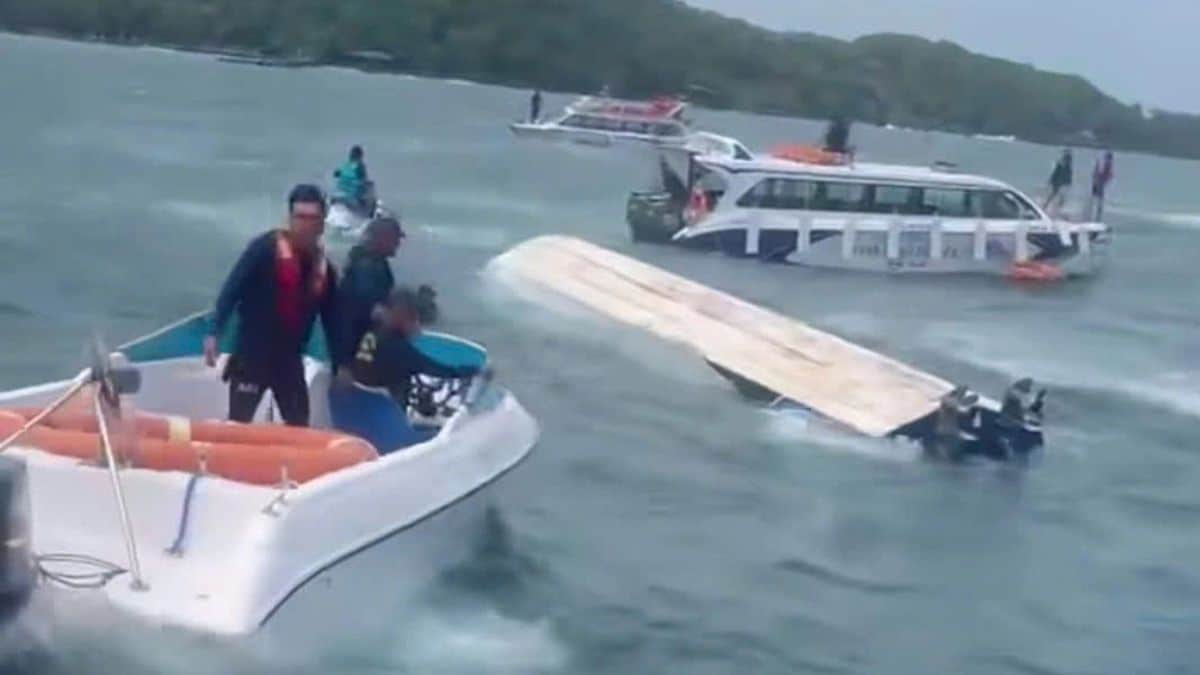
Fifteen Indian tourists are dead after a wooden tour boat carrying 32 passengers capsized in rough waters off the coast of Vietnam’s Phu Quoc island. The disaster highlights a critical breakdown in regional maritime safety enforcement during peak tourism surges. While local authorities initially pointed to sudden squalls, an investigation into the region's rapidly expanding island-hopping industry reveals a systemic failure. Overloaded vessels, inadequate life-preserver distribution, and a lack of real-time weather monitoring systems regularly place international travelers at extreme risk. This is not an isolated incident of bad weather, but the predictable result of a tourism infrastructure pushed far past its breaking point.
The Illusion of Safety in Paradise
Phu Quoc has transformed from a sleepy fishing outpost into a multi-billion-dollar tourism engine. The speed of this development has outpaced the regulatory frameworks meant to keep visitors alive.
When thousands of international tourists descend on a coastal hub daily, the pressure on local boat captains to fulfill itineraries is immense. Canceling a tour due to choppy waters means losing immediate cash, refunding expensive bookings, and taking a hit on digital review platforms. This economic pressure creates a culture of normalization of risk. Captains frequently gamble against changing weather patterns, relying on personal experience rather than official meteorological data.
On paper, maritime laws in Vietnam demand strict passenger manifests, mandatory life jackets, and vessel stability checks. On the water, reality looks entirely different.
Smaller day-trip operations frequently operate on the fringes of compliance. Tourism booms draw in independent contractors who use retrofitted fishing vessels. These boats feature high centers of gravity, making them highly susceptible to rolling when struck sideways by sudden swells. When a rogue wave hits a top-heavy wooden boat packed with passengers who are not wearing life jackets, disaster takes only a matter of seconds.
Structural Failures that Guarantee Tragedy
To understand how 15 people drown in a modern tourism hotspot, one must look at the specific mechanics of regional boat tours. The issues split into three clear structural failures.
Vessel Retrofitting and Stability Compensation
Many vessels utilized for cheap island-hopping tours were never engineered to carry dozens of moving human beings. They were built to hold static cargo or fish below deck.
- High Centers of Gravity: Adding benches, canopy roofs, and viewing decks elevates the boat's center of gravity.
- The Free-Surface Effect: If water enters the hull or if passengers suddenly rush to one side to take photos or escape spray, the shifting weight creates an uncontrollable momentum. The vessel simply cannot right itself.
The Life Jacket Paradox
It is common to see stacks of life jackets piled in the corner of tour boats, used as seat cushions, or stored under heavy benches.
Regulatory compliance is often treated as a checkbox exercise for dock inspectors. Once the boat leaves the pier, enforcement vanishes. Tourists rarely insist on wearing them due to the intense tropical heat, and crew members seldom enforce the rule for fear of making guests uncomfortable. In a sudden capsize event, retrieving a life jacket from beneath a submerged bench is mathematically improbable.
Fragmented Communication Networks
Small-scale maritime operators rarely utilize advanced Marine VHF radios or digital transponders. Instead, they rely on personal cell phones for communication with the shore.
When a vessel enters the blind spots around outer islands or faces sudden atmospheric interference during a storm, it becomes completely isolated. By the time an emergency becomes obvious to those on board, the window for launching an effective search and rescue operation has already closed.
The Supply Chain of Low-Cost Tourism
International travel agencies often sell these excursions as seamless add-ons to vacation packages, outsourcing the actual execution to the lowest-bidding local subcontractor.
This creates a dangerous layer of detachment. The agency selling the ticket in Delhi or Mumbai has never inspected the hull of the boat in Kien Giang province. They rely on the fact that the operator possesses a local business license, an administrative document that rarely reflects daily operational safety.
[International Agency] -> [Local DMC] -> [Boat Broker] -> [Unregulated Captain]
This supply chain dilutes accountability to the point of erasure. When an accident occurs, the international brand blames the local operator, the local operator blames the captain, and the captain blames the weather. The victims' families are left caught in a bureaucratic labyrinth, facing foreign legal systems and insurance companies that exploit fine-print exclusions regarding unlicensed or non-compliant transport.
A Blueprint for Survival
Fixing this broken system requires moving past public expressions of grief and temporary crackdowns. History shows that after a high-profile maritime disaster, local governments typically suspend all boat tours for a week, fine a handful of operators, and then allow business to return to normal once the international media attention fades.
True reform demands structural changes that remove human error and economic desperation from the safety equation.
First, marine port authorities must implement automated, digital manifests linked directly to harbor barriers. If a vessel's weight limit is breached by a single passenger, the digital barrier should refuse to clear the boat for departure.
Second, the use of retrofitted wooden hulls for commercial passenger transport must be phased out entirely. Modern catamaran designs or purpose-built fiberglass hulls offer the stability required to handle sudden coastal squalls safely.
Finally, international travel platforms must be held legally liable for the safety standards of their third-party vendors. If a booking platform faces multi-million-dollar lawsuits in its home jurisdiction for selling tours on unsafe vessels, the financial incentive to police those subcontractors increases instantly.
The tragedy near Phu Quoc should serve as an immediate warning to every traveler boarding a coastal tour boat this season. Do not assume that because an excursion was booked through a reputable website or features a sleek digital brochure, someone has verified its safety. Look at the hull. Look at the life jackets. If the crew treats safety precautions like an afterthought on a sunny morning, get off the boat before the weather turns.