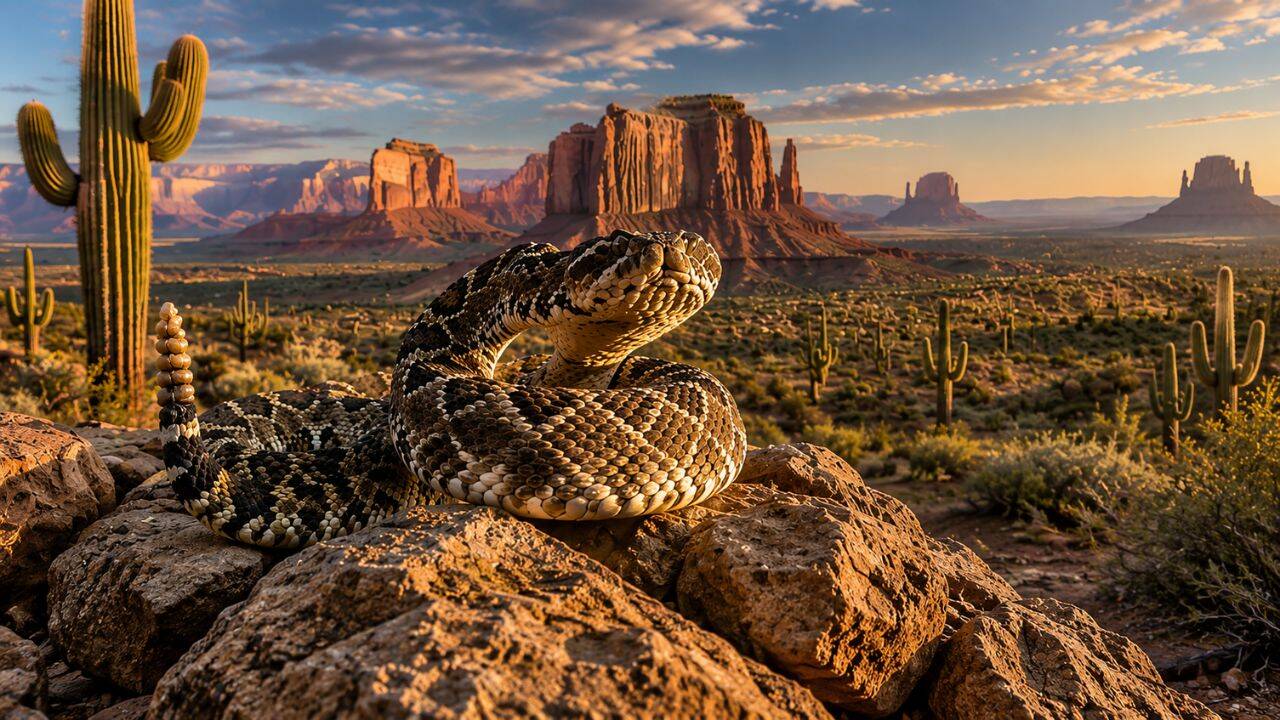
Ask anyone to name the king of snake country, and they'll usually point a finger straight at Texas. It makes sense on paper. The Lone Star State is massive, boasts over a hundred total species and subspecies, and has plenty of legendary desert brush to hide them.
But if we're talking about pure, concentrated danger, Texas actually loses the crown.
The real venomous snake capital of the United States is Arizona. While Texas wins the trophy for overall biodiversity, Arizona packs a far more toxic punch, serving as home to roughly 20 to 21 venomous species and subspecies. The exact count shifts slightly depending on how taxonomists argue over specific sub-species, but the gap between Arizona and the rest of the country isn't even close.
If you are hiking through the Grand Canyon, exploring the Sonoran Desert, or just living in the Southwest, understanding what actually crawls through the rocks is a matter of basic safety.
The Rattlesnake Deep Bench
Arizona doesn't just have a lot of snakes; it has a highly specialized lineup. Out of the roughly 20 venomous species in the state, an astonishing 13 of them are rattlesnakes. That means about one-third of every rattlesnake species on Earth lives right inside Arizona's borders.
This variety exists because the state is an evolutionary playground. You have low, scorching desert plains, flat grasslands, rugged chaparral, and high-altitude pine forests. Instead of competing with each other, different species claimed different territories.
The roster includes names you've probably heard of, alongside some incredibly obscure specialists:
- The Western Diamondback: The classic heavy-hitter. It's large, aggressive when cornered, and responsible for more bites than any other snake in the region.
- The Arizona Black Rattlesnake: A high-country hunter that lives in pine-clad mountains and changes its shade to blend in with dark volcanic rock.
- The Sidewinder: A small, specialized desert resident that moves in a strange J-shaped looping motion to avoid burning its belly on blistering sand.
- High-Altitude Rarities: The banded rock, western twin-spotted, and ridge-nosed rattlesnakes, which hide away in isolated mountain ranges.
Texas clocks in with about 15 venomous species. It's a respectable showing, but it's fundamentally a different mix, relying heavily on copperheads and cottonmouths to pad its numbers. Arizona is pure pit viper territory.
Meet the Most Dangerous Mouth in the Country
Having the most species is one thing, but Arizona also claims the snake with the most terrifyingly complex venom in North America: the Mojave rattlesnake.
Most rattlesnakes carry hemotoxic venom. It destroys tissue, ruptures blood vessels, and causes intense pain. It's miserable, but modern antivenom handles it well. The Mojave rattlesnake, specifically those carrying what researchers call "Mojave Toxin," brings something entirely different to the table. Its cocktail combines those tissue-destroying elements with a powerful neurotoxin that directly attacks your nervous system.
A bad Mojave bite can cause paralysis, breathing failure, and vision issues long before the actual bite site even swells up. They live out on the wide-open desert flats and grasslands of southern and western Arizona. Luckily, they're generally conflict-averse and want nothing to do with humans, meaning bites are relatively rare despite their lethal potential.
Beyond the pit vipers, the state also plays host to the Sonoran coral snake. It's a relative of the cobra, sporting bright bands of red, yellow, and black. While its venom is incredibly potent, it's a tiny, secretive burrower with small, fixed teeth. You'd practically have to jam your finger into its mouth to get a lethal dose, but it adds another layer to Arizona's venom capital status.
Surviving Snake Country Without Panicking
Living in or visiting Arizona doesn't mean you're constantly dodging fangs. Snakes don't view humans as food; they view us as giant, terrifying predators that might crush them. Most bites happen because someone accidentally steps on a snake, corners it, or tries to handle it.
If you want to enjoy the Southwest trails without a trip to the emergency room, just use some basic trail sense.
Watch Where You Put Your Hands and Feet
Never stick your hands into rock crevices or under bushes where you can't see. When hiking, stay in the center of the trail. If you have to step over a fallen log or a large rock, step onto it first, look down to make sure the other side is clear, and then step down.
Keep Your Dog on a Short Leash
Dogs are naturally curious, and they love sticking their noses into heavy brush where snakes rest during the heat of the day. A massive percentage of vet visits for snakebites happen because an off-leash dog cornered a defensive diamondback.
Freeze and Locate
If you hear that unmistakable, dry buzzing sound, don't jump blindly. Jumping without looking is an easy way to land directly on top of the snake. Freeze in place, look around to locate the source of the sound, and then take several large steps backward. Give the snake at least six feet of space, and it will happily slither away into the brush.
Know the Real First Aid
Forget everything you saw in old Western movies. Do not cut the wound. Do not try to suck out the venom with your mouth or a commercial pump kit. Do not apply a tourniquet, which traps the destructive hemotoxic venom in one spot and guarantees severe tissue damage.
The only real fix for a venomous bite is a hospital with a supply of antivenom. Calmly remove any rings or tight clothing near the bite before swelling starts, keep the injured limb at or slightly below heart level, and get to the nearest emergency room immediately.