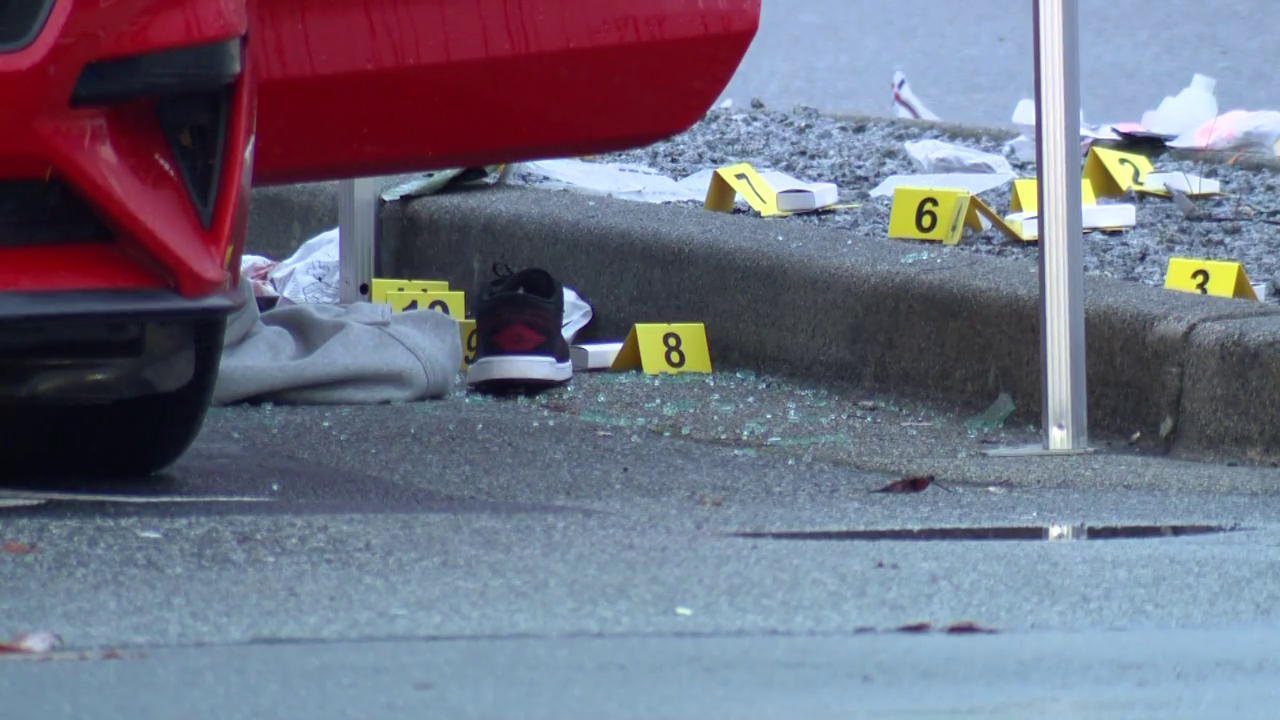
Two people are dead in Surrey, British Columbia. A man and a woman, fatally shot, leaving behind yellow police tape, a scorched vehicle two neighborhoods over, and a community asking the exact same question they asked last month.
Why does this keep happening here?
When news breaks about a man and woman fatally shot in a Surrey double homicide, the initial press release follows a predictable script. You get a block number, an approximate time of night, a vague mention of "targeted violence," and a phone number for the Integrated Homicide Investigation Team (IHIT). Most coverage stops right there. Local outlets rewrite the police press release, slap a stock photo of flashing red-and-blue lights at the top, and move on to the next news cycle within twenty-four hours.
That surface-level reporting leaves residents completely in the dark about what actually happens behind the scenes. Having covered Lower Mainland crime and watched how IHIT operates across Metro Vancouver for years, I can tell you the real story isn't just about the crime scene tape. It's about forensic timelines, gang intelligence networks, and why double homicides involving a man and a woman follow very specific investigative patterns.
The Anatomy of a Surrey Double Homicide Scene
Walk past a major shooting scene in Surrey—whether it's in Newton, Whalley, Guilford, or South Surrey—and you'll notice something immediately. The perimeter is massive.
Police don't just tape off a driveway or a single street corner. They shut down entire arterial corridors for days. Why? Because modern homicide investigations in British Columbia rarely start and end at the body.
When a man and woman are fatally shot together, investigators immediately look for three distinct physical footprints:
- The primary shooting site: Where the victims were ambushed, usually inside or right beside a parked vehicle.
- The secondary arson site: Almost every targeted shooting in the Lower Mainland involves a getaway vehicle burned to the frame within fifteen to twenty minutes of the shots being fired, often in a quiet residential cul-de-sac or rural stretch near Langley or Delta.
- The digital trail: Dashcam footage from commuters, Ring doorbell cameras, and automated license plate readers along Highway 1, Highway 99, and the Fraser Highway.
If you live within a five-kilometer radius of a shooting in Surrey, your home security system might hold the single piece of video that breaks the case open. Investigators spend their first seventy-two hours knocking on hundreds of doors just to map out the exact route the suspect vehicle took before and after the shooting.
Why Police Use the Term Targeted Violence
Every single time a fatal shooting hits the news in Surrey, police spokespeople tell the public there is "no ongoing risk to the general public" because the attack appears targeted.
Honestly, that phrase drives residents crazy. And for good reason.
When bullets fly in a residential neighborhood or a busy strip mall parking lot, saying there's no risk to the public feels tone-deaf. If you're walking your dog or grabbing groceries fifty feet away, a stray round doesn't care whether you're on a gang conflict list.
Here's what law enforcement actually means when they call a Surrey double homicide targeted. They aren't saying the neighborhood is magically safe. They're telling you this wasn't a random stranger picking victims off the sidewalk. It means at least one of the victims had a specific connection—financial, social, or criminal—that put them in the crosshairs of an organized crew.
The Complex Reality When a Man and Woman Are Killed Together
In Metro Vancouver's ongoing gang conflict, women are far less frequently the primary targets of contract hits than men. When a man and woman are fatally shot in the same incident, homicide detectives immediately test two working hypotheses.
First, was the woman collateral damage? In tragic cases across British Columbia, partners, girlfriends, or innocent acquaintances have been killed simply because they were sitting in the passenger seat when a shooter opened fire on a targeted man. Shooters using high-powered firearms rarely pause to check who else is inside a tinted-window SUV.
Second, was she an active participant or a deliberate target? Law enforcement agencies like the Combined Forces Special Enforcement Unit of British Columbia (CFSEU-BC) have repeatedly warned that the demographic profile of Lower Mainland organized crime has shifted. Women aren't just bystanders anymore. Some manage logistics, hold money, rent vehicles, or carry direct debts that make them primary targets in their own right.
Distinguishing between those two scenarios changes the entire direction of the investigation. It dictates which phone records get subpoenaed first, which associates get brought in for questioning, and whether retaliatory violence is likely to spill over into neighboring municipalities like Burnaby, Coquitlam, or Abbotsford.
How IHIT Actually Builds a Case After the Tape Comes Down
People watch too much television. They assume DNA results come back before dinner and cell tower dumps magically produce a suspect's name by morning.
Real life is painfully slow.
The Integrated Homicide Investigation Team is the largest homicide unit in Canada, handling cases across dozens of RCMP jurisdictions and municipal police departments in the Lower Mainland. When a double homicide happens in Surrey, IHIT deploys a primary investigative team, backed up by local Surrey RCMP officers (and, during the ongoing policing transition, Surrey Police Service personnel) to handle neighborhood canvassing and perimeter security.
Here is what the actual timeline looks like behind the scenes:
- The First 48 Hours (Containment and Canvassing): Forensic Identification Services (FIS) processes the shooting scene and the burned getaway car. Everything gets photographed, laser-mapped, and bagged before rain washes away trace evidence.
- Weeks One to Four (Digital Forensics and Autopsies): The BC Coroners Service conducts autopsies to recover projectiles and establish exact trajectories. Meanwhile, tech crimes units spend weeks extracting encrypted data from locked smartphones recovered at the scene.
- Months Two to Twelve (Judicial Authorizations): Getting access to banking records, encrypted messaging metadata, and cellular tower logs requires detailed production orders signed off by a judge. Every single warrant takes weeks of meticulous legal drafting.
- Year One and Beyond (The Waiting Game): Many targeted homicides in Surrey don't see charges laid for two, three, or even five years. Detectives often know who pulled the trigger long before they have enough admissible evidence to convince Crown Counsel to approve first-degree murder charges.
A common mistake the public makes is assuming an arrest hasn't happened because police have no leads. Usually, it's the exact opposite. Police are waiting for an alliance to fracture, an informant to flip after getting arrested on an unrelated weapons charge, or a forensic match to surface from another province.
The Policing Transition Factor in Surrey
You can't talk about major crime in Surrey without acknowledging the elephant in the room. For years, Surrey has been locked in a bitter, expensive, and confusing transition between the Surrey RCMP and the municipal Surrey Police Service (SPS).
Does a policing transition make homicide investigations harder? On paper, no. IHIT remains the lead investigative agency regardless of whether a municipal force or the RCMP holds jurisdiction in the city. IHIT detectives work seamlessly with both uniforms.
On the ground, though, institutional knowledge matters. Beat cops who have patrolled Newton or Whalley for fifteen years know the local players, the stash houses, and the family dynamics on a first-name basis. When officers rotate out, retire early due to political uncertainty, or shift between agencies, those informal intelligence pipelines take time to rebuild. Major crime units rely heavily on street-level tips passed up from frontline patrol officers. Keeping those communication lines airtight is critical every time a major shooting rocks the city.
What You Should Do If You Live Near a Crime Scene
Most people read a headline about a Surrey double homicide, shake their head, and scroll past. If you actually live or commute in the area, your actions in the first twenty-four hours can directly help get shooters off the street.
Don't assume the police already have what they need. They almost never do.
Check your dashcam immediately. Most dashcams operate on a continuous loop, overwriting old footage every few hours depending on the size of your SD card. If you drove anywhere near the reported intersection within two hours before or after the shooting, pull the memory card out of your camera right now so the file doesn't get erased. Even mundane footage of a dark sedan speeding through a yellow light three miles away can give IHIT the exact license plate or vehicle make they're missing.
Save your exterior home security footage. Ring, Nest, and wired CCTV systems often auto-delete clips after a set number of days unless you manually download them. Export the video covering a three-hour window around the incident and save it to a separate folder on your computer or phone.
Call the IHIT information line directly. If you saw a vehicle parked with its engine running in an unusual spot, noticed someone walking away from a residential street carrying a gas can, or heard distinct pops before sirens arrived, call IHIT at 1-877-551-IHIT (4448) or email ihitinfo@rcmp-grc.gc.ca. If you're worried about safety or retaliation—which is completely valid when organized crime is involved—use Metro Vancouver Crime Stoppers at 1-800-222-8477. Crime Stoppers strips out all caller ID and IP tracking before passing the tip to detectives.
Looking Past the Press Release
News articles about fatal shootings in Surrey tend to blur together after a while. Two victims, a burned car, a plea for witnesses, and silence until an arrest makes a brief blip on the evening news three years later.
Behind every single one of those sterile police statements is a massive, grinding investigative machine trying to piece together fractured evidence in a city growing faster than its infrastructure can keep up. Understanding how these cases unfold—and knowing how to preserve digital evidence if you happen to be nearby—turns passive frustration into actual community leverage. Check your cameras, lock down your footage, and let the investigators connect the dots.