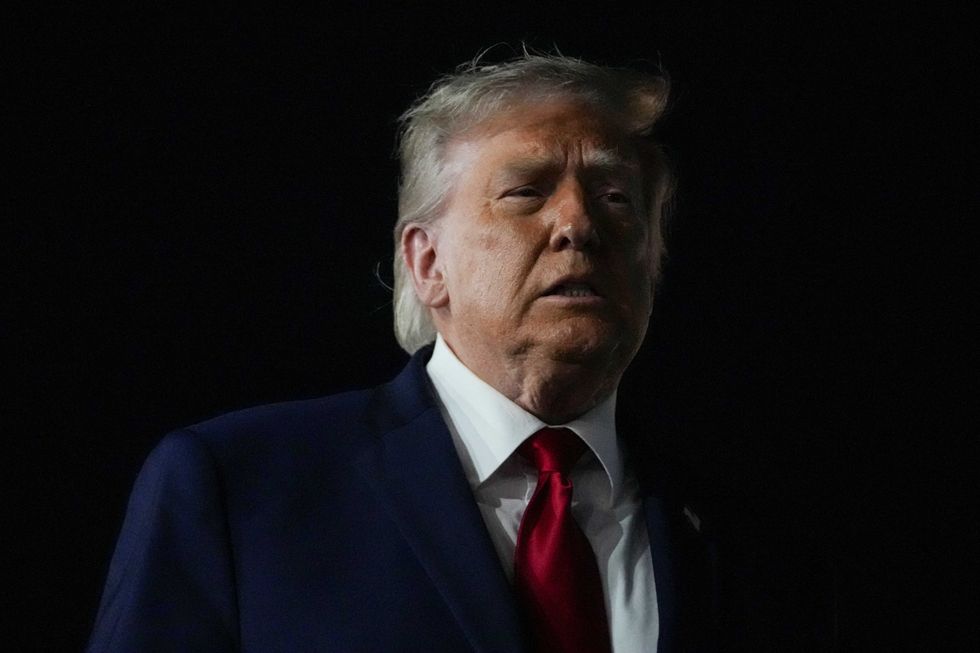
The press conference in Ankara was supposed to showcase international solidarity. Instead, it turned into an exhausting exercise in damage control. Standing next to Ukrainian President Volodymyr Zelenskyy at the NATO summit in Turkey, Donald Trump looked directly at the foreign leader and asked reporters if they had questions for "President Putin."
He caught himself a moment later. He tried to spin it. He claimed he meant he wanted to relay the journalists' questions to the Russian president during a later meeting. But the damage was done. The room went quiet, and the cameras kept rolling.
This was not an isolated slip of the tongue. It was part of a rapid-fire sequence of public mistakes that has reignited intense debate over the president’s fitness. For an hour, observers watched a bizarre display of mixed-up countries, mangled acronyms, and strange tech rants. Critics call it a national security risk. Supporters dismiss it as classic Trump performance art. The reality is much more complicated than either side wants to admit.
The Ankara Press Conference Breakdown
When you look at the raw transcript from Wednesday, the sheer volume of errors is hard to ignore. Calling Zelenskyy by his chief adversary’s name grabbed the biggest headlines, but the verbal stumbles didn't stop there.
While attempting to address a recent geopolitical conflict involving a American aircraft carrier, Trump repeatedly referred to the "Islamic Republic of Iran" as the "Islamic Republic of Japan." The two nations have vastly different roles in global politics. Mixing them up during a high-stakes military discussion raised immediate eyebrows among foreign diplomats in the room.
Soon after, the focus shifted to trade and treaties. Trump brought up the 2015 nuclear accord negotiated under the Obama administration. He did not call it the Joint Comprehensive Plan of Action or even use its widely known acronym, JCPOA. Instead, he repeatedly called it "JCPOC," calling it a terrible deal while stumbling over the letters.
Then came the lighter, though no less jarring, fixation on social media. Trump decided to brag about his digital reach but could not pronounce the name of the world's most popular video app.
"You know who's number one on tic tac?" Trump asked the press corps. "I am. I'm number one on Tik Tok and all I talk about is how bad communism is."
He made the exact same "tic tac" error earlier in the week during a White House briefing. Repeating it on an international stage suggested it wasn't a random glitch. It looked like a persistent cognitive block.
What Official Explanations Leave Out
The White House press office did what it always does after a rough public appearance. They ignored the specific errors and attacked the media's framing. Press Secretary Karoline Leavitt issued a statement praising Trump’s energy and his focus on putting American interests first during the NATO negotiations.
Behind the scenes, the spin machine was working overtime to convince everyone that Trump was simply exhausted from back-to-back diplomatic meetings. High-level summits are brutal schedules for anyone. They involve long flights, shifting time zones, and intense closed-door debates.
But the exhaustion defense only goes so far when the patterns match broader physical observations. Journalists covering the second term have noted visible changes. The president has appeared to doze off during lengthy public proceedings. Photos have captured distinct bruising on his hands and noticeable swelling around his ankles.
Political allies argue these are normal signs of aging for an individual approaching his eighties who refuses to slow down. They point out that behind closed doors, Trump can still drive a hard bargain. During the same summit, he threw meetings into temporary chaos by demanding trade cuts with Spain and making renewed rhetorical claims on Greenland. He later reversed course, praising the "love and unity" of the alliance. His defenders say this erratic style is a deliberate negotiating tactic, not a lack of mental clarity.
The Growing Medical Skepticism
Outside the political bubble, professional medical observers are growing increasingly vocal. This is not just partisan bickering anymore. Medical professionals have started risking public backlash to voice their concerns.
Earlier in May, a group of physicians associated with International Physicians for the Prevention of Nuclear War released a detailed assessment of the president's public behavior. They pointed to what they described as a marked deterioration in cognitive functioning. Their report highlighted disorganized speech, tangential arguments, and sudden, unexplained changes of direction during strategic discussions.
These doctors stated that if they were evaluated under the framework of the 25th Amendment, they would question his capacity to fulfill operational duties. It is a severe claim. It relies on observing public data rather than an in-person examination, which means it faces legitimate pushback from medical traditionalists who believe diagnosing from afar is unethical.
Yet, the public cannot simply ignore the frequency of these events. There is a vast difference between forgetting a minor statistic and replacing the identity of a crucial strategic ally with the name of a bitter enemy while standing right next to them.
The Real World Impact of Political Slips
Why does this matter beyond the cable news talking points? It matters because foreign adversaries and allies watch every single second of these appearances. They do not just see a funny clip for social media. They look for vulnerabilities.
When a United States president confuses Japan with Iran, it creates immediate friction. It signals a potential lack of focus on critical regional alliances. Japan is a foundational security partner in Asia. Iran is a heavily sanctioned state actor. Merging them into a single entity during an official security brief sends a confusing message to diplomats who spend years sweating the small details of international treaties.
Furthermore, the constant need for clarification drains administrative energy. Instead of executing policy, White House staff spend their days cleaning up verbal messes. They have to issue corrections, soothe insulted allies, and rewrite official transcripts to reflect what the president meant to say rather than what he actually said.
Moving Beyond the Talking Points
If you are trying to make sense of this situation, you need to ignore the extreme narratives from both political parties. The truth is rarely found in hyperbole. Trump is neither completely incapacitated nor perfectly sharp. He is an aging leader operating under immense global pressure, showing clear signs of cognitive fatigue.
Pay attention to the specific context of these errors. Watch how he reacts when he makes a mistake. Does he recover quickly, or does he double down on the error? Track the physical indicators like mobility and alertness during long events.
The next few months will demand total focus from the executive branch. With international trade friction escalating and regional conflicts requiring steady diplomacy, clear communication is mandatory. Watch the upcoming bilateral meetings closely. Do not just read the headlines. Look at the full transcripts, compare his performance across different times of day, and judge the consistency of his policy statements for yourself.