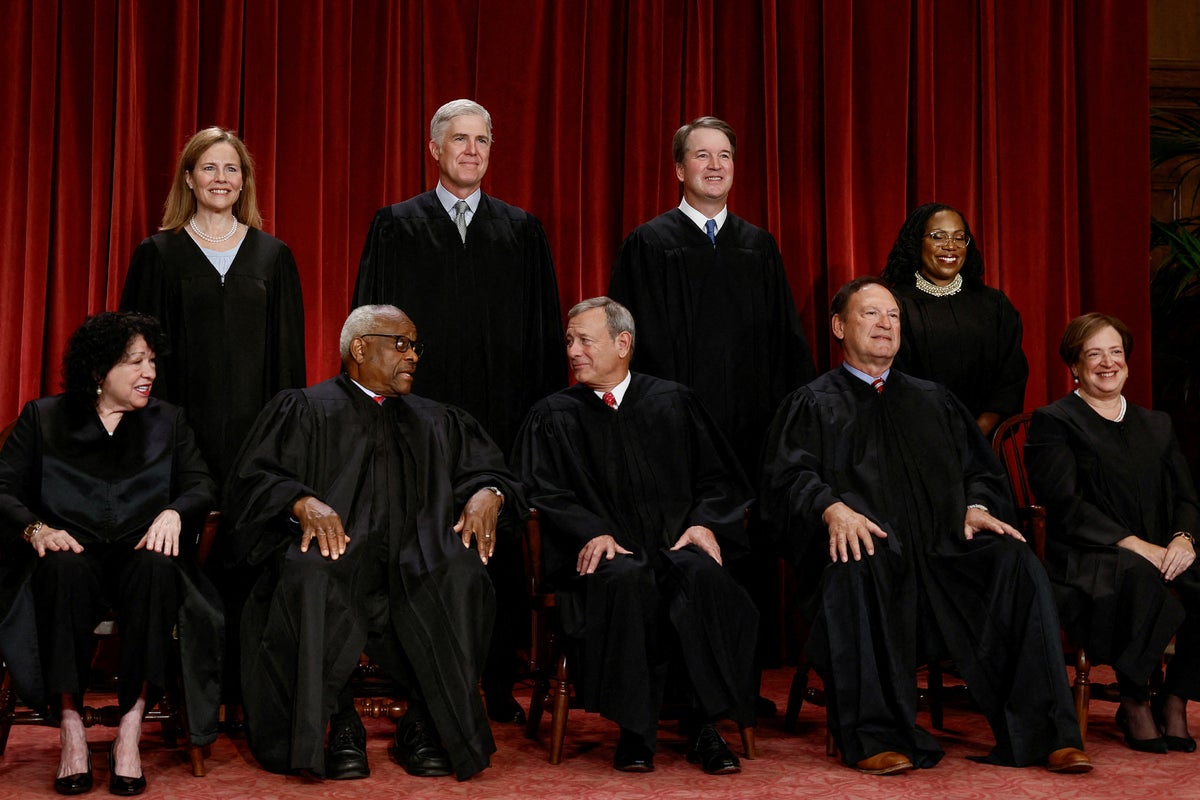
The mainstream narrative surrounding the United States Supreme Court is completely broken. If you read the headlines, you're told a simple, repetitive story. It goes like this: a monolithic, six-justice conservative voting bloc systematically dismantles decades of legal precedent while three lonely liberals voice their futile protests.
It makes for great political theater. It's also dead wrong.
Don't misunderstand the reality here. The court has undeniably shifted hard to the right. The fallout from major rulings on presidential immunity and the administrative state proves that the judicial center of gravity has fundamentally moved. But viewing this bench as a unified corporate board executing a single, coordinated agenda misses the real story.
The six-justice conservative supermajority is not a monolith. It is a fragile coalition prone to fierce internal warfare.
The Myth of the Six-Justice Voting Bloc
When observers scream about a Trump-dominated bench, they look at the raw numbers. Six Republican appointees. Three Democratic appointees. It looks like an unbeatable partisan firewall.
The numbers lie.
True 6-3 splits along strict party lines happen far less often than you think. Instead, what we actually see is a court deeply fractured over judicial philosophy, institutional preservation, and historical interpretation. The conservative legal movement spent forty years building this majority, only to realize that its prized jurists don't actually agree on how to read the law.
Take a look at how the justices align when the pressure mounts. You don't see one conservative faction. You see two, and sometimes three, distinct camps fighting for control of the conservative legal movement's soul.
The Pragmatists Versus the Purists
Chief Justice John Roberts and Justice Brett Kavanaugh form the institutionalist core of the current bench. They care deeply about public perception. They want to avoid massive, sudden structural shocks to the American legal system when a narrower ruling can achieve the same goal. They prefer incremental changes.
On the other side stand Justices Clarence Thomas and Samuel Alito. They are the ideological purists. They don't care about public backlash or political fallout. If they believe a precedent was wrongly decided fifty years ago, they want it gone tomorrow.
This friction creates strange alliances.
Justice Neil Gorsuch often joins the purists but possesses a fiercely independent streak, particularly regarding Native American treaty rights and federal statutory interpretation. Meanwhile, Justice Amy Coney Barrett has increasingly carved out her own path, frequently breaking away from Thomas and Alito when she feels their methods twist originalism too far or move too fast.
The Shadow Docket Proves the Friction
If you want to see the real cracks in the foundation, ignore the major June opinions. Look at the emergency docket instead.
The second Trump administration has accelerated its use of emergency applications, seeking immediate intervention on immigration, military policy, and federal agency structures. This fast-track process forces the justices to show their cards without months of formal briefings.
The data reveals a chaotic picture. In high-profile emergency stays, Roberts and Kavanaugh regularly pull back on the reins, sometimes joining the liberal minority to deny sweeping administration requests. In contrast, Thomas and Alito consistently vote to grant emergency relief, eager to bypass traditional lower-court delays.
These aren't minor disagreements over legal footnotes. These are fundamental fights about the limits of executive power and the role of the judiciary itself.
Why the Liberal Bloc Has More Power Than You Realize
With only three seats, the liberal minority should be completely irrelevant. They aren't.
Justices Sonia Sotomayor, Elena Kagan, and Ketanji Brown Jackson know they can't win on raw numbers. So they play tactical politics. Kagan, in particular, is a master of strategic compromise. She knows exactly how to write a narrow, technocratic opinion that appeals to Roberts or Kavanaugh, successfully peeling them away from the hard-right flank.
By peeling off just one or two conservative votes, the liberal bloc can turn a potential right-wing rout into a moderate, consensus ruling. They do it by exploiting the intellectual vanity of the conservative justices, who often value their own specific textualist methodologies over raw partisan victory.
The Fractured Path Forward
The court isn't just divided from left to right. It is fractured from within the right itself.
As the docket faces more complex cases regarding executive actions, corporate regulations, and civil liberties, expect the internal sniping to get worse. The justices aren't hiding their irritation anymore. They are calling each other out in footnotes and dissenting opinions with unprecedented sharpness.
For anyone trying to predict where the law goes next, stop counting to six. Start looking at the fluid, unstable space between John Roberts' institutionalism and Clarence Thomas' radical originalism. That is where American law is actually being rewritten.