Don't believe the hype about a clean diplomatic breakthrough in the Middle East. Just days after the United States and Iran signed a high-stakes memorandum of understanding to halt months of direct military conflict, the fragile peace is already fracturing over a narrow strip of water.
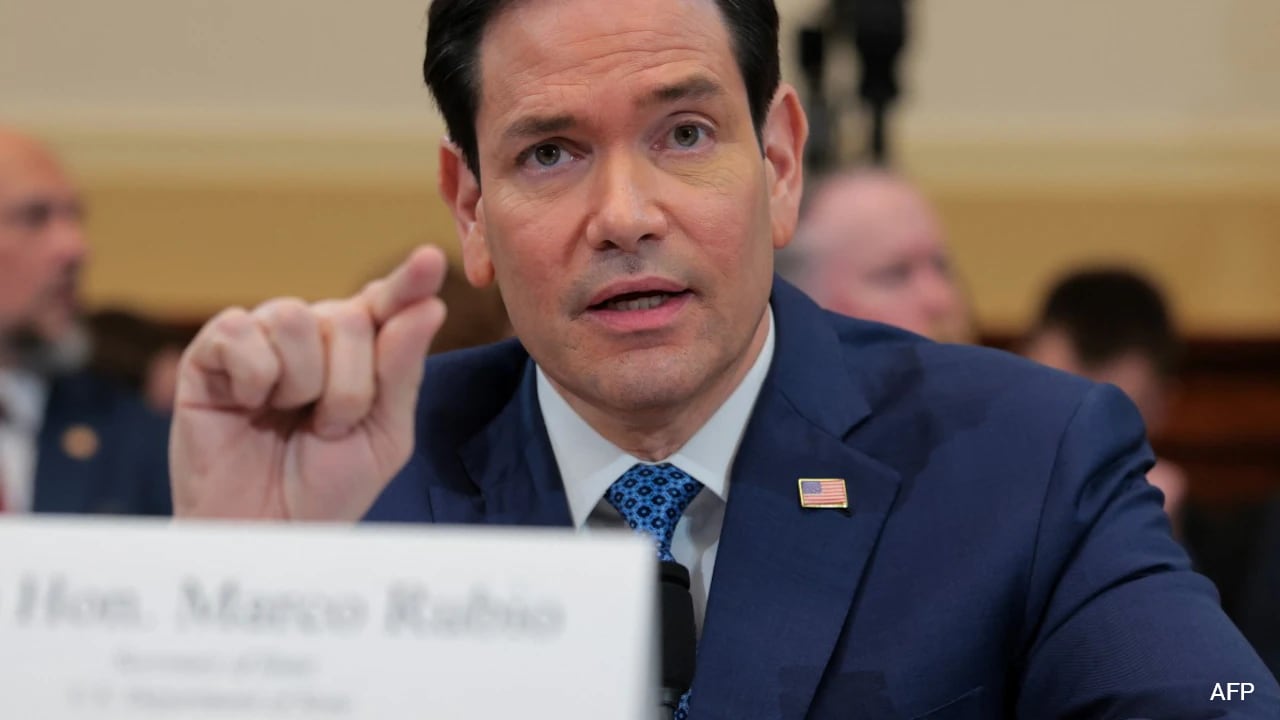
Iran claims it has the right to slap maritime service fees and tolls on every commercial vessel passing through the Strait of Hormuz once a temporary 60-day window expires. US Secretary of State Marco Rubio just landed in Abu Dhabi to draw a hard line in the sand, telling reporters that Washington won't tolerate it.
The battle over these shipping fees isn't some minor administrative argument. It's a fundamental clash over who controls the world's most vital energy chokepoint, and it threatens to blow up the entire ceasefire agreement before the ink even dries.
Why Marco Rubio Rejects Iran Tolls out of Hand
Arriving in the United Arab Emirates at the start of a critical regional tour, Rubio didn't mince words. He stated plainly that the Strait of Hormuz is an international waterway, meaning international law forbids any single nation from charging tolls or transit fees.
The US position relies on established maritime law that governs international straits globally. If the US allows Tehran to set up a toll booth at the entrance of the Persian Gulf, it sets a dangerous precedent for global trade. Rubio is betting that regional allies like the UAE, Kuwait, and Bahrain—all stops on his current itinerary—will back Washington's firm stance. They all depend on unhindered, free access through the strait to export their oil and keep their economies alive.
But there's a deeper reason for Rubio's aggressive pushback. Gulf states are furious and terrified that the initial US-Iran deal will leave Tehran emboldened. By taking an uncompromising stance on shipping tolls, Rubio is trying to reassure nervous allies that the US hasn't gone soft on Iran.
The Secret Omani Loophole Threatening the Deal
While the US insists the rules are clear, the actual text of last week's memorandum of understanding leaves a dangerous amount of wiggle room. The agreement locks in toll-free passage for commercial ships for 60 days. But what happens on day 61?
The text says that after the two-month period, Iran and Oman will discuss the future administration and maritime services in the strait alongside other Persian Gulf states. Iran's chief negotiator, Mohammad Bagher Ghalibaf, immediately seized on this phrasing. He quickly met with the Sultan of Oman in Muscat, and the two countries released a joint statement announcing a working group to study "service costs" for the waterway.
Tehran's strategy is clever. They aren't calling it a toll; they're calling it a "maritime service fee" for administering safe navigation. Ghalibaf has told Iranian state television that the strait will never return to pre-war conditions and that Iran has full sovereign rights over its territorial waters to collect these fees.
The Legal Ground Zero: UNCLOS and the Ratification Trap
To understand why this dispute is so intractable, you have to look at the legal technicalities that both sides use to justify their actions. The primary framework for global maritime law is the United Nations Convention on the Law of the Sea, often called UNCLOS.
Under UNCLOS, international straits are subject to the rule of "transit passage." This means foreign ships have the right to continuous, expeditious, and unobstructed transit without being subject to arbitrary fees or political blockades by coastal states.
Here is the catch: while Iran signed UNCLOS back in 1982, the Iranian parliament never actually ratified the treaty. Because of this, Tehran argues it is not legally bound by the transit passage rules. Instead, Iran falls back on older customary international law, which grants it "innocent passage" rights through its territorial waters. Under innocent passage, a coastal state can suspend transit if it deems a foreign vessel threatens its security, and it can assert much tighter control over maritime traffic.
Since the Strait of Hormuz is narrow—with the shipping lanes falling directly inside the territorial waters of Iran and Oman—Tehran believes it holds the legal high ground to dictate terms. The US, which ironically has also not ratified UNCLOS but treats its provisions as customary law, completely rejects this interpretation.
A Massive Traffic Rebound Under Extreme Stress
The economic stakes are staggering. During the recent peak of the US-Israel conflict with Iran, an Iranian blockade successfully choked off shipping traffic. The sudden halt threw global supply chains into chaos, hitting Southeast Asian nations especially hard by cutting off vital shipments of Middle Eastern energy and fertilizers.
Since the ceasefire took effect, shipping monitors like Kpler and MarineTraffic have tracked a massive surge in vessel activity. Confirmed weekend crossings through the strait jumped from a meager 32 vessels earlier in June to 93 vessels just a week later. On one recent Saturday alone, traffic skyrocketed from three ships to 42 week-on-week.
This dramatic rebound is driven by a temporary general license from the US Treasury’s Office of Foreign Assets Control, which has cleared the way for approved transits until late August. But this sudden rush of traffic is highly deceptive. Ship captains are racing against a ticking clock, trying to move as much cargo as possible before the 60-day window closes and the threat of Iranian fees or renewed blockades returns.
Deeper Strains: Inspectors, Proxies, and Broken Promises
The fight over the Strait of Hormuz tolls doesn't exist in a vacuum. It's happening alongside a series of major diplomatic disputes that make a final, permanent peace deal look highly unlikely.
First, there's a glaring contradiction over nuclear inspections. US President Donald Trump claimed on social media that Iran had agreed to allow international inspectors back into the country to monitor its nuclear sites long into the future. Almost immediately, officials in Tehran issued a flat denial, stating no such agreement had been reached.
Second, the financial terms of the deal are causing massive political friction. The US Treasury issued a sanctions waiver allowing Iran to access at least $8 billion in frozen assets, with transactions permitted in US dollars. While Washington insists these funds must be channeled strictly toward humanitarian goods like wheat and corn, regional critics worry the influx of cash will simply finish up funding Iran's military and its network of regional proxies.
Rubio addressed this proxy issue directly during his stop in Abu Dhabi. He told reporters that a true end to hostilities is impossible as long as Iran-backed groups continue to launch missiles and drones from Iraq or engage in terrorism. Iranian President Masoud Pezeshkian fired back from Islamabad, asserting that Iran's ballistic missile program is strictly for self-defense and will never be up for negotiation.
The Massive Evacuation Plan You Haven't Heard About
Lost in the loud political posturing is a massive, high-risk humanitarian operation happening right now inside the Gulf. The UN's International Maritime Organization announced it has launched a complex plan to evacuate roughly 11,000 seafarers who have been trapped aboard hundreds of ships stranded by the recent military blockade.
The IMO managed to secure safety guarantees from the US, Iran, and Oman to clear out these stuck vessels. While the logistics are moving forward, the operation highlights just how dangerous the region became during the height of the fighting. Moving 11,000 sailors out of a tense, heavily militarized maritime zone is a delicate balancing act. Any sudden escalation over shipping fees could instantly stall the evacuation and put thousands of civilian mariners back in the crosshairs.
What Shippers and Investors Must Do Next
The illusion of a stable Middle Eastern peace is fading fast. If you are managing supply chains, trading energy commodities, or assessing maritime risk, treating this ceasefire as a permanent fix is a recipe for disaster. You need to prepare for a volatile summer as the August deadline approaches.
- Audit Transit Timing: Ensure any cargo moving through the Persian Gulf is scheduled to clear the Strait of Hormuz well before the 60-day toll-free window closes on August 21.
- Price in Administrative Disruption: Build contingency budgets for potential maritime service fees. Even if the US successfully blocks outright tolls, Iran and Oman are highly likely to implement mandatory "escort," "environmental," or "safety" fees that will drive up the cost of shipping.
- Monitor the Iran-Oman Working Group: Keep a close eye on the output from the joint task force established by Muscat and Tehran. Their specific definitions of "maritime services" will give you the earliest warning signs of how Iran plans to enforce its claims.
- Secure Alternative Supply Lines: Relying solely on the re-opened strait is dangerous. Keep alternative rail, pipeline, or secondary port routing active, as the risk of a sudden regulatory or military shutdown remains exceptionally high.