We keep falling for the same illusion. Every time a major outbreak fades from the front pages, governments pat themselves on the back, pull their funding, and pretend the threat has vanished.
Then reality hits.
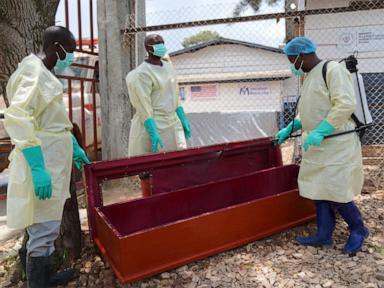
Right now, the Democratic Republic of Congo is battling a severe outbreak of the rare Bundibugyo ebolavirus strain. It has already crossed the border into Uganda. With hundreds of confirmed cases and a rising death toll, this is officially the third-largest Ebola outbreak in history.
The most alarming part isn't just that it came back. It's that it spread silently for weeks before anyone even realized what was happening. This happened because our global safety nets are frayed, underfunded, and heavily distracted. We are making the exact same mistakes that led to the catastrophic 2014 West Africa epidemic, proving that the global community suffers from a dangerous cycle of panic and neglect.
The Blind Spot of the Bundibugyo Strain
When people think of Ebola, they usually think of the Zaire strain. That's the variant responsible for the massive 2014 outbreak and the 2018 crisis in eastern DRC. Because Zaire is the most common and deadliest strain, the medical community poured billions into developing tools specifically for it. We have highly effective vaccines like Ervebo and proven monoclonal antibody treatments for Zaire.
But the current outbreak is driven by the Bundibugyo strain.
Existing rapid diagnostics completely failed to pick it up early on. Worse, those highly praised vaccines and treatments sitting in global stockpiles don't work against Bundibugyo. Health workers are essentially fighting this outbreak with their hands tied behind their backs, relying on basic supportive care and rigorous isolation protocols.
This reveals a massive flaw in how we prepare for threats. We don't prepare for viral families; we prepare for the specific enemy that beat us last time. It's the public health equivalent of fighting the last war.
Why Pathogens Keep Crashing Through the Gates
Viruses don't just magically appear out of nowhere. They are driven into human populations by deliberate human choices. The concept of spillover—where a virus jumps from wild animals to humans—is accelerating due to three distinct pressures.
Deforestation and Habitat Loss
Ebola lives naturally in fruit bats. When rural communities or commercial logging operations clear thousands of hectares of tropical forest, those bats lose their homes. They don't disappear; they move into orchards, villages, and schoolyards. In past outbreaks, patient zero was often a single child playing near a tree where infected bats nested. By pushing deeper into wild ecosystems, we are practically inviting these pathogens into our living rooms.
The Collapse of Global Political Will
During the height of COVID-19, world leaders swore they would fund pandemic preparedness forever. They set up the 100 Days Mission with the goal of having diagnostics and vaccines ready for every major viral family.
Instead, look at what actually happened. The United States withdrew from the World Health Organization and dismantled key programs inside the U.S. Agency for International Development. Official development assistance from major Western nations has tanked. The global health security architecture is weaker today than it was in 2020.
The Double Threat of the Lab and the Wild
While nature remains a highly predictable source of new outbreaks, it's no longer the only one. The risks are shifting. We are seeing a parallel rise in biosafety threats from high-containment laboratories.
The argument for gain-of-function research has always been that we need to study altered, more transmissible viruses to stay ahead of nature. But as we saw with the global fallout of the last few years, transporting remote pathogens to urban labs creates a massive surface area for human error. Whether a virus escapes from a hollowed-out tree in a clearing forest or through a torn glove in a high-containment facility, the end result is exactly the same for a vulnerable population.
The Hidden Death Toll of Broken Systems
When an Ebola outbreak takes off, the virus isn't the only thing that kills. In fact, the collapse of routine healthcare often claims far more lives than the hemorrhagic fever itself.
During the 2014 crisis in West Africa, the sudden influx of patients completely overwhelmed local clinics. Routine vaccinations stopped. Maternity wards closed because doctors lacked basic personal protective equipment like gloves and masks. Programs for malaria, HIV, and tuberculosis were completely disrupted.
As a direct result, an estimated 10,600 people died from preventable, treatable diseases in Guinea, Liberia, and Sierra Leone because the infrastructure collapsed. We are seeing the exact same strain on local health systems in northeastern DRC right now.
Trust Cannot Be Stockpiled
You can have the best medical counter-measures in the world, but they are entirely useless if the local population doesn't trust the people delivering them.
In eastern DRC, decades of violent conflict and political instability have bred deep, justifiable skepticism toward outside authorities. When foreign medical teams suddenly show up in yellow hazmat suits, rumors fly. During past outbreaks, communities frequently viewed Ebola as a political conspiracy designed to attract foreign funding or disrupt local elections.
This mistrust leads to hidden cases. Families hide sick relatives, traditional burial practices involving close contact with the deceased continue in secret, and health workers face outright hostility. If you don't invest in local community leaders, youth networks, and local language communications long before an outbreak happens, your medical response will fail every single time.
Shifting From Reaction to Prevention
Stopping the next pandemic requires walking away from the reactive model that dominates global politics. We have to address the root causes of spillover and systemic vulnerability before the next silent transmission chain begins.
- Enforce Zero-Deforestation Zones: Protecting tropical forests isn't just an environmental issue; it's a core pillar of global health security. Halting the destruction of habitats keeps wild reservoirs away from human settlements.
- Fund Multi-Strain Countermeasures: Global health agencies must pivot funding away from specific viral variants and toward broad-spectrum therapeutics and diagnostics that can identify entire viral families, including rare strains like Bundibugyo.
- Implement Global Lab Governance: The international community needs strict, mandated inspections of high-containment facilities alongside transparent reporting standards for laboratory-acquired infections.
- Invest in Continuous Local Surveillance: Instead of relying on border screenings that catch cases far too late, we need widespread, localized diagnostic networks and wastewater monitoring systems that can flag unusual viral activity at the source.
The current crisis in Central Africa isn't an isolated incident or a streak of bad luck. It is a direct consequence of a world that chooses to forget the lessons of the past the moment the immediate danger passes. If we continue to fund global health through temporary bursts of panic followed by years of absolute neglect, the next global catastrophe won't just be predictable—it will be earned.