Most people assume Joe Biden was blind to Benjamin Netanyahu’s political playbook during the Gaza war. He wasn’t.
In his November 2026 memoir, Promise Me, America, the former president pulls back the curtain on what was actually happening behind closed doors in the White House. His verdict on the Israeli prime minister is blunt. Biden writes that Netanyahu "had no qualms about making promises he had no power – or intention – to keep". For months, critics accused Biden of being naive, weak, or easily manipulated by Jerusalem. The book tells a much messier, more frustrating story of an American president who knew he was being played yet felt trapped by decades of alliance politics and the immediate horror of October 7.
The Illusion Of Private Diplomacy
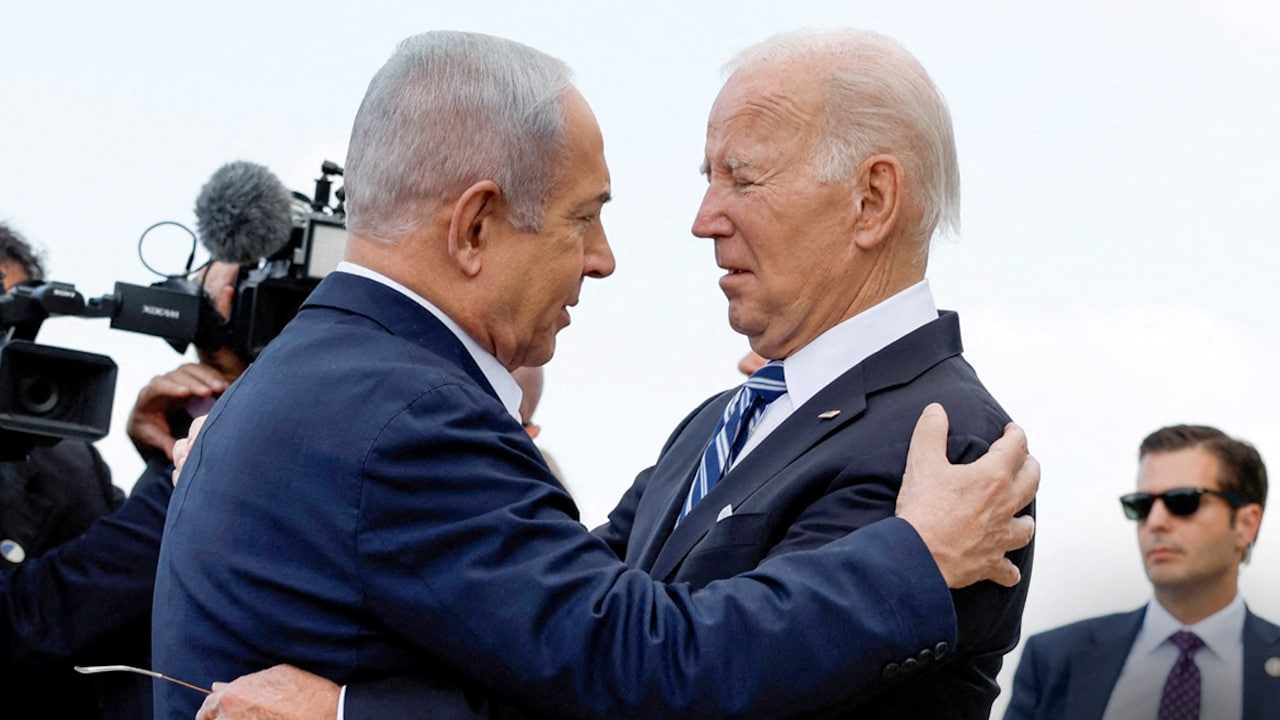
When Hamas attacked Israel on October 7, 2023, Biden flew to Tel Aviv just eleven days later to offer unconditional solidarity. He still stands by that decision, calling himself a lifelong Zionist who refuses to regret arming Israel in its darkest hour.
Behind the scenes, though, the relationship soured almost immediately.
Biden reveals that he repeatedly pressed Netanyahu on the mounting civilian death toll in Gaza. Every time they spoke, Netanyahu would acknowledge the damage being done to Israel's international standing and the erosion of American public support. He would nod along, agree that precautions were necessary, and promise adjustments.
Then nothing changed.
I've watched foreign policy up close for years, and this is the classic trap of "bear-hug diplomacy." The theory sounds smart in a State Department briefing room. You embrace an ally publicly so they trust you enough to listen privately. In practice, if your partner realizes you will never actually cut off the weapons or withdraw the diplomatic shield, your private warnings carry zero weight. Netanyahu understood that arithmetic better than anyone in Washington.
The Steering Wheel Warning
One exchange in Promise Me, America captures the exact dynamic between the two men. Biden confronted Netanyahu about the far-right extremists inside Israel's governing coalition, warning that they were spiraling out of control.
- Biden’s reminder: "Bibi, you promised me your hands were on the steering wheel."
- Netanyahu’s pushback: He insisted his hands were firmly on the wheel.
- Biden’s verdict: "Well, you're driving into a ditch!"
That wasn't a misunderstanding between allies. It was a collision of incentives. Biden wanted a statesman thinking about Israel's long-term security and regional integration. Netanyahu was focused on surviving the next Tuesday in Jerusalem. If he made concessions on a ceasefire or a post-war Palestinian authority, his right-wing partners would collapse his government. So he told Biden whatever he needed to hear to get off the phone, then went right back to appeasing his coalition.
Why Biden Compares Netanyahu To Donald Trump
Perhaps the sharpest line in the memoir isn't about military tactics at all. Biden explicitly compares Netanyahu to Donald Trump.
He notes that while Netanyahu is smart enough to grasp complex intelligence and facts, he willingly bends democratic institutions to serve his own personal political survival. That observation cuts straight to why the two leaders could never truly align. Biden operates on an old-school institutional code—he repeats throughout the book that loyalty matters and that when he gives his word, he sticks to it. Netanyahu treats every conversation as a tactical transaction.
You can't shame a transactional leader with appeals to statesmanship.
The January 2025 Phone Call Contradiction
If you want to understand why so many observers remain skeptical of Biden's self-defense, look at what leaked right after his memoir hit shelves.
On November 19, 2026—just two days after Promise Me, America was published—The Jerusalem Post released a transcript of Biden’s final presidential phone call with Netanyahu from January 15, 2025. That call happened five days before Biden left office, right as a ceasefire and hostage deal was finally announced.
In the book, Biden paints Netanyahu as untrustworthy and self-serving. On that phone call, Biden sounded completely different.
"You're a good man," Biden told him. "I know we've disagreed on occasion but, you know… I still love you, pal. I admire you. It took a lot of courage to do what you did."
Hold those two versions side by side. How does a president write that a foreign leader had "no intention of keeping his word" while telling that same leader "I still love you, pal" on his way out the door?
Honest answer? Both things are part of who Biden is. He is a politician shaped by fifty years in the Senate, where you curse a colleague in the cloakroom at noon and hug them on the floor at two. Even his own former vice president, Kamala Harris, noted in her own writings that Biden struggled to extend the same visceral empathy to Palestinian civilians that he naturally felt for Israelis and Ukrainians. His personal affection for Israel—and his decades-long familiarity with Bibi—kept overriding his strategic frustration.
What Critics And Supporters Both Miss
Most commentary around Biden’s memoir falls into two predictable camps, and both miss the real takeaway.
The progressive critique argues Biden was complicit because he refused to condition military aid. There's real weight to that argument. Even in his own book, Biden admits Israel went too far and warns that Israel's strongest American defenders are disappearing among younger generations. Yet he still insists he would never agree to cut off weapons. When you take leverage off the table from day one, you shouldn't act surprised when the other guy ignores your advice.
The hawkish defense claims Biden tied Israel’s hands and prolonged the conflict through public second-guessing. That doesn't hold up against the facts either. Washington vetoed multiple UN resolutions, surged billions in munitions, and absorbed massive domestic political damage to shield Netanyahu's government. If Netanyahu felt constrained, it wasn't because Biden cut him off.
The real lesson here isn't about personal trust between two aging politicians. It's about how American foreign policy works when rhetoric replaces leverage.
How To Read Political Memoirs Without Getting Played
Whenever a former president drops a 480-page book like Promise Me, America, the headlines focus on the juiciest insults. Here is how to separate genuine historical insight from legacy-polishing spin:
- Compare memoirs against contemporaneous transcripts. Books are written with hindsight and an eye on history. Leaked cables, call transcripts, and voting records show what leaders actually did when the pressure was on.
- Watch the leverage, not the adjectives. When a leader says they "expressed deep concern" or "privately urged" restraint, ask what material consequence was attached to that request. Without conditions, private pressure is just conversation.
- Follow domestic coalition math. Foreign leaders rarely make decisions to please Washington. Look at who keeps them in power at home—in Netanyahu’s case, hardline coalition partners—and you'll predict their next move far better than any diplomatic readout ever will.
- Separate personal rapport from national interest. Leaders often mistake decades of personal familiarity for actual influence. Knowing someone for forty years doesn't mean they won't prioritize their own survival over your advice.
Biden’s assessment of Netanyahu is almost certainly accurate. Netanyahu did prioritize his political survival, and he did make promises he had no intention of keeping. The catch is that Biden knew it in real time—and chose to keep signing the checks anyway.
Check out Biden's explosive memoir revelations on Netanyahu for a closer look at the specific passages from Promise Me, America. This clip breaks down the key quotes from Biden's book regarding his private friction with Netanyahu over the Gaza conflict.