Let's talk about the brutal math of human shelter.
Right now, to meet global housing needs by 2030, we have to construct 96,000 new housing units every single day. One home per second. That is exactly what we need to build, every minute of every hour, just to shelter the people currently living without adequate housing. Honestly, the math is horrifying. And basically, it's impossible under our current development models.
The UN-Habitat's recently released 2026 World Cities Report paints a stark picture of a world rapidly retreating into what urban theorists call the global favela. For decades, politicians and city planners have treated informal settlements as temporary glitches in the urban matrix. A symptom of growing pains. Something that would eventually be paved over by shiny high-rises and formal zoning grids.
They were wrong. This isn't a temporary glitch in the system. It is the system.
The Staggering Reality of Urban Informality
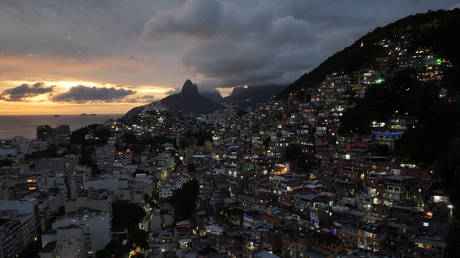
We tend to think of slums as isolated pockets of extreme poverty. A few tin roofs clustered on the steep outskirts of Rio de Janeiro, Mumbai, or Nairobi. You've probably seen the drone footage in a documentary. But the scale has mutated into something entirely different.
According to the latest UN data, 1.16 billion people currently live in slums and informal settlements. That is a massive, terrifying jump. Back in 2000, that number sat at 895 million. We are going backward.
Add in the people who might not live in a technically defined "slum" but still lack secure, safe, and adequate housing, and the number explodes. Up to 3.4 billion people fall into this broader category. Almost half the planet is struggling with unstable shelter. The global housing deficit jumped from 251 million units in 2010 to 288 million in 2023. The market is failing the majority of humanity.
What actually defines a slum? The UN isn't just going by aesthetics. A slum household is officially defined as a group of individuals living under the same roof who lack at least one of five critical conditions. They lack access to improved water. They lack improved sanitation. They don't have sufficient living area. Their housing durability is compromised. Or, perhaps most importantly, they lack security of tenure.
That last point is the invisible trap door beneath the global favela. When you don't legally own the land under your bed, you live in a constant state of impending erasure.
Stop Pretending Bulldozers Are a Housing Policy
For a very long time, the standard government response to a growing informal settlement was state-sanctioned violence. Send in the bulldozers. Clear the land. Build a highway, a shopping center, or a luxury apartment complex that the displaced residents could never dream of affording.
Between 2003 and 2023, research shows approximately 64 million people were forcibly evicted globally. Sixty-four million.
Why do cities do this? Mostly for vanity. The UN-Habitat report explicitly calls out the obsession host cities have with projecting a "world-class" image, especially before organizing large-scale mega-events like the Olympics. Politicians sweep the poor under the rug to make the skyline look good for international investors.
It never works. You can't bulldoze away poverty. You just move it.
When a settlement is cleared without fair compensation or adequate resettlement options, the residents don't magically enter the formal housing market. They just migrate to a more hazardous, less visible area of the city and start rebuilding from scratch. They lose their social networks. They lose their proximity to informal jobs. Their entire economic foundation is wiped out overnight.
Who Actually Lives in the Global Favela?
It's kids. That's the part that really stings.
Between 350 and 500 million children are growing up in slums right now. They make up a third to a half of the total population in these areas. You are looking at half a billion developing brains exposed to chronic overcrowding, environmental hazards, and limited sanitation.
Geographically, the crisis is heavily concentrated. As of 2024, roughly 85 percent of the world's informal settlement population was located in just three major regions. Central and Southern Asia holds about 340 million people in informal housing. Eastern and South-Eastern Asia contains another 370 million. Sub-Saharan Africa accounts for 254 million.
Women bear the absolute brunt of this crisis. The UN found that women between the ages of 15 and 49 are overrepresented in slums across 80 percent of the countries tracked. The lack of basic infrastructure isn't just an inconvenience. It's an extreme daily safety risk.
When a settlement lacks in-home plumbing, residents rely on shared public latrines. Walking to a poorly lit, shared toilet in the middle of the night exposes women and girls to severe risks of gender-based violence. Unsecure tenure also disproportionately harms women, who often have weaker legal property rights and face higher risks of eviction if a spouse dies or leaves.
The Climate Migration Pipeline
You simply can't talk about the global housing crisis without talking about the climate crisis. They feed off each other in a vicious, accelerating loop.
Decades of insufficient investment and economic instability created the baseline housing shortage. Now, conflict and climate-related disasters are throwing gasoline on the fire. Natural disasters and shifting weather patterns are wiping out rural livelihoods at an unprecedented rate.
When a farmer in Bangladesh loses their land to persistent flooding, or a pastoralist family in the Horn of Africa loses their herd to a multi-year drought, they don't just disappear. They pack up and move to the city. They seek safety, stability, and work.
Because they arrive with absolutely nothing, the formal housing market is closed to them. They end up on the urban fringes. The cruelest irony of all? These informal settlements are almost always built on the most hazardous land available. They pop up on floodplains, steep hillsides highly prone to landslides, or directly adjacent to toxic industrial sites. The very people fleeing climate disasters are forced to settle in the exact urban zones most vulnerable to the next storm.
The Economic Engine Nobody Wants to Acknowledge
There's a massive misconception that informal settlements are a drain on the formal city. That they are parasitic. This is completely backward. The global favela subsidizes the wealth of the formal city.
Informal housing is tightly bound to informal employment. The people living in these unrecognized neighborhoods are the domestic workers cleaning luxury condos. They are the construction workers pouring the concrete for new financial districts. They are the street vendors, the waste pickers, and the delivery drivers keeping the urban economy churning.
They provide hyper-cheap labor because their living costs are suppressed by the informal nature of their housing. If cities suddenly had to pay these workers a wage that covered formal, market-rate rent, the entire urban economic structure would collapse. The wealthy city functions precisely because the global favela absorbs the cost of housing its labor force.
How We Actually Fix the Informal Settlement Crisis
We have to abandon the eradication mindset. We have to stop treating the poor like an aesthetic problem to be cleared away.
The most effective, proven solution is something urban planners call "in-situ upgrading." Instead of tearing down an informal settlement, you work with the organic structure the residents have already built. You pave the main arterial roads to allow emergency vehicles in. You lay down clean water pipes. You install proper sewage and drainage systems to stop the flooding. You connect the neighborhood to the municipal electrical grid.
In 2024 alone, UN-Habitat interventions helped 205,000 people across 27 cities access basic services like water and clean energy. They helped 68,000 people get access to sustainable public transport. It works.
But infrastructure is only half the battle. The real magic happens when governments grant secure land tenure.
When a family knows they won't be violently evicted next month, their entire economic psychology shifts. They start investing in their own shelter. They replace corrugated tin walls with brick and mortar. They pour concrete floors. They add a second story to rent out to new arrivals. The community stabilizes and begins generating its own internal wealth. In 2024, UN-Habitat helped 98,700 households gain secure land tenure through improved documentation. It advances peace. It creates prosperity.
The Bureaucracy of Recognition
You can't govern what you refuse to see. The first major hurdle to upgrading informal settlements is a deliberate lack of data.
Many municipalities actively refuse to map their slums. If a neighborhood doesn't officially exist on the city registry, the government doesn't have to allocate budget for schools, health clinics, or trash collection there. It's a calculated strategy of financial neglect.
During the COVID-19 pandemic, this lack of data turned deadly. UN-Habitat had to deploy youth volunteers with mobile apps just to map informal settlements in Kenya, Uganda, and South Sudan. They had to walk the dirt roads manually logging the locations of water points, pharmacies, and hand-washing facilities. You shouldn't have to rely on emergency volunteer mapping to know where your citizens get their drinking water.
Cities must commit to radical data transparency. We need globally harmonized approaches to defining human settlements so we can actually measure progress.
Taking the Profit Out of Displacement
The market alone will never solve the global housing crisis. It is currently structurally designed to worsen it.
We are losing ground every year because the global real estate market treats housing primarily as a speculative financial asset rather than fundamental human infrastructure. Developers are highly incentivized to build luxury units that sit empty as investments, while millions are pushed into informality.
Governments have to intervene aggressively. We need heavy taxation on vacant investment properties to force them onto the rental market. We need strict, universally enforced anti-eviction laws. We need to fund and scale community land trusts, where neighborhoods collectively own the land beneath their homes, permanently removing it from the speculative market.
We have a choice. We can keep ignoring the 1.16 billion people living in the global favela, clinging to the fantasy that enough bulldozers and luxury developments will eventually solve the problem. Or we can look at the data, face reality, and recognize these settlements for what they are: the raw, unpolished future of human urbanization. Demand your local representatives support anti-eviction policies and in-situ upgrading. Stop supporting politicians who prioritize pristine skylines over human lives. The concrete is already poured. It's time to build the plumbing.