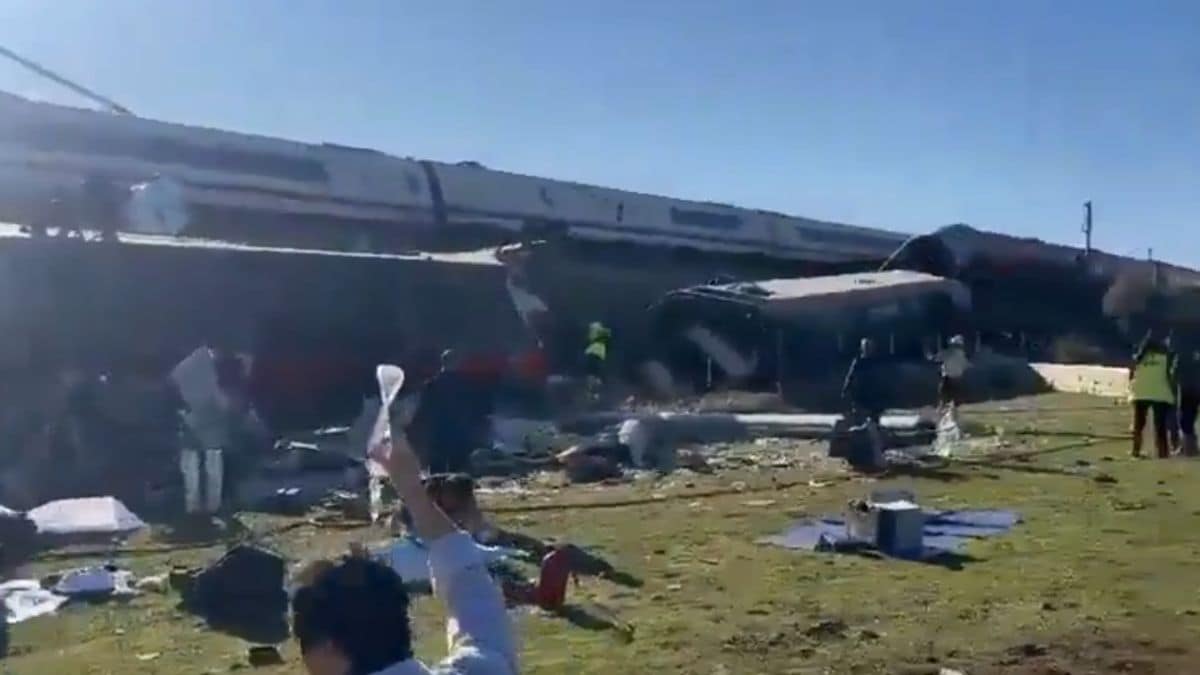
Everyone wants a quick fix for Haiti. When news broke that El Salvador was reportedly sending hundreds of troops to Haiti following a deadly gang ambush, social media erupted with hot takes. Some cheered Nayib Bukele as the savior of the Caribbean. Others screamed about human rights abuses spilling across borders. Both sides are missing the actual reality on the ground.
Let's get the facts straight first. El Salvador did commit personnel to the UN-backed Multinational Security Support (MSS) mission in Haiti, led by Kenya. The deployment followed a brutal string of gang ambushes in Port-au-Prince that killed Kenyan officers and local police, exposing just how outgunned the international force really was. Yet, the early reports claiming "hundreds of combat troops" were storming the beaches of Haiti got distorted fast. In reality, El Salvador's initial deployment focused heavily on specialized medical evacuation teams, helicopters, and logistical support—with a smaller contingent of security forces—rather than a massive infantry invasion.
Why does that distinction matter? Because fighting armed coalitions in Port-au-Prince isn't the same thing as rounding up street gangs in San Salvador. If you treat Haiti like an extension of El Salvador's domestic crackdown, you're going to misread the entire crisis.
The Reality Behind the El Salvador Haiti Troop Deployment
When a gang ambush in Haiti left Kenyan police officers dead and exposed glaring gaps in air support, the MSS mission hit a wall. Kenyan forces had boots on the ground, sure. What they didn't have was reliable medical evacuation capabilities or heavy aerial reconnaissance. If an officer got shot in the middle of a firefight in Delmas or Cité Soleil, getting them to a trauma center fast was nearly impossible.
Enter El Salvador. President Nayib Bukele had already offered to help fix Haiti's security crisis back in early 2024, famously posting on X that he could solve it if given a UN mandate and funding. By late 2024 and into 2025, that rhetoric turned into an actual bilateral agreement signed with Haitian authorities and backed by the Organization of American States (OAS).
The initial wave wasn't 500 assault riflemen kicking down doors. It was a specialized contingent—numbering around 70 to 150 personnel depending on the rotation phase—centered around military medics, pilots, and aircraft mechanics. Their primary job? Operating helicopters for medical evacuations (MEDEVAC) and transporting wounded MSS personnel out of hot zones.
Does that make it less significant? Not at all. In urban warfare, air mobility and trauma care keep an army from collapsing. Without MEDEVAC, morale craters. Troops hesitate to push into gang-held territory if they know a gunshot wound means bleeding out on the asphalt. El Salvador stepped into the exact logistical blind spot that was paralyzing the Kenyan-led mission.
Why Haiti Is Not El Salvador
Here is where the armchair analysts get tripped up. People love drawing a straight line between Bukele's war on MS-13 and Barrio 18 and the chaos in Haiti. On paper, it sounds tempting. El Salvador went from the murder capital of the world to having one of the lowest homicide rates in the Western Hemisphere. Why not just copy-paste that playbook into Port-au-Prince?
Because the physics of the conflict are completely different.
In El Salvador, Bukele had total control over the state apparatus. He had a functioning judicial system he could bend, a massive prison infrastructure he built from scratch (CECOT), and a national police and military force that answered directly to him. More importantly, Salvadoran gangs were extortion rackets armed mostly with pistols, shotguns, and aging assault rifles. They didn't control major ports, they didn't have heavy belt-fed machine guns, and they weren't toppling the national government.
Haiti is the exact opposite. There is no functioning state infrastructure to lean on. The Haitian National Police (PNH) has been decimated by underfunding, defections, and targeted assassinations. Meanwhile, the gangs—united under coalitions like Viv Ansanm led by figures like Jimmy "Barbecue" Chérizier—aren't just street thugs. They operate like heavily armed insurgent militias.
Comparing the Two Environments
- Weaponry: Haitian gangs routinely use .50 caliber sniper rifles, belt-fed machine guns, and commercial drones for surveillance, often smuggled directly from the United States. Salvadoran gangs rarely possessed military-grade hardware at that scale.
- Territorial Control: Armed groups control roughly 80% to 85% of Port-au-Prince. They hold ports, fuel terminals, and major highways, effectively choking the economy at will.
- Legal Framework: Bukele used a domestic "State of Exception" to suspend constitutional rights and arrest over 80,000 people. Foreign troops in Haiti operate under strict UN-endorsed rules of engagement and international human rights oversight. You can't just mass-arrest a neighborhood when you don't even have functioning jails to put them in.
Honestly, anyone expecting Salvadoran troops to waltz into Port-au-Prince and clear the city in six months hasn't been paying attention to how urban insurgencies work.
What Happened During the Gang Ambushes
To understand why El Salvador's involvement escalated after those gang ambushes, you have to look at how the gangs fight. They don't line up for conventional battles. They use dense, labyrinthine slums as defensive fortresses, digging trenches, blocking roads with burned-out semi-trucks, and setting up elevated sniper nests.
When Kenyan officers and Haitian police pushed into gang strongholds, they walked into classic kill zones. The gangs would let the armored vehicles roll down narrow streets, block the exits behind them, and open fire from rooftops. Several Kenyan officers were killed in these traps, and videos of gangs parading captured equipment flooded social media.
Those ambushes proved two brutal truths:
- Armored vehicles aren't enough. Without eyes in the sky and rapid extraction teams, armored personnel carriers just become steel coffins when they get immobilized.
- The international mission was severely undermanned. The MSS was supposed to field around 2,500 personnel from various countries. For months, Kenya carried almost the entire weight alone with roughly 400 to 600 officers, plus a handful of personnel from Jamaica, Belize, and the Bahamas.
El Salvador's entry injected seasoned military professionals into a mission that was previously relying almost entirely on police tactics. Salvadoran soldiers spent years fighting in dense, hostile urban neighborhoods. Even in a support and medical capacity, their institutional muscle memory matters.
The Geopolitics Nobody Talks About
This deployment isn't just about charity or regional solidarity. Politics drives everything here.
For Nayib Bukele, sending troops to Haiti is a masterstroke of foreign policy branding. For years, Washington criticized Bukele's administration over democratic backsliding and human rights concerns during his gang crackdown. By stepping up to help stabilize Haiti—a crisis the United States desperately wants contained to prevent a massive migration surge toward Florida—Bukele instantly made himself indispensable to American policymakers.
Suddenly, the guy critics called an authoritarian strongman is the one doing the heavy lifting in Washington's backyard. The U.S. government has poured hundreds of millions of dollars into funding the MSS mission, providing equipment, logistics, and base construction. When El Salvador puts skin in the game, it earns massive diplomatic capital in Washington without having to change a single domestic policy at home.
At the same time, it cements Bukele's image across Latin America as a leader of action. While larger regional powers like Brazil and Mexico hesitated to send combat or military support to Haiti—mostly because Brazil still remembers the bruising trauma of leading the UN's MINUSTAH mission there from 2004 to 2017—tiny El Salvador stepped right up.
Can Foreign Troops Actually Fix Haiti
If you're looking for an honest assessment of whether El Salvador's troops will turn the tide, the answer is complicated. They will save lives—specifically the lives of wounded Kenyan and Haitian officers who would otherwise die waiting for ground transport. Having dedicated MEDEVAC helicopters changes the calculus for commanders on the ground. It lets them take risks they couldn't take before.
Will it defeat the gangs permanently? No. Not by itself.
You can't shoot your way out of a governance vacuum. Even if the MSS mission—bolstered by Salvadorans, Kenyans, Guatemalans, and others—manages to clear major highways and reopen the main port in Port-au-Prince, what happens the next day? If there are no judges, no functioning ministries, no jobs, and no legitimate political transition, the gangs simply melt back into the population and wait for the foreigners to leave. We've seen this exact movie play out in Haiti multiple times over the last three decades.
Plus, funding remains a massive headache. The UN trust fund for the Haiti mission has consistently fallen short of what's needed to sustain a multi-year operation. Helicopters are expensive to fly. Fuel, spare parts, and combat pay burn through budgets fast. If international donors lose interest or redirect money to other global conflicts, even the best-trained troops get grounded.
How to Read Future News on the Haiti Mission
When you see headlines about troop surges or gang clashes in Haiti over the coming months, don't get swept up in the viral noise. Filter every report through a few practical realities so you actually know what's happening:
- Watch the logistical metrics, not just troop counts. A headline saying "300 troops arrive" sounds dramatic, but ask what they actually do. Fifty combat engineers, helicopter pilots, and trauma surgeons have ten times the operational impact of three hundred standard patrolmen without air support.
- Follow the money in the UN Trust Fund. Watch whether major donors like the U.S., Canada, and European nations actually disburse the pledged funds. Without steady cash flow, deployments stall out fast.
- Track the Haitian National Police recruitment. Foreign troops are a temporary bandage. The only metric that predicts long-term stability is whether the PNH can recruit, vet, and retain thousands of new local officers capable of holding territory after the MSS leaves.
- Look at port and highway access. Ignore vague claims of "military progress." If food and fuel trucks can move freely from the Port-au-Prince harbor to the rest of the country without paying gang tolls, the mission is working. If they can't, the gangs are still winning.
El Salvador's decision to send personnel after those brutal gang ambushes gave the international mission a pulse when it was on life support. It proved that regional partners are willing to step into the fire. Now comes the hard part: turning tactical survival into an actual country that can govern itself.