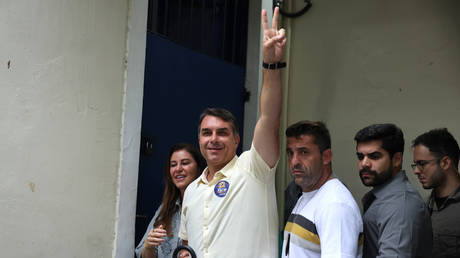
When Jair Bolsonaro lost Brazil's presidential election in October 2022, he didn't stick around to hand the presidential sash to Luiz Inácio Lula da Silva. He boarded a Brazilian Air Force plane and flew straight to Orlando, Florida.
He wasn't alone. Over the months and years that followed, a steady stream of high-profile allies, conservative bloggers, and right-wing lawmakers followed the exact same flight path north. Mainstream headlines love to frame this as a sudden, frantic escape by a "Trump ally" fleeing electoral defeat. That's only half the story.
If you actually look at the legal timelines, visa loopholes, and political alliances connecting Brasília to South Florida, the real picture is much more calculated. People treat Florida like a vacation spot for defeated politicians. In reality, it has become an operational base for the Brazilian right—a safe harbor from Brazil's aggressive Supreme Federal Court (STF) and a direct pipeline to American conservative power brokers.
Why Florida Became the Default Escape Hatch
You can't understand why so many Brazilian politicians end up in Orlando or Miami without understanding the legal pressure cooker back home. In the United States, the First Amendment protects almost everything short of direct incitement to imminent violence. Brazil's legal framework operates differently.
Following the January 8, 2023 riots in Brasília—where thousands of Bolsonaro supporters stormed Congress, the presidential palace, and the Supreme Court—Justice Alexandre de Moraes launched sweeping investigations into anti-democratic acts and digital misinformation. Assets were frozen. Passports were seized. Arrest warrants were issued for lawmakers, influencers, and former officials.
For allies of the former president, staying in Brazil meant risking indefinite pre-trial detention or having their social media accounts banned nationwide. Moving to the United States immediately put them out of reach of Brazilian federal police.
Take Allan dos Santos, a prominent pro-Bolsonaro blogger and media personality. After Justice Moraes ordered his arrest in 2021 over allegations of spreading disinformation and attacking democratic institutions, dos Santos relocated to the United States. Even after Brazilian authorities pushed for his extradition and Interpol involvement, he remained in Florida, continuing to broadcast to his followers online.
Then there's Oswaldo Eustáquio, another conservative journalist aligned with Bolsonaro, who fled Brazil to avoid arrest warrants, bouncing through neighboring countries before seeking asylum abroad.
Or look at former Justice Minister Anderson Torres. He was actually on vacation in Orlando when the January 8 riots erupted in Brasília—while he was serving as the public security chief for the Federal District. Unlike others who stayed abroad permanently, Torres returned to Brazil and was immediately arrested at the airport in Brasília in January 2023. His arrest served as a stark warning to every other Bolsonaro ally sitting in Florida: if you go back, you go to jail.
The Trump Connection Isn't Just Symbolic
Media outlets routinely slap "Trump ally" into headlines because it grabs clicks. They aren't wrong about the alliance, though. The bond between Bolsonaro's inner circle and Donald Trump's movement goes way beyond a few shared photo ops at Mar-a-Lago.
Eduardo Bolsonaro, the former president's son and a federal deputy in Brazil, has spent years cultivating deep ties with Trump's orbit, Steve Bannon, and the Conservative Political Action Conference (CPAC). He has spoken at CPAC events in the U.S. and organized CPAC Brazil, effectively importing American MAGA political strategy into South America.
When Bolsonaro arrived in Orlando at the end of December 2022, staying at a vacation home owned by former UFC fighter José Aldo in Kissimmee, he wasn't hiding out in obscurity. He was drawing crowds of supportive Brazilian expats, speaking at Turning Point USA events, and meeting with conservative figures.
For Brazilian politicians facing legal heat at home, aligning themselves with Trump's movement serves a specific, practical purpose. It reframes their legal troubles in Brazil. Instead of looking like suspects in a criminal investigation over election interference or coup plotting, they position themselves as victims of political censorship fighting a global battle for free speech.
That framing works remarkably well in Washington. In 2024, members of the U.S. House Judiciary Committee, led by Republican lawmakers, held hearings and released reports criticizing Justice Alexandre de Moraes's orders to block social media accounts on platforms like X (formerly Twitter). Brazilian lawmakers who had traveled to the U.S. testified and lobbied Congress directly, turning a domestic Brazilian judicial dispute into an American partisan talking point.
How the Visa and Asylum Game Actually Works
A common misconception is that foreign politicians can just hop on a plane to Miami and stay forever because they know a former U.S. president. Immigration law doesn't work like that, even for high-profile figures.
When Jair Bolsonaro flew to Florida in late 2022, he entered the United States on an A-1 visa—a diplomatic visa reserved for heads of state and senior government officials. Once Lula took office on January 1, 2023, Bolsonaro was no longer a sitting president. His diplomatic status evaporated.
To stay legally, he had to apply for a change of status to a B-1/B-2 tourist and business visa, which his legal team filed before his A-1 grace period expired. He eventually returned to Brazil in March 2023 after three months in Florida, though Brazilian authorities later confiscated his passport in February 2024 as part of an ongoing investigation into an alleged coup plot.
Other allies haven't had the luxury of returning. When a foreign national faces an arrest warrant at home and wants to stay in the U.S., the options narrow quickly:
- Asylum applications: Individuals claim they face political persecution in their home country. Because U.S. immigration courts are severely backlogged, an asylum application can legally allow someone to remain in the country for years while their case crawls through the system.
- Extradition hurdles: Even when Brazil requests extradition, the U.S. Department of State and federal courts apply the "dual criminality" principle. The alleged offense must be a crime in both countries. Because U.S. courts have an extraordinarily high bar for criminalizing speech, offenses tied to "disinformation" or "attacks on democratic institutions" often fail to meet the U.S. standard for extradition.
- Investor or talent visas: Wealthier allies or media personalities sometimes pursue O-1 visas (for individuals with extraordinary ability) or EB-5 investor visas to establish long-term residency without relying on political asylum.
What Happens When You Govern From Exile
Staying in Florida solves the immediate problem of avoiding a Brazilian prison cell, yet it creates a massive political headache. You can't easily run a grassroots political movement from four thousand miles away.
In Brazil, local politics runs on face-to-face loyalty, municipal budgets, and constant media presence. When key voices of the Brazilian right relocate to Orlando or Miami, they risk losing touch with everyday voters in São Paulo, Minas Gerais, or the rural interior.
There's also the optics problem. Ordinary Brazilian voters struggling with inflation and high interest rates don't always sympathize with politicians posting videos from gated communities in Central Florida. Opponents in Lula's Workers' Party (PT) routinely mock these figures as "patriots in Disney World," pointing out the irony of nationalists abandoning their own country the moment things get tough.
Even within the Brazilian right, tensions flare over who stayed to fight and who took the easy way out. Some conservative lawmakers who remained in Brasília and negotiated with the establishment quietly resent the exiles who lob rhetorical grenades from the safety of Florida without facing the local consequences.
The Legal Net Is Still Tightening
Fleeing to the U.S. puts physical distance between Bolsonaro's allies and Brazilian judges, yet it doesn't freeze the investigations in Brasília.
Brazil's Supreme Federal Court and Federal Police have continued to press forward with sweeping probes into everything from the January 8 riots to alleged falsification of COVID-19 vaccination records and the unauthorized sale of state gifts. Even if an ally sits comfortably in Florida, their bank accounts in Brazil can be frozen, their properties seized, and their political rights stripped—barring them from running for office for eight years or more.
More importantly, the diplomatic winds in Washington can shift. While Republican lawmakers have been eager to champion the cause of Brazilian conservatives, executive branch decisions on visas, asylum, and extradition rest with the U.S. administration and federal courts.
If you're following this story to understand where Latin American politics is heading, stop looking at Florida as a simple retirement home for defeated politicians. Watch the visa filings, watch the Congressional hearings in Washington, and pay attention to who actually risks flying back to Brasília. The real power struggle over Brazil's future isn't just happening in the halls of Congress—it's playing out in immigration courts and political conferences across South Florida.